2016 in review

I thought I would take this opportunity to reflect on 2016 in relation to refugees, asylum seekers and the importance of stories to help us understand what is happening in the world.  There were many low points, but also some inspiring highlights that made me marvel at the strength and humanity of others. I hope you’ll take time to read this longer post from me.

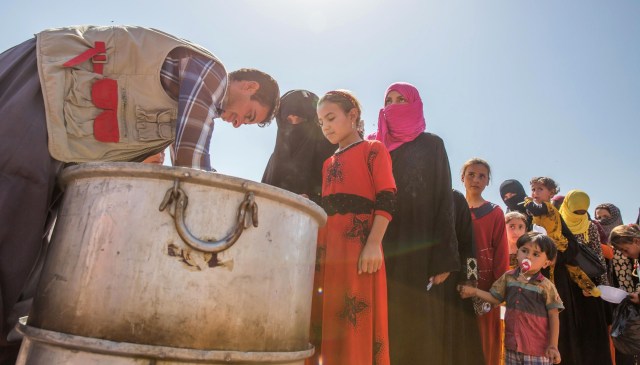
It was a challenging year in Australia and the international community. The conflict in Syria worsened but I am hopeful that the tentative peace deal brokered by the Russians may help.   syrian-refugeesThe escalating violence and insecurity continued in South Sudan and Yemen.   We saw an amazing welcome initially from Angela Merkel and Germany in welcoming thousands of fleeing refugees as the crisis of displaced people had a dramatic impact in Europe. Populist groups in the UK, USA, Austria, Denmark, Germany, France and the Netherlands used the world’s biggest refugee crisis to spread fear and hate, inflaming tensions about people who may be different to us. In Australia where I live, the re-emergence of the One Nation party led by Pauline Hanson, has reflected these sentiments.

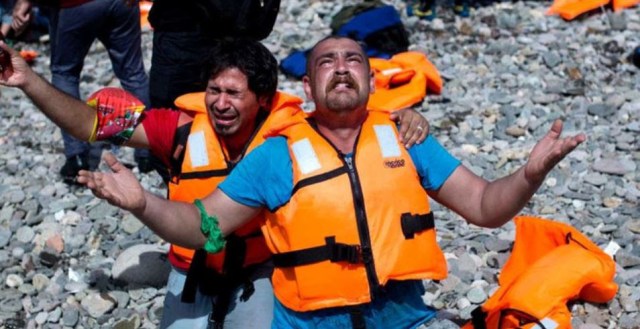
Walls, both physical and metaphorical, have been built in countries around the world to stop many of the people most in need from seeking help. According to the UNHCR, 1 in every 113 people globally is now either an asylum-seeker, internally displaced or a refugee.

As a writer and former journalist, I followed with fascination and often despair the twitter postings of Bana al-Abed, a young seven-year-old girl whose postings offered the world a glimpse into the deprivation and violence in the besieged city of Aleppo. Bana and her family were recently evacuated to the Turkish capital.

I worried about writer and journalist friends in some of the world’s trouble spots. I could only be thankful that people like my friend Karl Schembri were able to post on the ground reports from tragic situations in Yemen and Syria. Ben Doherty and the team from nauru-filesGuardian Australia continued to lead the way with the most in-depth updates on the refugee and asylum seeker situation as it related to Australia. In a global exclusive, the Nauru files which included over 2,000 documents showing the despair and horror of Australia’s offshore detention, were leaked to the Guardian. This was followed by graphic reports on the ABC’s 4 Corners that also screened around the world.

I know, as someone who worked in news for many years, a picture can tell a story “better than a thousand words” In 2015 it was the image of Aylan, the two-year-old Syrian refugee, lying face down on a Turkish beach that seemed to galvanise western countries into responding to the urgency of the Syrian refugee crisis. Australia increased its refugee intake by 12,000 to help Syrian and Iraqi refugees.  After a very slow start (why did it take nearly a year?) 2016 finally saw some of these refugees arrive in Australia.

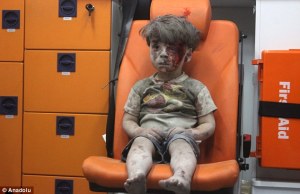
In 2016 it was the image of young Oman in the back of the ambulance, which I am sure will show up in all your news feeds, as one of the photos of the year. oman-in-ambulanceThis photograph and video seemed particularly poignant and tragic to me. Oman was wearing shorts and a t-shirt featuring a cartoon character. His hands were in his lap. In a moment of pure horror, he lifted his left hand to his face, ran his fingers through his hair and then back down the side of his face before putting his hands back in his lap. He looked at the palm of his hand covered in blood and, unsure what to do, turns it over and wipes it on the seat. In that moment, he could have been our son, our grandson, our brother or our nephew, trying to get something off his hand. He looked straight at the camera, from a bright orange seat in the back of an ambulance where medics were rescuing people amidst the violence and chaos, towards the voices. He blinked and looked away… but I couldn’t look away from Oman.
yusra-mardiniOn a brighter note there was the uplifting news of a refugee team being selected for the Rio Olympics. I was drawn to 17 year old Yusra Mardini who saw terror in the eyes of her fellow passengers as the inflatable dinghy she was in trying to cross the Mediterranean began taking on water. Most of the people in the boat could not swim, but 17-year-old Yusra could, and she dragged them to safety.

The year ended with good news in Australia with a landmark decision in the Federal Court of Australia that ruled against the Minister of Immigration on the question of citizenship for people of refugee background. The case, brought by the Refugee Council of Australia with pro bono legal support, provides hope for 10,231 people that the department confirmed were in similar situations. This group of people from a refugee background have had their citizenship applications ‘put in the bottom drawer’, as the Department has dragged its feet in offering this large group of new Australians citizenship.

Personally, it was an amazing year with my book More to the story –conversations with refugees published by Margaret River Press selling very well. There are a small number of copies left that can be purchased online. I participated in writers festivals- the highlights being Big Sky in Geraldton and the Perth Writers Festival. I was a guest at community events, such as the Katanning Harmony Festival, where I gave the address on Australia Day. I gave library talks and attended book clubs throughout the year to help raise awareness about refugees and asylum seekers. Throughout the year I met hundreds of people, many of whom told me they were inspired to volunteer for organisations working with people from a refugee background including CARAD, Refugee Rights Action Network and Joining the Dots’ Welcome Dinner Project. More of you have signed up to receive information or made donations to organisations like the Refugee Council of Australia,  Australian Red Cross, Amnesty International and Edmund Rice Centre WA where I am proud to serve on the board. I truly believe that hundreds of people who have read the personal stories featured in the book have taken time to reflect on what is happening around the world and in their own lives.

MYAN group 2016One of the year’s highlights for me was my involvement with Shout Out, a public speaking program for young people from a refugee and migrant background run by the Multicultural Youth Advocacy Network. I feel very privileged to have been a part of helping some fabulous young people to develop their personal stories and public speaking skills.

Perhaps the most satisfying experiences in 2016 came in schools where I spoke. I started the year on a high with the Margaret River Senior High School Social Justice group – why don’t more schools have a group like this?  I visited schools in the Geraldton region and elsewhere around Western Australia, and ended my engagements at Churchlands Senior High School with a day full of talks to different classes. We know that many schools around Australia now have More to the Story in their school libraries or are studying it as part of the curriculum.

I continued to be inspired by my close friends – Paul and Naw Bi from Burma; John, Farid and Fauzia from Afghanistan; Piok and Akech from South Sudan. We made more new friends as our lives became more involved with people from a refugee background – some of whom I hope will feature in my next book. We celebrated Karen New Year, Eid and other festivals with people of different cultural backgrounds. We heard sad stories, tragic stories and inspirational and happy stories

And finally I made good progress on my doctoral studies about life writing and human rights in relation to refugees. I am approaching the half way mark of a four year course and I hope my research and writing might make a small difference. As 2016 drew to a close I like to believe that hope can shine a bright light in darkness.  There are some thoughts on this from World Vision that you might like to read.

I hope you’ll keep following this website in 2017. You can sign up to follow it and receive information as I post – just click the button on the right.  Sometimes it is helpful to have useful information about an issue in one place and don’t forget you can contact me via the website or join in the conversation via the More to the Story facebook page.

I wish everyone peace in the coming year.

Landmark Win Provides Hope

I’m pleased to report that last week after a long fought case, The Federal Court ruled against the Minister for Immigration on the question of citizenship for people of refugee background.

The Court found the Minister had ‘unreasonably delayed’ making decisions on citizenship applications, depriving eligible former refugees from having their full rights as Australian citizens.

The case, brought by the Refugee Council of Australia with pro bono legal support, provides renewed hope for 10,231 people that the department confirmed were in the same situation. This large group, although eligible for citizenship, have had their applications ‘put in the bottom drawer’, as the Department dragged its feet in completing this simple but important task.

Lawyers for the former refugees argued that these delays have been unreasonable and appear discriminatory.

The Court heard that the excessive delays have caused significant anxiety for the many thousands affected, as they have been unable to reunite with their families while their citizenship remains in limbo.

Tim O’Connor, acting CEO of the Refugee Council of Australia, said “this decision is a landmark ruling, providing hope for over 10,000 people around Australia who have been denied justice by the Immigration Department. Our government has denied them basic rights to stability and importantly, family reunion, through slow and targeted decision-making. Today’s ruling recognises this injustice and represents a first step towards a resolution for thousands and a chance for them to start to rebuild their lives.”

The Refugee Council of Australia do terrific work in promoting the development of humane, lawful and constructive policies towards refugees and asylum seekers. Find out how you can support its work and get involved here.

refugee-council-of-australia-logo


Human Rights is Nothing Without Stories

To mark International Human Rights Day on Saturday December 10 I attended a wonderful event at The Centre for Stories in Northbridge, and listened to a great panel of speakers discussing why stories matter.  Each had a different perspective and it was one of the most thoughtful afternoons I have experienced.

Chair and Director of the Centre for Human Rights Education at Curtin University, Baden Offord, set the scene for a crowded room of people.  We heard from Mary Ann Kenny from Murdoch who also acts as a lawyer for refugees and asylum seekers. Her heart breaking stories illustrated how the power of social media makes it easier for those in detention or in the community care to communicate. Mary Ann’s stories moved us all to tears. John Ryan gave us the view of an educator and talked about what concerns students and teachers in schools have. Yasue Arimutsu gave her first-hand experience of how some Japanese people struggle to find a clear identity and Yirga Gelaw Woldyes shared his own personal story as a boy growing up in Ethiopia. I was particularly taken with his point that it is possible to feel a sense of dislocation in your country when language is taken away or not respected.

After a break for coffee and chocolates at afternoon tea, we re-convened for an open and stimulating discussion. Baden concluded by reminding us that human rights theory is nothing without stories.

As a storyteller, I have always felt that it is impossible to fully understand a place or a person without engaging with all the stories of that place or person. In this way we surely have a better chance of finding a shared humanity. To do that, of course, we need to find better ways of listening and respecting each other. It was suggested to me through the week at a conference called ‘Re-imagining Australia’, that we need to give up something so that there is more room in our lives for contemplation – and that allows for a better way of listening.

One of my favourite Australian writers, Kim Scott, was also at this conference. When it opens, if you visit the new Perth Stadium at Burswood in WA you will see a poem written by Kim and etched around the walls in Noongar and English welcoming people – it is beautiful. I was particularly taken with these lines:

Travelling, we are many peoples; 

But our footprints make us one.

Let’s all think more about everyone’s footprints around the world.

baden-and-rose
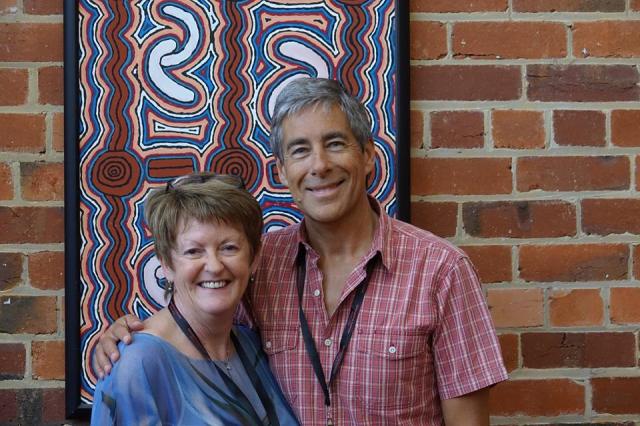
Rosemary with Baden Offord, Director of the Curtin University Centre for Human Rights Education
int-human-rioghts-day
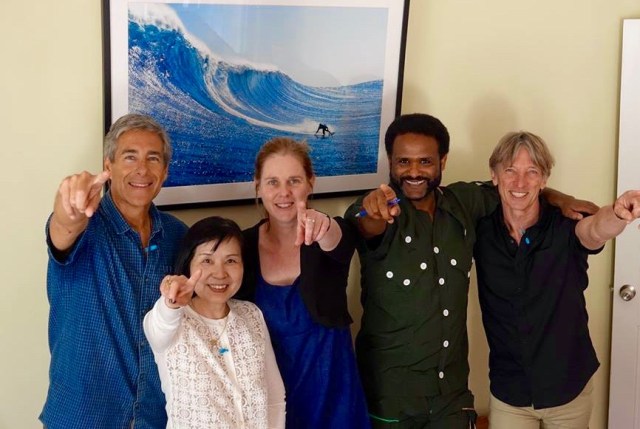
Baden Offord, Yasue Arimutsu, Mary Ann Kenny, Yira Gelaw Woldyes and John Ryan at The Centre for Stories 2016 International Human Rights Day event

Human Rights Day

The Centre for Stories in Northbridge Western Australia is holding a special event on Human Rights Day, Saturday 10 December, involving Yirga Gelaw Woldeyes, Mary Ann Kenny, Baden Offord, John Ryan and Yasue Arimitsu. You may not know their names, but all these people make a difference in our world. They will be sharing the stories and books that have influenced and impacted upon their human rights work.  Come along and listen. If you aren’t in WA – look for an event near you so you can take participate in International Human Rights Day.

Human Rights Day commemorates the day on which, in 1948, the United Nations General Assembly adopted the Universal Declaration of Human Rights. In 1950, the Assembly passed a resolution inviting all States and interested organisations to observe 10 December of each year as Human Rights Day.

The United Nations asks that on Human Rights Day we reaffirm our common humanity. In our current global environment I hope we can all take time to reflect on these issues more. Whoever we are and wherever we are, we can make a difference…. in the street, in school, at work, in public transport or at the voting booth. It’s up to all of us to understand the issues and the true stories so that we can defend the rights of a refugee or migrant, a person with disabilities, an LGBT person, a woman, a child, indigenous peoples, a minority group, or anyone else at risk of discrimination or violence.

Personally, I can’t think of a better way to mark Human Rights Day than to attend this Centre for Stories event. The speakers are all significant voices in the human rights movement and I’m sure this event will sell out very fast. If you are interested I urge you to reserve your place soon. I’ll look forward to seeing you there or hearing about your activities elsewhere in Australia and around the world.

hrd-logo

The Seven Ages of Woman

My friend at Radio National Australia, Susan Maushart, has produced a wonderful new series called The Seven Ages of Woman.   Some of you might remember ‘the seven ages of man’ speech from Shakespeare’s As You Like It which is among the most celebrated passages in English literature. Susan decided it needed a fresh approach – from a woman’s perspective!

Her series of the stories is about seven Australian girls and women, each poised at a critical moment in her life journey. From child to senior and from different cultural backgrounds and experiences they each reveal what it’s like to be female – right at this moment.

Susan and I re-connected after she read my book. She realised that to have a truly representative group of Australian women in her series, there needed to be at least one woman from a refugee background included. She asked me who I knew and I took her to meet the team at the Edmund Rice Centre WA where I spend a lot of time as a Board member and supporter. Like me, Susan was impressed by the grass roots work being done at the Centre. It was there that Susan met Bella.

Bella is a young woman in her twenties with a refugee background who works at the Edmund Rice Centre. She inspires all women every day through her work and life. I love spending time with her.  And you will too as you listen to Bella’s story in the Seven Ages of Woman.

7-ages-of-women-series

A perverse punishment

The Refugee Council of Australia has labelled the proposed draconian laws, aimed at banning people who arrived seeking asylum in Australia by boat from ever setting foot on Australian soil, as ill-targeted, perverse punishment for people who came to us seeking safety.

In their recent newsletter, Refugee Council of Australia acting CEO Tim O’Connor said “The Minister and the Prime Minister have gone to some lengths to suggest these proposed laws are targeted at the people smuggling trade, yet it is both perverse and cruel that the people who will be ill-targeted are those that have sought our safety and protection.” You can read the full article here.

If, like me, you are horrified at this latest development, I urge you to sign the Refugee Council of Australia’s online petition.

unnamed-3

Refugees Welcome Here

Refugees not welcome in Australia? NO WAY.  

refugee-week-quote
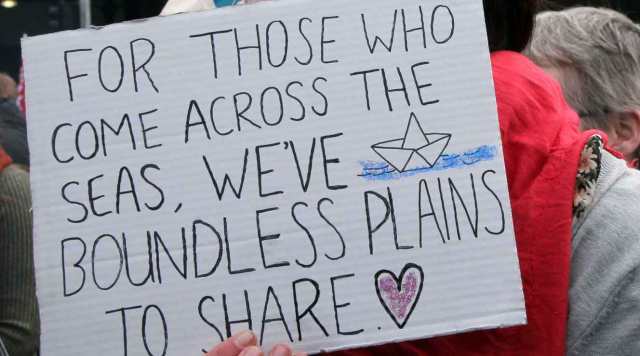
Placard at a recent Refugee Week event

The Federal Government’s announcement to ban refugees and asylum seekers on Manus Island and Nauru from ever coming to Australia applies to 1,300 people who currently live there.

Seventy-two per cent of those who have been through the camps have been assessed as being refugees, according to the latest information issued by the government. I have no words for this latest cruelty inflicted by my government. What is the point of this when its ‘turn back’ policy is supposedly working?  Fear, confusion of language and violation of international human rights continues in my country.

Malcolm Turnbull is sounding more and more like the previous PM John Howard who said in 2001: “We will decide who comes to this country and the circumstances in which they come” as he fought against the rising support for Pauline Hanson and her One Nation party.

Can we really be returning to this low point in our history?

There is so much misunderstanding about why and how people seek protection and what happens when they arrive here.   Why as a community are we prepared to accept the lack of information about what is happening in our detention centres?   Asylum seekers are not only the most vulnerable group of people in Australia, but also one of the most marginalised.

Pauline Hansen went further yesterday that “all refugees are not welcome here.”   It’s time that the millions of people who have come to Australia as refugees stood up with people like me and you to loudly say NO.   Refugees ARE welcome here and have contributed positively to our community for decades.

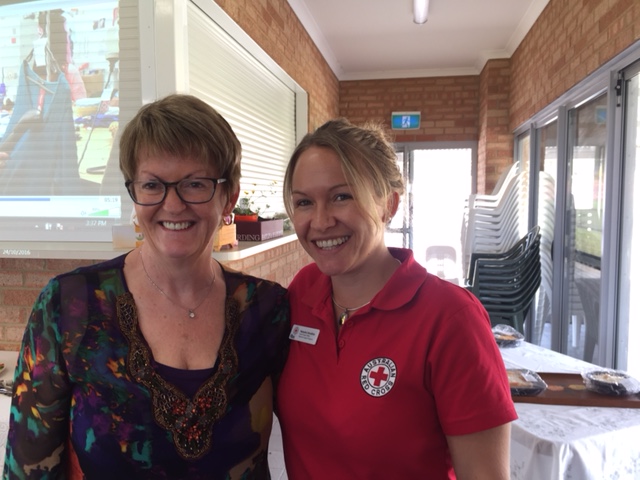
I was please to share the stage at a community event with members of the Australian Red Cross last week. It was heartening to be reminded that they have been working with people impacted by migration – including people seeking protection – for almost 100 years.

There is a lot of great information on the Australian Red Cross website and it’s an interesting experience to take their quiz on asylum seekers and refugees… It reminded me how we have been misled on the facts. I encourage you to take the quiz and see how you go.

gingin-red-cross
Meeting the lovely Natasha Venebles from the Australian Red Cross

Personal insights on Iraq from my friend Karl

It’s nearly a week since the military operation to recapture Iraq’s second city from the Islamic State began.

For more than two years, the Islamic State has held Mosul, in northern Iraq, in a stranglehold. People who have fled say the militants terrorize people, conduct public executions, recruit children as fighters, forbid communication with the outside world — all in the name of enforcing a brutal regime they call Islamic – which it is not.

The UN estimates the worst-case scenario is 1.5 million people at risk. We all hope this is not the case. A friend of mine Karl Schrembi is working with the Norwegian Refugee Council based in in Erbil, where refugee camps are hastily being constructed – a mere 80m kms from Mosul.

I first met Karl in 2010 in the tropical paradise of Ubud, Bali with Janet De Neefe at the writers and readers festival. At that time he was stationed in the Gaza strip on the front line with Oxfam. His personal insights as a humanitarian aid worker (and a poet) helps us all understand the true cost of war.

For those who know Karl – he assures me is doing OK and his agency is working hard along with other aid agencies to do what they can. We can only hope that he, and all who do this important work, will continue to stay safe.

Here are some links to Karl’s interviews on the BBC, ABC radio and NY Times.

mosul-crisis

The Forgotten Children

The human face of Australia’s tough border policies can be seen through the eyes of more than 100 refugee children living on Nauru – some for more than 2 years.

forgotten-children

Four Corners spoke to children and young people recognised as refugees, released from detention, but trapped in limbo. The recently aired program included footage filmed for Four Corners and smuggled out of the country, that showed children talking of their experiences over the last three years. It was hard to watch.

One of the more telling quotes came from a teacher who had worked with them “You could see the light drain out of their eyes. You could see them go flat.”

What are we doing? Who are we as a country?

If you didn’t see the program please follow this link.

Finally, some welcome news

Some welcome news has come out of Malcolm Turnbull’s attendance at the General Assembly of the United Nations in New York this week. Australia has announced it will increase its humanitarian intake of refugees to 18,750.

However that was the limit of any good news. It was extremely disappointing that Prime Minister Turnbull did not mention the 2,000 asylum seekers stuck for months, even years, in limbo on Manus and Nauru. Phil Glendenning, President of Refugee Council of Australia, referred to the omission as the “elephant in the room in the form of our offshore detention system”.  Most of these people have been assessed as refugees and need to be treated as such. And was I the only person horrified as our PM lectured the member nations of the United Nations about border security? Surely not.

The wonderful Tim Costello wrote a thoughtful blog recently published in the Huffington Post Australia called Looking the Other Way is no Longer an Option. It ends with these powerful words:

“Conscience doesn’t always win, and it rarely wins quickly. Most often those who stand up in the public square on matters of conscience face long and lonely battles, even if ultimately vindicated.

But it is nonetheless to be treasured and promoted because it remains one of the major engines of change for good in the world, and in our own country.

There has never been a better time for an earnest and honest national conversation about where our collective conscience is pointing.

You can read the full blog here.

refugees-rodi-saidreuters