
I thought I would take this opportunity to reflect on 2016 in relation to refugees, asylum seekers and the importance of stories to help us understand what is happening in the world. There were many low points, but also some inspiring highlights that made me marvel at the strength and humanity of others. I hope you’ll take time to read this longer post from me.
It was a challenging year in Australia and the international community. The conflict in Syria worsened but I am hopeful that the tentative peace deal brokered by the Russians may help.  The escalating violence and insecurity continued in South Sudan and Yemen. We saw an amazing welcome initially from Angela Merkel and Germany in welcoming thousands of fleeing refugees as the crisis of displaced people had a dramatic impact in Europe. Populist groups in the UK, USA, Austria, Denmark, Germany, France and the Netherlands used the world’s biggest refugee crisis to spread fear and hate, inflaming tensions about people who may be different to us. In Australia where I live, the re-emergence of the One Nation party led by Pauline Hanson, has reflected these sentiments.
Walls, both physical and metaphorical, have been built in countries around the world to stop many of the people most in need from seeking help. According to the UNHCR, 1 in every 113 people globally is now either an asylum-seeker, internally displaced or a refugee.
As a writer and former journalist, I followed with fascination and often despair the twitter postings of Bana al-Abed, a young seven-year-old girl whose postings offered the world a glimpse into the deprivation and violence in the besieged city of Aleppo. Bana and her family were recently evacuated to the Turkish capital.
I worried about writer and journalist friends in some of the world’s trouble spots. I could only be thankful that people like my friend Karl Schembri were able to post on the ground reports from tragic situations in Yemen and Syria. Ben Doherty and the team from  Guardian Australia continued to lead the way with the most in-depth updates on the refugee and asylum seeker situation as it related to Australia. In a global exclusive, the Nauru files which included over 2,000 documents showing the despair and horror of Australia’s offshore detention, were leaked to the Guardian. This was followed by graphic reports on the ABC’s 4 Corners that also screened around the world.
I know, as someone who worked in news for many years, a picture can tell a story “better than a thousand words” In 2015 it was the image of Aylan, the two-year-old Syrian refugee, lying face down on a Turkish beach that seemed to galvanise western countries into responding to the urgency of the Syrian refugee crisis. Australia increased its refugee intake by 12,000 to help Syrian and Iraqi refugees. After a very slow start (why did it take nearly a year?) 2016 finally saw some of these refugees arrive in Australia.
In 2016 it was the image of young Oman in the back of the ambulance, which I am sure will show up in all your news feeds, as one of the photos of the year. 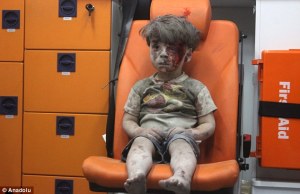 This photograph and video seemed particularly poignant and tragic to me. Oman was wearing shorts and a t-shirt featuring a cartoon character. His hands were in his lap. In a moment of pure horror, he lifted his left hand to his face, ran his fingers through his hair and then back down the side of his face before putting his hands back in his lap. He looked at the palm of his hand covered in blood and, unsure what to do, turns it over and wipes it on the seat. In that moment, he could have been our son, our grandson, our brother or our nephew, trying to get something off his hand. He looked straight at the camera, from a bright orange seat in the back of an ambulance where medics were rescuing people amidst the violence and chaos, towards the voices. He blinked and looked away… but I couldn’t look away from Oman.
 On a brighter note there was the uplifting news of a refugee team being selected for the Rio Olympics. I was drawn to 17 year old Yusra Mardini who saw terror in the eyes of her fellow passengers as the inflatable dinghy she was in trying to cross the Mediterranean began taking on water. Most of the people in the boat could not swim, but 17-year-old Yusra could, and she dragged them to safety.
The year ended with good news in Australia with a landmark decision in the Federal Court of Australia that ruled against the Minister of Immigration on the question of citizenship for people of refugee background. The case, brought by the Refugee Council of Australia with pro bono legal support, provides hope for 10,231 people that the department confirmed were in similar situations. This group of people from a refugee background have had their citizenship applications ‘put in the bottom drawer’, as the Department has dragged its feet in offering this large group of new Australians citizenship.
Personally, it was an amazing year with my book More to the story –conversations with refugees published by Margaret River Press selling very well. There are a small number of copies left that can be purchased online. I participated in writers festivals- the highlights being Big Sky in Geraldton and the Perth Writers Festival. I was a guest at community events, such as the Katanning Harmony Festival, where I gave the address on Australia Day. I gave library talks and attended book clubs throughout the year to help raise awareness about refugees and asylum seekers. Throughout the year I met hundreds of people, many of whom told me they were inspired to volunteer for organisations working with people from a refugee background including CARAD, Refugee Rights Action Network and Joining the Dots’ Welcome Dinner Project. More of you have signed up to receive information or made donations to organisations like the Refugee Council of Australia, Australian Red Cross, Amnesty International and Edmund Rice Centre WA where I am proud to serve on the board. I truly believe that hundreds of people who have read the personal stories featured in the book have taken time to reflect on what is happening around the world and in their own lives.
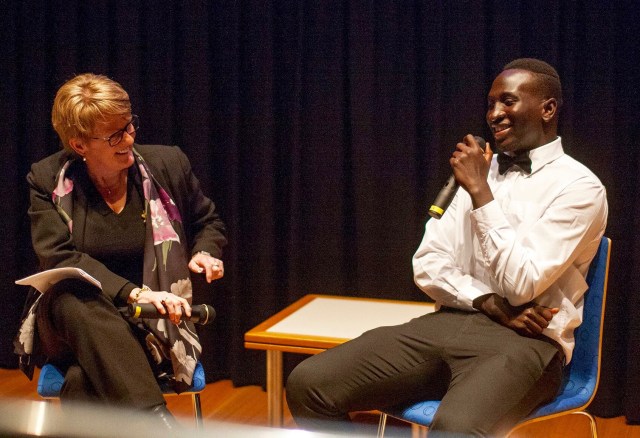
 One of the year’s highlights for me was my involvement with Shout Out, a public speaking program for young people from a refugee and migrant background run by the Multicultural Youth Advocacy Network. I feel very privileged to have been a part of helping some fabulous young people to develop their personal stories and public speaking skills.
Perhaps the most satisfying experiences in 2016 came in schools where I spoke. I started the year on a high with the Margaret River Senior High School Social Justice group – why don’t more schools have a group like this? I visited schools in the Geraldton region and elsewhere around Western Australia, and ended my engagements at Churchlands Senior High School with a day full of talks to different classes. We know that many schools around Australia now have More to the Story in their school libraries or are studying it as part of the curriculum.
I continued to be inspired by my close friends – Paul and Naw Bi from Burma; John, Farid and Fauzia from Afghanistan; Piok and Akech from South Sudan. We made more new friends as our lives became more involved with people from a refugee background – some of whom I hope will feature in my next book. We celebrated Karen New Year, Eid and other festivals with people of different cultural backgrounds. We heard sad stories, tragic stories and inspirational and happy stories
And finally I made good progress on my doctoral studies about life writing and human rights in relation to refugees. I am approaching the half way mark of a four year course and I hope my research and writing might make a small difference. As 2016 drew to a close I like to believe that hope can shine a bright light in darkness. There are some thoughts on this from World Vision that you might like to read.
I hope you’ll keep following this website in 2017. You can sign up to follow it and receive information as I post – just click the button on the right. Sometimes it is helpful to have useful information about an issue in one place and don’t forget you can contact me via the website or join in the conversation via the More to the Story facebook page.
I wish everyone peace in the coming year.



 More to the Story