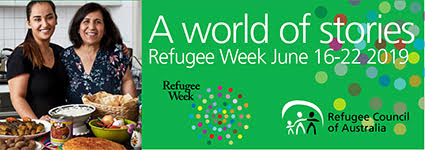
A world of stories


Refugee Week, 16 -22 June, provides a wonderful opportunity for people around the world to celebrate the contribution refugees make to our society.  It’s also a time to raise awareness, remembering and honouring the often-perilous journey that refugees have taken to reach Australia and other countries.

Logo

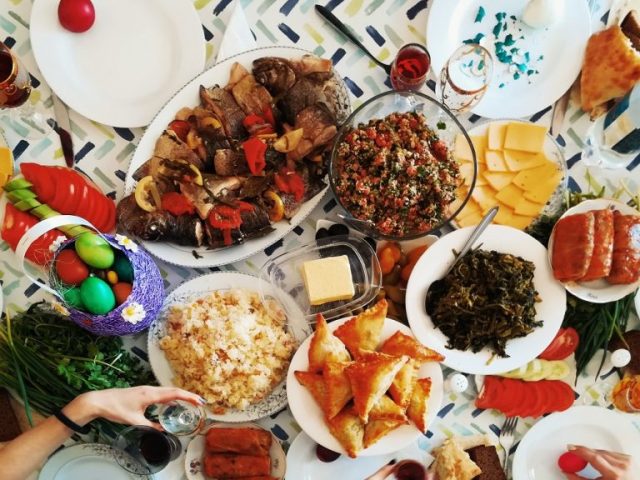
For many people, Refugee Week provides an opportunity to meet a refugee for the first time. This year’s theme for Refugee Week is A World of Stories which makes food the focus and asks you to “Share a meal, share a story…”  With that in mind, the Refugee Council is encouraging businesses, community groups, schools, and individuals to hold a food event (breakfast, morning tea, dinner) where they can hear stories from this year’s Refugee Ambassadors, while sharing some of their favourite meals. This can be done by either inviting a refugee to your event, watching a video or listening to stories in other ways.

There’s a lot of information on the website and similar organisations around the world also provide advice.  If you are planning an event in Western Australia, I can highly recommend the speakers bureau at the Youth Affairs Council of WA.  For a modest fee, a young person is available to talk, share their story and answer questions.

There are many public events around the world for Refugee Week.   If you do nothing else, take time on World Refugee Day on 20 June to look out for some stories such as this one about a woman whose parents came to Australia after the second world war.

Or you could buy a book.  Behrouz Boochani’s book about his imprisonment on Manus Island No friend but the mountains  is excellent, or They cannot take the sky, a collection of direct testimonies as stories, is also a thoughtful read. I have a suggested reading list on my website you may like to investigate.

I will be thinking about my new friends – those refugees who entrusted me with their stories, and the positive lives they have built for themselves here in Australia.

gor-davtyan-share-a-meal-02-768x576

Refugees create jobs

Recent Australian Bureau of Statistics data revealed that people who arrived in Australia as refugees are the most entrepreneurial migrant group. ‘This builds on earlier research showing people of a refugee background tended to work several jobs in their first few years in Australia to build capital to start their own businesses,’ the ABS said.

Today, Australia is more multicultural than ever before. We live this reality in the food we eat, the music we listen to and, most importantly, with the people we choose to spend time with.

Refugees are not taking Australian jobs, they are creating new ones. There are so many good stories around about big and small enterprises but I wanted to highlight one.

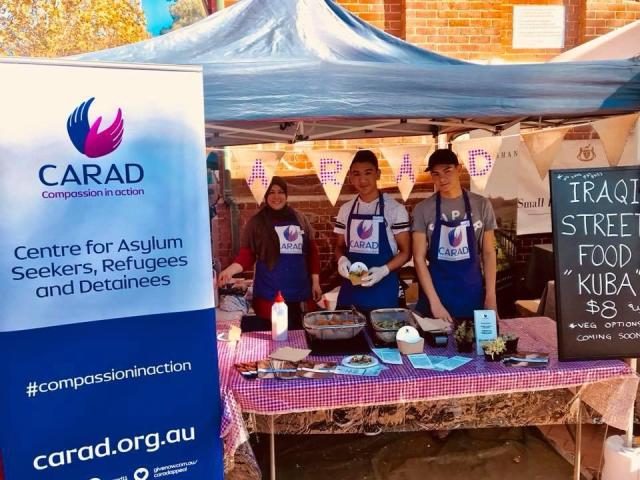
The Fare Go food truck is a social enterprise food truck operated by people from refugee and asylum seeker backgrounds. Started by CARAD – the Centre for Asylum Seekers, refugees and detainees in Western Australia, the Fare Go food truck gives us the opportunity to eat, share and connect over food from different cultures while empowering refugees and asylum seekers through employment.

I was pleased to see that the Fare Go enterprise has been chosen to participate in the Pitch for Good event in October.  Impact Seed, StartSomeGood and City of Perth host the event which is essentially a triple-decker live crowdfunding campaign!

It is such a great event – and the finalists are all doing amazing work. Each have the chance to ‘pitch’ their idea to up to 250 people, all of whom are interested in social enterprises and keen to make a difference. There is a cost to attend and all money goes to the enterprises participating. You can find out more about the event and book to attend here.

Fare Go food truck

The ever burning candle

The power of telling people’s stories never ceases to amaze and inspire me.

In association with the Centre for Stories, three established playwrights have been working with three local story tellers to bring a portion of their stories to the stage at The Blue Room Theatre. My good friend Fauzia Sufizada is one of those story tellers.

I’m thrilled that Fauzia’s story, which was adapted by Chris Isaacs, an award winning writer who has worked around the world, was primarily inspired by my book More to the Story: conversations with refugees. English is Fauzia’s fifth language and she was brilliant in a solo performance. She asks her audience to imagine her life as someone from a refugee background.

Fauzia Sufizada is lost on a bus to White Gum Valley.  She is in a room in Peshawar watching a Norwegian freighting ship on TV.  She is reading her father’s poetry in Kabul.  She is stepping off an airplane in Perth. She is in a chair in the theatre – and she’s talking to you.

The other two stories that were brought to the stage were equally as engaging.  Due to popular demand an extra show has been scheduled for Saturday 4 August. Click here to make a booking.

Fauzia's play
Fauzia Sufizada (third from left) with a few fans after the show

Take action

You may have heard recently about how the Australian government is making cuts to the Status Resolution Support Service (SRSS). This program provides asylum seekers in the community, who are awaiting the outcome of their protection visa application, with a basic income (89% of a Centrelink Newstart Allowance) and casework support. New tightened eligibility criteria will mean that around 500 people in Perth may no longer have access to this program.

CARAD logoCARAD is a fabulous organisation in Western Australia that has assisted thousands of refugees and asylum seekers with a range of services. Their latest newsletter reports they are witnessing many people facing destitution and homelessness as a result of no longer having a safety net of financial and casework support available to them.

They are calling on people to take action by finding out the facts and getting involved via the following methods.

ADVOCATE – Engaging with your local Member of Parliament is an effective way of demonstrating that you care about justice, non-discrimination and upholding human rights for all. Advice on how to go about writing to your MP is on the CARAD website.

DONATING FOOD – With more and more people relying on their food bank to provide food for their families CARAD is seeking donations. Their website outlines the food and non-food items that are most often needed.

VOLUNTEER – CARAD has many volunteer roles on offer including homework support, English tuition, assisting with the food bank program, and helping out at the CARAD office. They also have a new Food Truck project just getting off the ground and are looking for people who have skills in vehicle mechanics/maintenance, hospitality/food industry, small business management, marketing or event management. Their volunteer information sessions are held every month – here are the ones coming up:

  • Thursday 26 July, 12pm
  • Tuesday 14 August, 5.40pm
  • Wednesday 15 August, 12pm

More information on volunteering is on the CARAD website. If you would like to get involved in the Food Truck project please contact: foodtruck@carad.org.au.

MEMBERSHIP – By renewing your membership or becoming a CARAD member you will give weight to their vital advocacy work, stay up-to-date on news and events and can actively participate in the organisation. More information on membership and on how to make a donation is on their website.

If you are located elsewhere in Australia there are a range of other organisations you can support that assist asylum seekers and refugees.

take action

Everyone belongs

Yesterday’s Harmony Day, promoting inclusiveness and belonging, brought to an end a week of celebrations around Australia. I was lucky enough to attend several wonderful events celebrating Harmony Day and was inspired to hear of some great initiatives happening in Western Australia.

One of the highlights of the week for me, was seeing a video clip called Same Drum. Recently released by students of Aranmore Catholic College in Perth this three-minute video was created during a series of workshops with students from the Intensive English Centre. It’s sung in three African languages – Swahili, Dinka and Kinyarwanda – as well as English. The project was devised by artist and filmmaker Poppy van Oorde-Grainger. It’s gone viral! I really recommend you take a look.

I attended a major event at Curtin University for the launch of the 2017 Catalyst Report. The Catalyst Youth Summit was held over three days and once again, provided nearly sixty young, multicultural Western Australians the opportunity to build relationships, speak with politicians and work together to develop solutions to issues that face their peers. The report is up on my Research and Reports page.

And lastly, as usual the town of Katanning in the Great Southern region of WA put on a fantastic celebration for Harmony Day. I have a personal connection with Katanning as I wrote a chapter about its extraordinary success with multiculturalism in More to the Story. While I couldn’t get there this year, I have heard the Shire, local businesses and community groups put on a great event full of local food, music, performances, art and activities. With 6,000 people attending over the weekend Katanning knows how to celebrate! Check out the photos on their Facebook page.


Celebrating Harmony Week

Harmony-Week-Web-Banner

Harmony Week in Western Australia starts today 15 March and runs through to Australia’s Harmony Day on 21 March. Harmony Week is an opportunity for all Western Australians to celebrate our vibrant multicultural State. The fabulous artwork used for this year’s Harmony Week banner is by local artist Alina Tang. Her parents were Vietnamese refugees who came to Australia in the 1980s.

Harmony Day in Australia takes place on the United Nations’ International Day for the Elimination of Racial Discrimination, which started in recognition of the 1960 Sharpeville Massacre when police fired on a peaceful demonstration against apartheid in South Africa, killing 69 unarmed protestors.

Harmony Week has become an opportunity for all of us to celebrate our diversity while working to remove barriers that still exist in the community. The message of Harmony Day is everyone belongs. The day aims to engage people to participate in their community, respect cultural and religious diversity and foster sense of belonging for everyone.

Since 1999, more than 70,000 Harmony Day events have been held in childcare centres, schools, community groups, churches, businesses, and federal, state and local government agencies across Australia.

The 2016 census showed Western Australia is one of Australia’s most culturally diverse States. You can see other States results on the website.  I found it particularly interesting to be reminded that one-third (32.2 per cent) of Western Australians are born overseas — that’s the highest percentage of the population for any Australian State or Territory.   Among those born overseas, people from non-main English speaking countries (410,291) outnumbered those from main English speaking countries (387,423) for the first time since the Census began in Western Australia.   What’s it like where you live?

Everyone can join in Harmony Week: community organisations, businesses, State Government agencies, local governments, schools, colleges and universities. More information is available from the Harmony Day and the Office of Multicultural Interests websites.

These websites have suggested activities or events: simple things like organising a morning tea, inviting speakers to your groups or cooking up a variety of different food from different countries at home or with friends.

A Taste of Harmony has some super recipe suggestions from Syria, Turkey, China and Vietnam and so many other places. I’m rather fond of the Iranian Marinated chicken with charred limes on the BBQ myself, but I am yet to tackle Baklava, which I love.

What will you do to celebrate?


Ways of Being Here

Diverse voices matter in Australia more than ever. Ways of being here is pocket book-sized collection of four short stories that showcases the work of four tWays of Being Here coveralented African writers living in Australia – Raefeif Ismail, Yirga Gelaw Woldeyes, Tinashe Jakwa and Yout A Alaak.

Maxine Beneba Clarke writes in her introduction: “Black people of African descent – black diaspora settlers and migrants and descendants of such – have been living in Australia for over 200 years. Yet local African diaspora fiction has been markedly absent from Australian shelves”.

Ways of being here is a terrific read. You can read it slowly, dipping into it over time, or in a few hours on an afternoon or evening you might have free. Either way, I guarantee you will want to read it several times. These beautifully written stories will capture your imagination and your attention. The four write of love, loss, the challenge of living between cultures, intergenerational clashes, of being made welcome and of being isolated.

Rafeif Ismail’s moving story, ‘Light at the end’, about two young women has language that sings off the page with emotion.   He writes: “When did you become this desperate, desolate thing? When did the world’s colours dull and laughter have a price? Fear is the chain you wear, shackling you between walls of loneliness, shame, regret and, most terribly, hope.

Yirga Gelaw Woldeyes story, ‘When the sky looks like the belly of a donkey’, tackles the cultural challenges of starting a new life in Australia – a place so different from your home country. Yirga also captures what could be a group of typical Aussie blokes with insightful writing. The story about Ermi, usually mis-pronounced by many of his workmates as Army, is one I have heard from many migrants and people of refugee background. It is about starting at the bottom of the ladder, trying to fit in and always missing the people left behind. I laughed and I cringed but by the end of the story I smiled with hope.

All four short stories provide a valuable opportunity to reflect about the lives of others.

Ways of being here is published by Margaret River Press and the Centre for Stories, 2017

Stocking the pantry

CARAD is a fabulous organisation in Western Australia that has assisted thousands of refugees and asylum seekers with services such as settlement support, advocacy, referral, financial aid, English lessons, homework support and emergency supplies, including food and other pantry items.

As winter approaches and the number of CARAD’s non-income asylum seeker clients has food donationsincreased, the pantry is running low and they need your help. They’re looking for donations of the following:

cooking oil, sugar, salt, pepper, plain flour, cereal, instant coffee, tea, long-life milk, basmati rice, tinned tuna, tinned tomatoes, tinned fruit, honey, dried chickpeas or lentils, nuts and dried fruit, shavers, shaving cream, body wash or soap, toothbrushes, shampoo, male and female deodorant, laundry detergent, dish washing liquid, and tissues.

You can drop off your donations to their office at 245 Stirling St, Perth, Monday to Friday between 9am – 4pm.

Please spread the word.

For those of you who are keen to get involved and support some of our most vulnerable asylum seekers and refugees, volunteering with organisations such as CARAD is a great option. They have volunteering information sessions coming up, held at the CARAD office on:

  • Monday 22 May from 12-1 pm
  • Wednesday 24 May from 5.30-6.30 pm

Sessions will cover what CARAD does, the specific volunteer roles available, and the process for becoming involved. After attending an information session, volunteers will then be invited to participate in a ‘Building Bridges’ Training Course. To register your attendance please email sellie@carad.org.au.

Our Common Goal

It’s not every evening that you get to tour a mosque, cheer on an enthusiastic game of soccer and attend a board meeting!

That was how my involvement with the Edmund Rice Centre unfolded on Monday night starting with the launch of our second Common Goal program.

Common Goal involves a partnership between the Edmund Rice Centre WA, Football West, WA Police and the Canning Mosque. It aims to give young people opportunities for leadership training and education through a soccer academy.

After the launch event, the Canning Mosque team (aged from 14 -18) took to the field against a WA Police team in an evenly matched game. Over 100 people watched and cheered on the game and I have to say some of the skills on display would have rivalled the A-League! Canning Mosque was victorious with a 1-0 win.

Common Goal also aims to foster positive relationships between people from diverse communities and assist in strengthening police engagement by providing fun and structured sporting activities where anyone is welcome.

As a board member of the Edmund Rice Centre WA, I was delighted to hear the thoughts of the Turkish Muslim Society, Canning Mosque representatives and senior members of the WA Police about how the program was making a difference in the local community.   I was also honored to tour the Mosque with the Iman before the game and understand more about this often misunderstood religion.

The highlight for me though was watching young people from very diverse cultural backgrounds mingling, playing and laughing together. It gives me hope for our future.

2016 in review

I thought I would take this opportunity to reflect on 2016 in relation to refugees, asylum seekers and the importance of stories to help us understand what is happening in the world.  There were many low points, but also some inspiring highlights that made me marvel at the strength and humanity of others. I hope you’ll take time to read this longer post from me.

It was a challenging year in Australia and the international community. The conflict in Syria worsened but I am hopeful that the tentative peace deal brokered by the Russians may help.   syrian-refugeesThe escalating violence and insecurity continued in South Sudan and Yemen.   We saw an amazing welcome initially from Angela Merkel and Germany in welcoming thousands of fleeing refugees as the crisis of displaced people had a dramatic impact in Europe. Populist groups in the UK, USA, Austria, Denmark, Germany, France and the Netherlands used the world’s biggest refugee crisis to spread fear and hate, inflaming tensions about people who may be different to us. In Australia where I live, the re-emergence of the One Nation party led by Pauline Hanson, has reflected these sentiments.

Walls, both physical and metaphorical, have been built in countries around the world to stop many of the people most in need from seeking help. According to the UNHCR, 1 in every 113 people globally is now either an asylum-seeker, internally displaced or a refugee.

As a writer and former journalist, I followed with fascination and often despair the twitter postings of Bana al-Abed, a young seven-year-old girl whose postings offered the world a glimpse into the deprivation and violence in the besieged city of Aleppo. Bana and her family were recently evacuated to the Turkish capital.

I worried about writer and journalist friends in some of the world’s trouble spots. I could only be thankful that people like my friend Karl Schembri were able to post on the ground reports from tragic situations in Yemen and Syria. Ben Doherty and the team from nauru-filesGuardian Australia continued to lead the way with the most in-depth updates on the refugee and asylum seeker situation as it related to Australia. In a global exclusive, the Nauru files which included over 2,000 documents showing the despair and horror of Australia’s offshore detention, were leaked to the Guardian. This was followed by graphic reports on the ABC’s 4 Corners that also screened around the world.

I know, as someone who worked in news for many years, a picture can tell a story “better than a thousand words” In 2015 it was the image of Aylan, the two-year-old Syrian refugee, lying face down on a Turkish beach that seemed to galvanise western countries into responding to the urgency of the Syrian refugee crisis. Australia increased its refugee intake by 12,000 to help Syrian and Iraqi refugees.  After a very slow start (why did it take nearly a year?) 2016 finally saw some of these refugees arrive in Australia.

In 2016 it was the image of young Oman in the back of the ambulance, which I am sure will show up in all your news feeds, as one of the photos of the year. oman-in-ambulanceThis photograph and video seemed particularly poignant and tragic to me. Oman was wearing shorts and a t-shirt featuring a cartoon character. His hands were in his lap. In a moment of pure horror, he lifted his left hand to his face, ran his fingers through his hair and then back down the side of his face before putting his hands back in his lap. He looked at the palm of his hand covered in blood and, unsure what to do, turns it over and wipes it on the seat. In that moment, he could have been our son, our grandson, our brother or our nephew, trying to get something off his hand. He looked straight at the camera, from a bright orange seat in the back of an ambulance where medics were rescuing people amidst the violence and chaos, towards the voices. He blinked and looked away… but I couldn’t look away from Oman.
yusra-mardiniOn a brighter note there was the uplifting news of a refugee team being selected for the Rio Olympics. I was drawn to 17 year old Yusra Mardini who saw terror in the eyes of her fellow passengers as the inflatable dinghy she was in trying to cross the Mediterranean began taking on water. Most of the people in the boat could not swim, but 17-year-old Yusra could, and she dragged them to safety.

The year ended with good news in Australia with a landmark decision in the Federal Court of Australia that ruled against the Minister of Immigration on the question of citizenship for people of refugee background. The case, brought by the Refugee Council of Australia with pro bono legal support, provides hope for 10,231 people that the department confirmed were in similar situations. This group of people from a refugee background have had their citizenship applications ‘put in the bottom drawer’, as the Department has dragged its feet in offering this large group of new Australians citizenship.

Personally, it was an amazing year with my book More to the story –conversations with refugees published by Margaret River Press selling very well. There are a small number of copies left that can be purchased online. I participated in writers festivals- the highlights being Big Sky in Geraldton and the Perth Writers Festival. I was a guest at community events, such as the Katanning Harmony Festival, where I gave the address on Australia Day. I gave library talks and attended book clubs throughout the year to help raise awareness about refugees and asylum seekers. Throughout the year I met hundreds of people, many of whom told me they were inspired to volunteer for organisations working with people from a refugee background including CARAD, Refugee Rights Action Network and Joining the Dots’ Welcome Dinner Project. More of you have signed up to receive information or made donations to organisations like the Refugee Council of Australia,  Australian Red Cross, Amnesty International and Edmund Rice Centre WA where I am proud to serve on the board. I truly believe that hundreds of people who have read the personal stories featured in the book have taken time to reflect on what is happening around the world and in their own lives.

MYAN group 2016One of the year’s highlights for me was my involvement with Shout Out, a public speaking program for young people from a refugee and migrant background run by the Multicultural Youth Advocacy Network. I feel very privileged to have been a part of helping some fabulous young people to develop their personal stories and public speaking skills.

Perhaps the most satisfying experiences in 2016 came in schools where I spoke. I started the year on a high with the Margaret River Senior High School Social Justice group – why don’t more schools have a group like this?  I visited schools in the Geraldton region and elsewhere around Western Australia, and ended my engagements at Churchlands Senior High School with a day full of talks to different classes. We know that many schools around Australia now have More to the Story in their school libraries or are studying it as part of the curriculum.

I continued to be inspired by my close friends – Paul and Naw Bi from Burma; John, Farid and Fauzia from Afghanistan; Piok and Akech from South Sudan. We made more new friends as our lives became more involved with people from a refugee background – some of whom I hope will feature in my next book. We celebrated Karen New Year, Eid and other festivals with people of different cultural backgrounds. We heard sad stories, tragic stories and inspirational and happy stories

And finally I made good progress on my doctoral studies about life writing and human rights in relation to refugees. I am approaching the half way mark of a four year course and I hope my research and writing might make a small difference. As 2016 drew to a close I like to believe that hope can shine a bright light in darkness.  There are some thoughts on this from World Vision that you might like to read.

I hope you’ll keep following this website in 2017. You can sign up to follow it and receive information as I post – just click the button on the right.  Sometimes it is helpful to have useful information about an issue in one place and don’t forget you can contact me via the website or join in the conversation via the More to the Story facebook page.

I wish everyone peace in the coming year.