The Mustard Pot

I was very pleased to recently have been asked to contribute to a WA anthology of short memoirs. The first collection of its kind in Australia, Ourselves: 100 Micro Memoirs aims to invite the reader into the histories we often edit—or don’t tell—about ourselves.

Published by Night Parrot Press with funding from the WA Department of Local Government, Sport and Cultural Industries this book includes 100 micro memoirs, each 750 words or less, all from WA writers.

Author and journalist Kate Emery shone a lovely and generous spotlight on the book recently in The Sunday Times, calling the collection a ‘a high note’ for WA culture and writing, and good news worth celebrating.

My micro memoir is called ‘The Mustard Pot’ and is about a funny lop-sided mustard pot that my Mum bought me from the Provencal markets and that we used for years and years at our home in France. Here is a brief excerpt:

One day I dropped it and it shattered into hundreds of pieces. Even though it was only a piece of pottery it brought back so many memories of my mum who passed away from cancer ten years ago. The shattered pieces seem to reflect my loss more deeply. I kept telling myself it didn’t matter, it was only an old mustard pot, just a thing that I could easily replace, but this tangible little pot was much more than that…

To purchase the book go to Night Parrot Press, or check out your favourite independent bookshop.

My Top Five Books of 2023

Last year provided some excellent new books, so if you’re looking for something to read I thought I’d share a list of my top five books for 2023.  

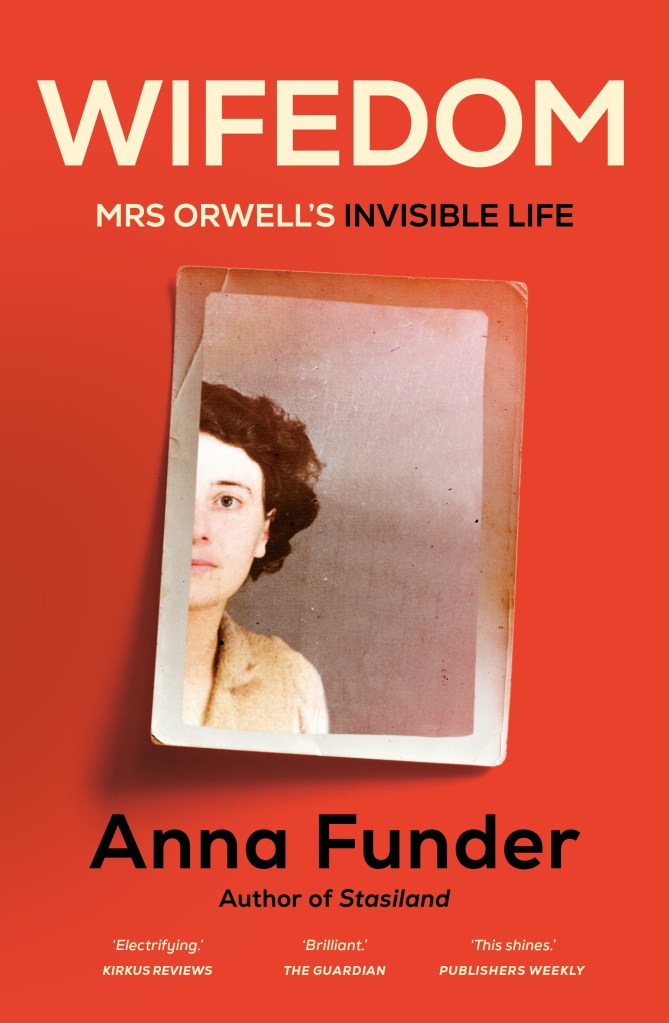
It was a tough choice, but my number one book of the year is Wifedom by Anna Funder. Meticulously researched combining history and memoir, Wifedom uncovers the hidden life of George Orwell’s wife Eileen. It shows how she was written out of history and the vital role she played in supporting and aiding Orwell in his writing life. A terrific read.

Second choice takes us to another country, Malaysia, sometimes home of sublime writer Tan Twan EngTwan writes with a moody and descriptive style of colonial Malaysia in his book The House of  Doors. His exploration of lives is rich and satisfying. I had the good fortune to meet and interview Twan in both Hong Kong and Ubud. His humility and dry sense of humour makes him popular at literary festivals around the world. You’ll want to read everything he has written.

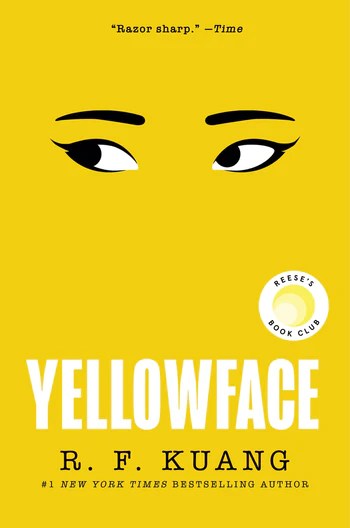
My third choice is Yellowface by R.F Kuang. June Hayward, an unsuccessful young author, finds herself the only witness to the death of her former classmate, Athena Liu, a Chinese American author who is an industry darling. She decides to position herself as a friend of the author and begins to edit and re-write Athena’s manuscript. In the end she makes it her own and I could not get past the fact that she stole the manuscript. It asks all sorts of questions about the publishing industry and was a fascinating read.

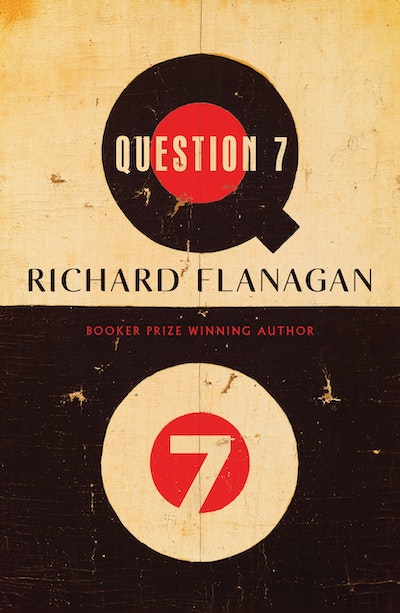
I finished Richard Flanagan’s book Question 7 over Christmas. It’s a captivating read written in a unique style. It is a meditation on the past of one man and the history that coalesced in his existence. It jumps around quite a bit as Flanagan explores different ideas from HG Wells to the atomic bomb, to his father’s life as a POW, to the killing and suffering of Tasmanian Aborigines but somehow it all works. A book that makes you think.

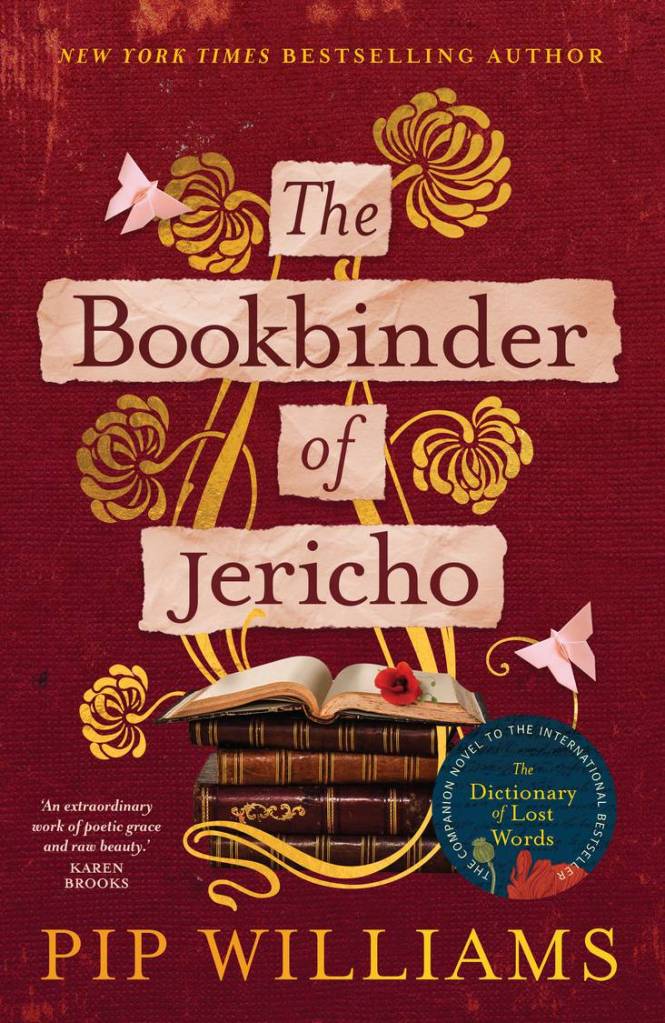
My final choice is The Bookbinder of Jericho by Pip Williams. It is almost a companion novel to her highly successful book The Dictionary of Lost Words, as again she has told a story told through women’s eyes. A working-class, self-educated woman, Peggy works as a book binder at Oxford University Press, while what she wants is to read the books and study at Oxford. Williams writes in a descriptive easy to read style. It’s a good one to curl up with on rainy day.

Happy reading!

My Favourite Women Writers

In celebration of this year’s International Women’s Day, I thought I would reflect on some of my favourite women writers and their works.  I am sure you have read a few of them.

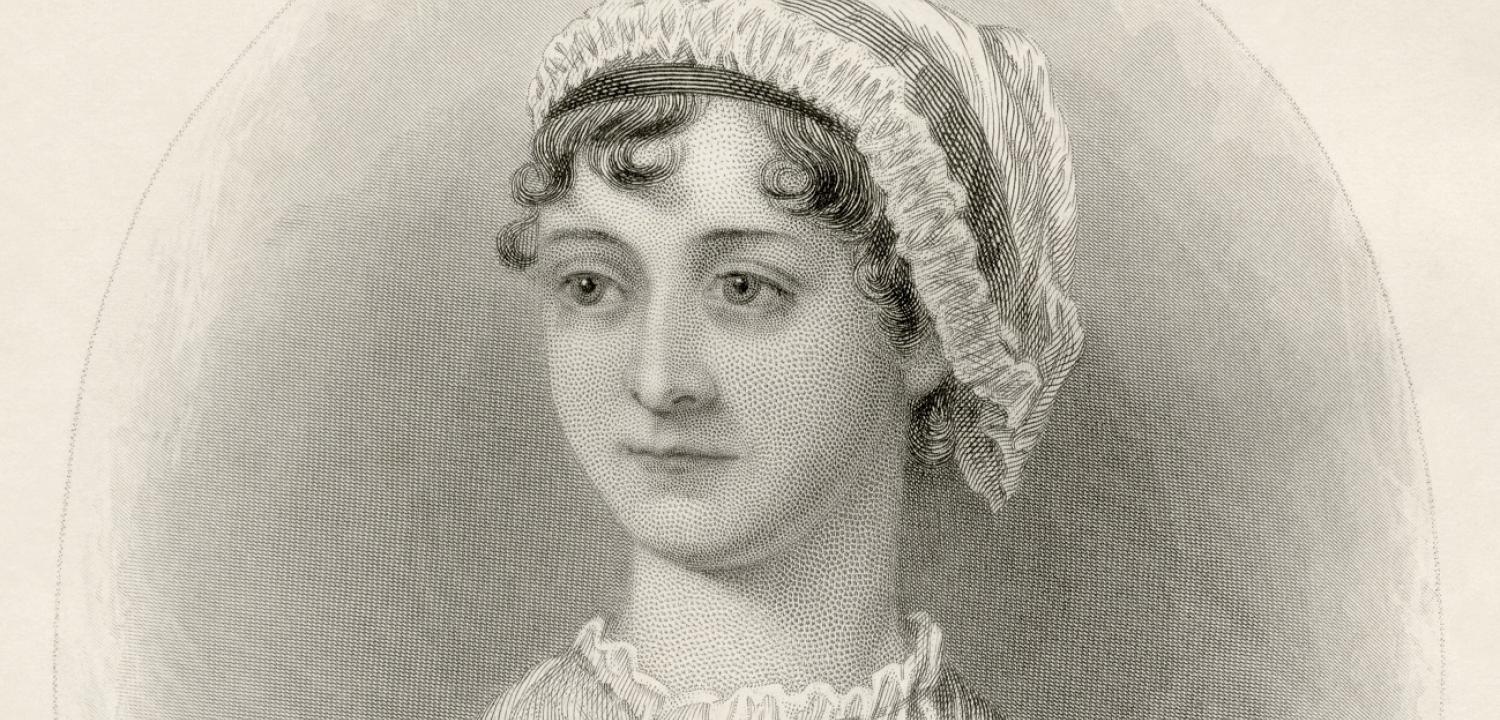
Jane Austen Such a classic writer!  Her novels interpret, critique and comment on British society. Austen gained status after her death and her six full-length novels have rarely been out of print. I re-read her work regularly and Pride and Prejudice is a favourite.

Virginia Woolf  Another English writer, Woolf is considered one of the most important modernist authors of the 20th Century.  She was a pioneer in the use of stream of consciousness.  My personal favourite is To the lighthouse along with her essay A room of one’s own.

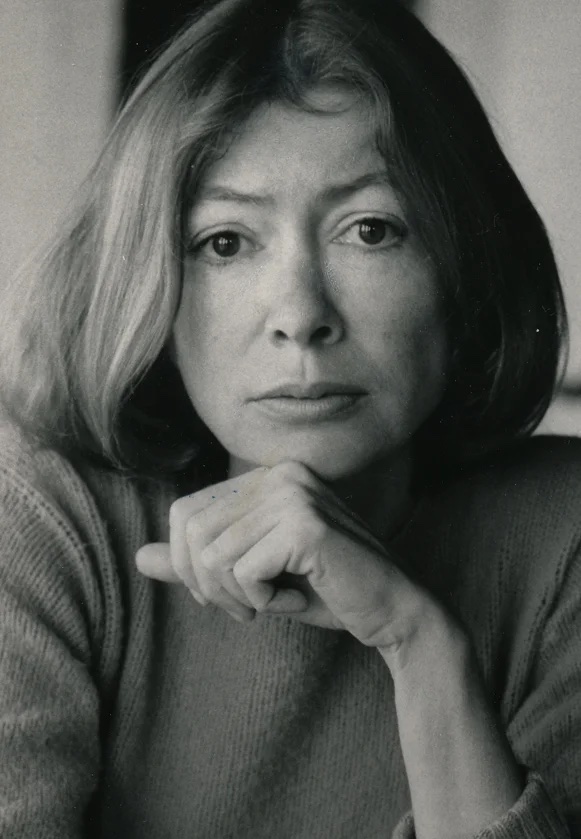
Joan Didion I wanted to be Joan Didion when I was a student.  She completely changed the way literary non-fiction was written and viewed. She has a spare, no nonsense style with acute observational skills.  Her memoir about the death of her husband, The year of magical thinking is one of the most moving books I have read.

J K Rowling I love Rowling because she made reading ‘cool’ for thousands of young non-readers with her series of six books about young wizard Harry Potter. She has sold more than 500 million books and is the best-selling children’s author in history.

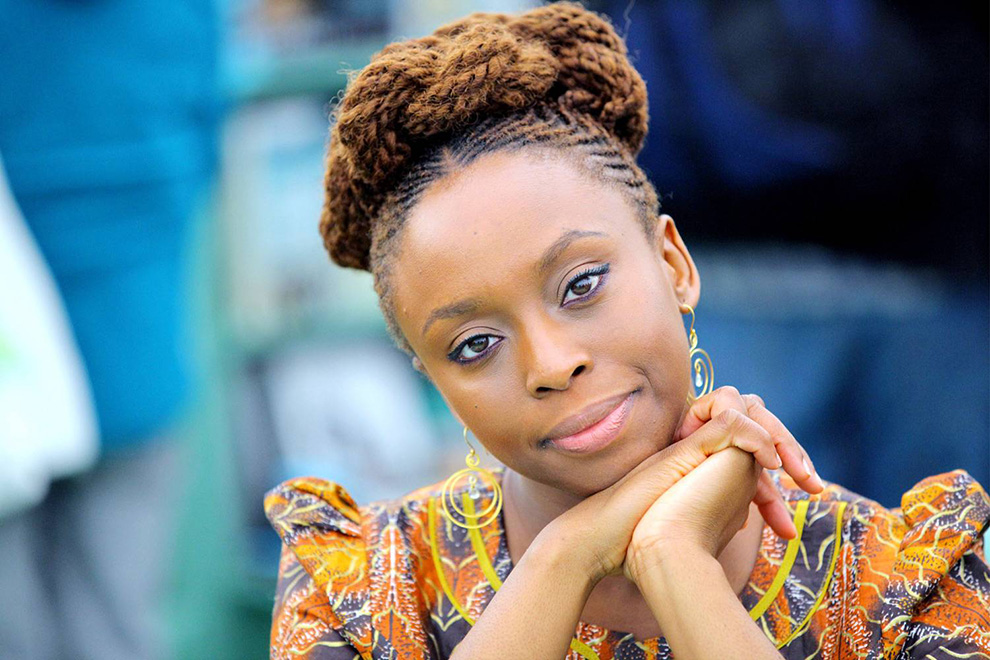
Chimamanda Ngozi Adiche My favourite of this Nigerian author’s books is Half a yellow sun where five characters tell of their war experiences in Nigeria.  She gave a TEDx talk in 2012 entitled We should all be feminists’ which has been viewed more than five million times and is worth a look.

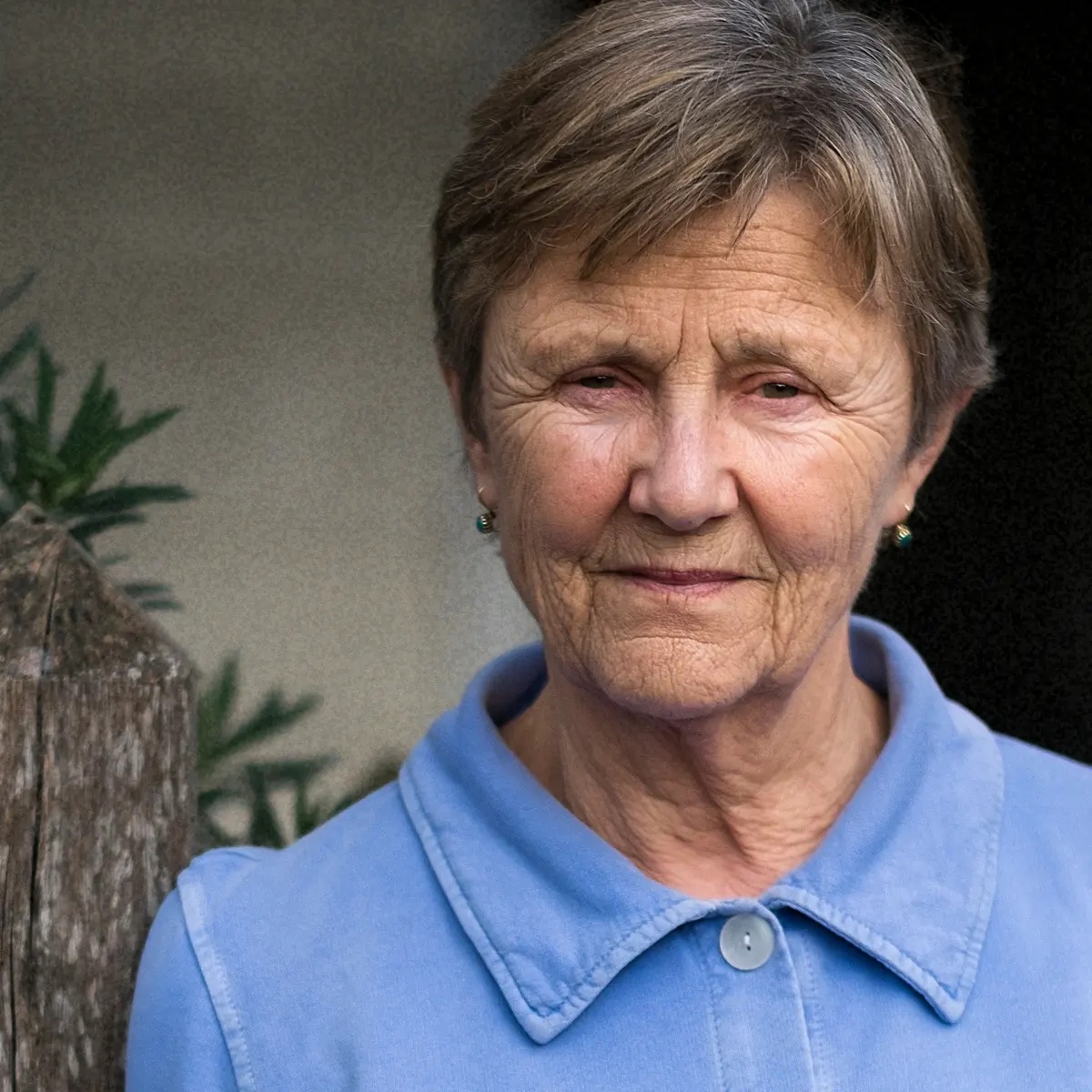
Helen Garner One of Australia’s best writers, her first novel Monkey grip established her as an original voice on the Australian literary scene. I particularly enjoyed Joe Cinque’s consolation and her recent diaries have been a delight.

Shirley Hazzard I’m always surprised when I meet people who haven’t read Hazzard. She was an Australian American novelist, short story writer and essayist. My favourite book is The great fire, although the Guardian calls her book The transit of Venus her breakthrough novel.

Gail Jones One of Australia’s most celebrated writers, she has received numerous literary awards.  Like many Australian writers her work has been translated into several languages.  Dreams of speaking and Five bells are fantastic.

Father of the Lost Boys

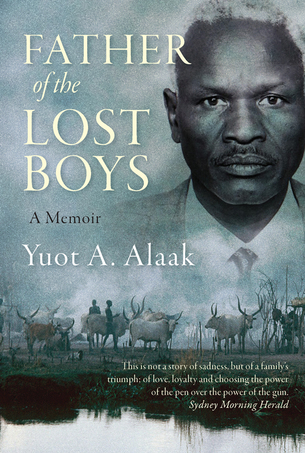
Father of the lost boys is Yuot A. Alaak’s memoir of walking through the deserts and the jungles across three continents in Africa to seek safety after his home was destroyed in the second Civil War between North and South Sudan. 

I interviewed Yuot during the 2021 Festival of Literature and Ideas in Perth and had the pleasure of spending time with him while he shared his story.

It is a remarkable testament to his grit and fortitude, but it is also an ode to his father, who as an educator and important community leader in South Sudan, was responsible for leading 20,000 boys and associated refugee groups from Ethiopia to Sudan and on to the safety of Kakuma refugee camp in Kenya.

The group became known as ‘the lost boys of Sudan’ and for many years their story and suffering were unknown.  Yuot writes “we kept waiting for the United Nations to come and help us,. Often the boys were under attack from not only the North Sudanese but also from the military of South Sudan that wanted to recruit the boys as child soldiers. Yuot himself trained as a child soldier when he was nine years old.

The boys first became refugees when they reached Ethiopia. During this time Yuot’s father was imprisoned and tortured. They were told by radio that he was dead and believed this to be the case for many years. Thankfully, his father lived and managed to find his way to the family and the lost boys.  He took on a leadership role with the refugees. Yuot’s father always said, “the pen is mightier than the sword” and did all he could to keep the boys safe from various opposing forces.

Organising his charges into groups of 1,000 with a head teacher, several other teachers, head boys and a few soldiers, he marshalled the big groups of boys in a military like operation to criss-cross various countries.

One of the more gripping parts of this memoir is the crossing of the Gilo River by the group. Fighting a swollen river with strong currents, Yuot’s father obtained twelve canoes and in a mass exodus they shuttled as many boys as possible across the river in canoes all day and all night. Some of the boys swam across on their own and they feared for their lives. Some drowned and some were taken by crocodiles.   In the end not all escaped as they were fired upon by competing armies.

Yuot writes passionately about the rest of their trek and arrival at Kakuma where they were the first refugees in the camp. Now decades later the refugee camp houses 180,000 people. 

His pride in his father, who is truly a remarkable man, shines through.  Eventually all the family were reunited and Yuot explains how they escaped to Nairobi where they still feared for their lives.  They were finally accepted as refugees by Australia years later.  

This is a story of triumph. There is humour too, as Yuot describes settling into his new home and learning what it meant to become an Australian.

Yuot arrived in Australia at the age of 14 and spoke no English.  He went on to learn the language, finish Year 12, and be accepted to university where he obtained degrees in engineering and geoscience.  He now works for one of Australia’s largest mining companies and enjoys writing.

This is an inspiring read and the publisher Fremantle Press has provided some great book club notes.

The Beekeeper of Aleppo

Nuri is a beekeeper who works with his cousin and business partner, Mustafa.   He lives happily with his wife Afra who is an artist in what was the beautiful city of Aleppo in Syria. As we know brutal war with heavy bombing destroyed the city resulting in trauma and ruined lives.  Nuri and Afra are caught up in this crisis.

Sometimes we forget how beautiful Aleppo was because the only images we see on television are the mass destruction of everything and people being killed or made homeless.   Nuri’s peaceful life as a beekeeper is taken away from him in Aleppo. Both Nuri and particularly Afra find themselves frozen in grief until they make the painful decision to escape so that they can survive. Their relationship is fraught at times, but in the end hopeful as they struggle to overcome their losses and start again.

It is the opportunity to re-start his life as a beekeeper in England that keeps Nuri going on their long and difficult journey to flee Aleppo.  Mustafa escaped earlier and has started an apiary and is teaching fellow refugees in Yorkshire to keep bees. Author Christy Lefteri writes that bees are a symbol of vulnerability, life and hope. 

The story re-creates the dangerous boat trips undertaken and time spent in different refugee camps in Turkey and Greece.  We experience their day to day life in their tent in the camp, rather than just seeing passing images on the television screen. England seems far away for Nuri and Afra and for much of the time impossible to reach.  The Beekeeper of Aleppo is about profound loss, but it is also about love and finding life in the light.

“The heart of the story, however, is not the odyssey across the Middle East and Europe, but the couple’s relationship,” says Lefteri.

The beekeeper of Aleppo is a novel, but Lefteri bases much of it on her own experience of working in Greece in 2016 and 2017 as a volunteer in a UNICEF refugee centre.   Each day she watched thousands of refugees flooding into the country trying to escape persecution and war. In writing this book she is able to make Nuri and Afra’s journey seem far from fiction. As the daughter of refugees, Lefteri’s personal understanding of the trauma created by war must have also fed into what she was writing.

We are living in difficult times, compounded by leaders confusing both true and false news. I remember during the study for my PhD the refugee crisis was all over the news. Now it’s nowhere. Where is all that gone? It still exists, people have still been displaced around the world and in Australia alone around 30,000 people are still trying to settle and have their visa applications formalised.  They’re still traumatised. COVID 19 is profoundly serious, but I’m concerned that we cannot seem to focus on any other difficult issues.

The Beekeeper of Aleppo is a wonderful story that brings the refugee crisis to the forefront of our minds.   It is an excellent book club read as it has notes and thoughtful questions for discussion included.

The Kabul Peace House

Never doubt that a small group of thoughtful committed citizens can change the world: indeed, it’s the only thing that ever has.  

The words of Margaret Mead inspire the unlikely hero of this book, Afghan doctor Insaan, to establish a hopelessly idealistic project: to build and maintain a community of young Afghans devoted to the principle of non-violence.

Insaan has brought together a group of men and women with harrowing backgrounds from Afghanistan’s rival groups including Pashtuns, Tajiks, Hazaras and Uzbeks.  Usually fighting each other in a bitter tribal warfare that has torn Afghanistan apart for decades, the 40 young people start to build peaceful multiethnic communities. 

The Kabul Peace House is a book of fascinating opportunity by well-known writer and community worker Mark Isaacs.

To contrast this compelling story Isaacs also documents the depressing history of Afghanistan which has been wracked by war since the Soviet invasion of 1979.  This brutal conflict lasted ten years and was followed by years of civil war and then an invasion led by the US post 9/11 to defeat the Taliban.  While hope is shared among the young people of the Kubul Peace House it is hard not to feel a sense of déjà vu as the Taliban once again rise to take back power and feudal wars continue.

Isaac’s characters are large on the page including Hojar, a young woman making a new life for herself with education and Horse, a child shepherd supporting his family of eight. They and others risk their lives to join this radical experiment – a glimpse of what a new Afghanistan could look like. People come and go throughout the story as the Peace House moves from the mountains to other humble sets of premises.

Issacs starts his book with the following questions:

“What kind of world are we becoming when 65 million people do not have a safe place in their own countries?   What kind of world are we nurturing and accepting?”

If you are interested in discovering how small pockets of communities interested in peacebuilding not violence can make a difference, this is a book for you.

The Kabul Peace House reminds us that even in the most challenging times, hope, love, and peace can flourish. 

Violin Lessons

I know that reading is going to be a great solace for me as Coronavirus forces us to spend more time at home. I have done several book reviews on the More to the story website blog and I plan to do others as I am forced to spend time alone which is good thinking and writing time for me.

If you are looking for something different to read I hope you will find my book reviews helpful.  Arnold Zable, one of my favourite Australian writers, has just released a new book called The Watermill.  I have just bought it from my local bookstore and it is readily available from on-line book sellers.

This review however is of an earlier work from Zable – a collection of short stories called Violin Lessons. It is a favourite of mine because it explores displacement and exile in different times and settings including stories from the Jewish refugee experience through to the Greek and other European immigrant experience.   A young boy plays the violin for his mother in Melbourne. Nina Simone sings ‘Pirate Jenny’ in a bar in Berlin. A fisherman plays a flute on the Mekong. And the strains of Paganini resonate in the forests of eastern Poland. From the cabarets of 1940s Baghdad to the streets of war-torn Saigon and the canals and alleyways of present-day Venice, music weaves through each of these stories.

The Ancient Mariner, the longest story in the collection describes Amal’s journey to Australia by boat as an asylum seeker and the trauma that she suffered as she struggled to stay alive after her boat capsized. She was forced to hang onto a dead body to stay afloat waiting for help.

Zable met Amal recovering from the trauma of nearly drowning at sea and was with her years later at the time of her death from cancer. As a trusted friend he promised to write her story. Despite these two tragic events, this is a truly uplifting story and reminder of our shared humanity.

Zable writes of documenting her story. “Five years after her death I am fulfilling my promise. Yet each time I sit down to write, anxiety rises for fear I will not do the story justice, will not find the words to convey the terror and beauty of Amal’s telling…”

He finds the words; words so lyrical in the choosing that I have to read them several times for their beauty.  Zable is one of Australia’s great storytellers.   I hope you enjoy his work.

violin lessons

A world of stories


Refugee Week, 16 -22 June, provides a wonderful opportunity for people around the world to celebrate the contribution refugees make to our society.  It’s also a time to raise awareness, remembering and honouring the often-perilous journey that refugees have taken to reach Australia and other countries.

Logo

For many people, Refugee Week provides an opportunity to meet a refugee for the first time. This year’s theme for Refugee Week is A World of Stories which makes food the focus and asks you to “Share a meal, share a story…”  With that in mind, the Refugee Council is encouraging businesses, community groups, schools, and individuals to hold a food event (breakfast, morning tea, dinner) where they can hear stories from this year’s Refugee Ambassadors, while sharing some of their favourite meals. This can be done by either inviting a refugee to your event, watching a video or listening to stories in other ways.

There’s a lot of information on the website and similar organisations around the world also provide advice.  If you are planning an event in Western Australia, I can highly recommend the speakers bureau at the Youth Affairs Council of WA.  For a modest fee, a young person is available to talk, share their story and answer questions.

There are many public events around the world for Refugee Week.   If you do nothing else, take time on World Refugee Day on 20 June to look out for some stories such as this one about a woman whose parents came to Australia after the second world war.

Or you could buy a book.  Behrouz Boochani’s book about his imprisonment on Manus Island No friend but the mountains  is excellent, or They cannot take the sky, a collection of direct testimonies as stories, is also a thoughtful read. I have a suggested reading list on my website you may like to investigate.

I will be thinking about my new friends – those refugees who entrusted me with their stories, and the positive lives they have built for themselves here in Australia.

gor-davtyan-share-a-meal-02-768x576

A big weekend of stories and ideas

Regular readers and those of you who know me, understand I am a big supporter of Literary Festivals around the world.   They bring readers and writers together in exchange of stories and ideas.   There’s time for laughter, sadness and reflection.  The Perth Writers Week has just concluded, and I have to say it lived up to expectations.  Here’s some of the writers I interviewed and saw in action which might provide some good reading tips.

What fun I had with children’s writer Dianne Wolfer as we discussed navigating children’s literature at the Perth City Library.   We were lucky enough to have a really engaged group of librarians, teachers and parents attend, all of whom contributed their own ideas and suggestions.  Dianne will be blogging soon about a resource list of ideas she has put together.   I’ll send links once I get it.

Dianne Woolfer and Rosemary Sayer
Dianne Woolfer with Rosemary

The highlight of the festival for me was attending a Sunday breakfast chaired by the fabulous Alan Dodge, former Art Gallery of WA Director and art historian.  Amanda Curtin, Gail Jones and Amy Sackville were the guests and it was a wonderful opportunity to travel through their books each with an art focus.   The conversation was entertaining and informative – it was a really lovely way to spend a Sunday morning.

Alan Dodge, Amy Sackville, Gail Jones and Amanda Curtin

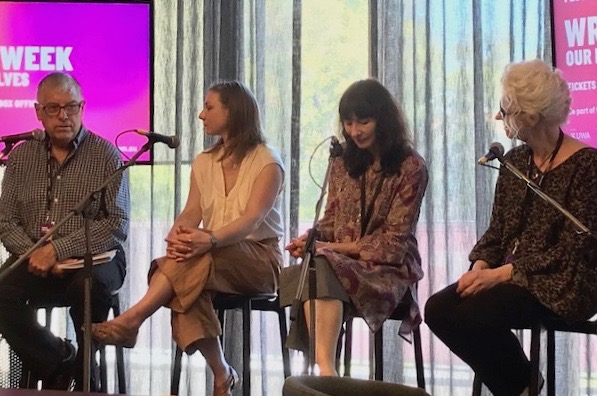
On the last day I chaired a panel with a variety of authors who all grappled with the concepts of freedom, identity and language. Heather Morris, Future D Fidel, Balli Kaur Jaswal and Carly Findlay, are very different people who have written vastly different books. It was interesting however to identify and explore some commonality within the themes we discussed. I highly recommend their books.

Heather Morris, Future D. Fidel, Balli Kaur Jaswal and Carly Findlay

If you have never been to a writer’s festival, look out for one near you.   You can go by yourself or with a friend.  It’s an opportunity to hear from authors and thinkers you know or find new ones to get to know.   You don’t have to do anything other than buy a ticket, turn up and be prepared to enjoy yourself.

Woman2Drive

This month Manal al-Sharif was planning to return to Saudi Arabia, the country of her birth, to drive freely down the main streets on her own, when a ban on women driving is lifted.

However, as the historic date of 24 June drew closer Manal received death threats while six other prominent human rights activists have been detained in Saudi Arabian prisons.

She decided it is safer for her to stay in Australia where she now lives.  “I think I can be a stronger human rights advocate outside of Saudi Arabia where my voice can be heard around the world. They would lock me up again if I returned,” she said in a recent interview.

Manal has been part of a movement in the Saudi Kingdom advocating for women’s rights and the right to drive a car without a male chaperone. Her memoir Daring to Drive also gives us rare personal insights into everyday life for women in the country.

The book describes her strict commitment to Islam in her younger years and how that slowly changed.  Manal graduated from university with a Bachelor of Science focussed on computer science.  She then secured a position as an information security consultant, one of the few women to do so, at Aramco, Saudi Arabia’s biggest oil company.  It was from this point in time that she sought fearless ways to break through taboos.  It was not easy, as the opening paragraph shows.Manal al Sharif

‘The secret police came for me at 2 in the morning. As soon as I heard the words Dhahran Police Station, I was terrified. My brother slammed the door shut and locked the bolt. There was a pause. Then the knocking started again.’

Manal spent a week in a cockroach infested prison for driving a car.  She did not commit a traffic offence, but the police told her she ‘broke orf’ – a tradition, custom or practice.

When I interviewed Manal at the recent Perth Writers Week, she still seemed a little surprised that her book has become a best seller around the world.  Manal has also been recognised with the Havel Prize for Creative Dissent Award at the Oslo Freedom Forum and Time magazine named her one of the 100 most influential women in the world.

‘I have always wanted to tell my story.  I am a Muslim girl born in Mecca and now I am an activist.  I did not know my story would be of interest,’ she told me.

I can assure you it is… I highly recommend her memoir.