Voices from Iran

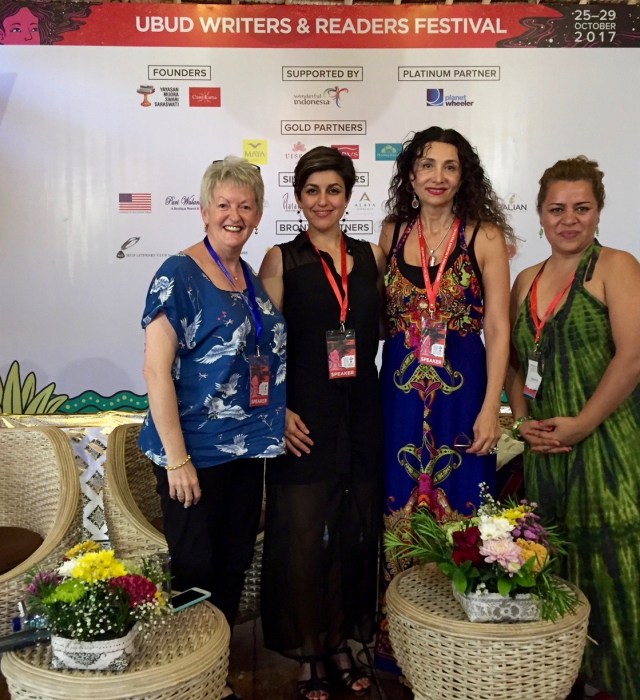
What a joy it was to meet and interview three outstanding Iranian writers Sholeh Wolpe, Sanaz Foutouhi and Shokoofeh Azar at the 2017 Ubud Readers and Writers Festival last week.

Our discussion ranged over the rich history of Persian literature, the influence of heritage and why we should all read more works from around the world in translation. These writers are creating a new chapter in diasporic literature.

Sanaz has written a book about meaning and identity since the Islamic Revolution. The Literature of the Iranian Diaspora is a must read for anyone who wants to begin to understand writing from Iran. Sanaz is also the Director of Asia Pacific Writers and Translators and works tirelessly to promote voices from different regions.

Sholeh lights up any room when she reads her beautiful poetry or other work. She is also an award winning playwright and translator. Her translation of Attar’s The conference of the Birds is a book I return to again and again. Attar was considered by Rumi to be the master of Sufi mystic poetry.

And, of course, Shokoofeh Azar is a writer I know well. I have already reviewed her first book in English called The Enlightenment of the Greengage Tree. It is an enthralling novel that combines magical realism alongside Iranian politics.

The writers discussed the challenges of working across cultures and how to encourage more people to read literature from Iran.   Perhaps, the most poignant moment came when I asked each of the writers about home. Shokoofeh cannot return to Iran.   She was jailed as a journalist and had to flee for her life. Sholeh feels she may never be able to return to Iran because of what she has written since moving to the United States.   Sanaz, however, returns frequently to Iran from Australia. I felt the great sense of loss from Shokoofeh and Sholeh in missing that connection to their homeland.

In Sholeh’s words:

Home is like a missing tooth.

The tongue reaches

For hardness

But falls

Into absence.

Ubud festival 2017 panel

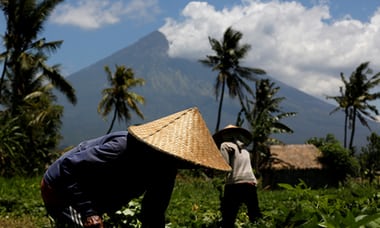
Spiritual Mount Agung Volcano

Ubud Readers and Writers Festival Founder and Director Janet De Neefe knows the power and beauty of Mount Agung. From the terrace of her famed restaurant, Indus, she has watched Gunung Agung for nineteen years. ‘We respect whatever choice she makes, but we also hope it’s compassionate’, says Janet.

The mountain, which is the highest point in Bali, is a very sacred place. In every Balinese temple a shrine is dedicated to its spirit.mount Agung

Because of a possible eruption from Mount Agung, an estimated 140,000 people in surrounding areas have been evacuated and moved into makeshift shelters and formerly bustling travel hotspots have been left virtually empty. Festival organisers have looked at all options through their crisis planning and have decided to proceed.

We are doing everything possible to help the displaced villagers,” Janet said this week in an interview with the Guardian newspaper. ‘Ubud won’t be directly affected by the volcano and none of the writers has panicked or threatened to pull out. The Balinese are kind of chilled, like, “Ehh – this could take months”,’ she says. ‘But there’s lots of frantic expats out there.’ The Guardian newspaper has a more in depth look at the current situation.

I love this festival and have been attending as a moderator and interviewer for over a decade. This year I am very pleased to be interviewing Jung Chang the author of Wild Swans, Empress Dowager Cixi, Mao: The Unknown Story.

I am also moderating a wonderful panel of Iranian women writers. Sanaz Fotouhi is Director of Asia Pacific Writers & Translators Conference, a writer and filmmaker. Sholeh Wolpé is an award-winning Iranian-born poet, playwright and literary translator and my friend Shokoofeh Azar, is a rising star of Iranian literature, whose first novel has just been published in English. On our panel, we’ll be discussing the magic of diasporic Iranian literature. The writers will contemplate the influence of their ancient Persian heritage and share insights gleaned from working and writing across cultures. I can’t wait to talk to this wonderful group of writers.

The Ubud Readers and Writers Festival was born from tragedy. In 2002, after the Bali bombings, Janet founded the festival to encourage visitors back to the region. It is now regarded as one of the best writers’ festivals in the world, highlighting and promoting Indonesian authors and attracting some of the biggest names in the international literary scene. I always tell people this is the one festival you MUST see sometime.

We are all hoping a rumbling volcano won’t discourage people from attending the 2017 Ubud Readers and Writers Festival.

Ubud writers festival logo

A Country of Refuge

I really enjoyed the anthology edited by Tom Keneally and Rosie Scott. A country too far features fiction, memoir, poetry and essays about seeking asylum by 27 of Australia’s best writers including: Anna Funder, Kim Scott, Raimond Gaita, Christos Tsiolkas, Gail Jones, Les Murray and Dorothy Hewitt.

It was released in 2013 and I can remember attending a writer’s festival event to hearTom and Rosie talk about how the book came together. Rosie talked about the way in which the best writers can get to the heart of things because of their clarity of language and powerful insights. Tom, in in his eloquent way, reminded politicians that the inflammatory and inaccurate language they were using was de-humanising. In the introduction to the book he wrote “the fact that they are talking about the most marginalised people on earth – deeply traumatised refugees who have lost their countries, homes and families through disasters of every kind – is lost in a storm of venom and cliché.”

It is a powerful book of unique voices and experiences.

Little did I know that it also inspired another book in another country. While on holiday, I spent my obligatory self-indulgent morning trailing over all the floors of Foyles A Country of RefugeBookshop in London and came across A Country of Refuge – an anthology of writing about asylum seekers by outstanding British and Irish writers.  Editor Lucy Popescu conceived of the idea in 2014 when she received her copy of A country too far just as the European refugee crisis began to make news when thousands of people fled across the Mediterranean into Europe.

Featuring outstanding writers like Sebastian Barry, Rose Tremain, Marina Lewycka and William Boyd, it takes the same approach as A country too far, combining, memoir, short fiction and essays with poetry. Barry’s opening short story ‘Fragment of a journal, author unknown’ recalls Ireland’s famine years in the nineteenth century when tens of thousands of starving people risked voyages across the Atlantic in hazardous coffin ships. Many disturbing parallels can be drawn between the exodus of the famine years and the current refugee crisis.

The book is poignant and thought-provoking.

Both anthologies are highly readable and can be picked up and put down as the mood strikes, which given the topic, is not a bad way to read and reflect on them.

Barbara Kingsolver, praising the skill required to write a memorable short story, described the form as entailing ‘the successful execution of large truths delivered in tight spaces.’ All The writing in A Country of Refuge and A country too far may be short, but you won’t forget what you read for a long time.

A Country of Refuge – edited by Lucy Popescu (Unbound, 2016)

Recommended reading

While I was on holidays recently I put together a list of some of the most interesting books about refugees that I have found, and added it the website. This reading list is not exhaustive, but it should have something for everyone. My recommended book list includes books about:

  • Personal stories,
  • The Australian situation,
  • The European situation,
  • Fiction, and
  • Other interesting reads.

Some of the books are very new and some were published a while ago. One published over 10 years ago is still a wonderful read – The rugmaker of Mazar-e-Sharif is likely to remain an Australian classic for many years to come. New publications such as The New Odyssey – the story of Europe’s refugee crisis are wonderfully researched, but give you a personal perspective on the current global situation.

I have also included some fiction, as book clubs contact me for recommendations. What is the what by Dave Eggers, for example, is heart breaking but rewarding at the same time. I’m not sure why some book clubs don’t feel comfortable taking on non-fiction – you couldn’t go wrong with Talking about Jane Austen in Baghdad by Bee Rowlatt and May Witwit or City of Thorns by Ben Rawlence.

I’ll keep adding to the list and I would love to hear about other recommendations.

‘I have stories I want to tell’

Want to read a magical story about an amazing family set alongside a gripping political commentary?  The enlightenment of the greengage tree by my good friend Shokoofeh Azar, which will be launched this week in Australia, does just that.Enlightenment of the greengage tree cover

Living a large part of her life in Iran means most of Shokoofeh’s writing has been published in Farsi. This is her first novel to be written and translated into English with Western readers in mind. It is an opportunity for us to experience the art of Persian story-telling in the style of magical realism at its best. Alice Pung wrote in an early review: ‘It is incredible. I have never heard such a voice before… Azar writes about Iranian history with the lightness of a feather’s touch. Transcendental, brilliant and beautiful.

Shokoofeh came to Australia in 2010 as a political refugee by boat. Sadly sometimes Australians find this the most interesting thing about her. On a blog by Rashida Murphy, another novelist, Shokoofeh said: ‘Surviving a boat journey does not define a person for life. How I got here is not what I’m about. I have stories I want to tell. I paint. I’m a mother.’

Shokoofeh’s book is published by the small independent publisher Wild Dingo and is being launched by Professor Baden Offord, the Director of the Centre for Human Rights Education on Friday 18 August at the Centre for Stories.

This is a book that represents the rich literary tradition of Iran. I loved it.

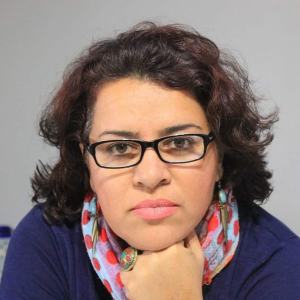
Shokoofeh Azar

Waleed Aly at the Centre for Human Rights Education

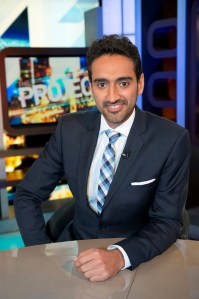
This year’s Annual Human Rights Lecture at the Curtin University Centre for Human Rights Education will be delivered by Waleed Aly.image003 (1)

Widely known as the co-host of Network TEN’s The Project, Waleed Aly is a broadcaster, author, academic, musician and one of Australia’s most respected and versatile media talents.

His social and political commentary has produced an award-winning book and multiple literary short-listings. His debut book, People Like Us: How arrogance is dividing Islam and the West (Picador, 2007), was shortlisted for several awards including the Queensland Premier’s Literary Awards and for Best Newcomer at the 2008 Australian Book Industry Awards. In 2014 he was awarded the prestigious Walkley Award for Commentary, Analysis, Opinion and Critique.

The inaugural Curtin Annual Human Rights Lecture delivered by Professor Gillian Triggs was excellent.  There is a link on the Research and Reports page of this site to view the lecture.

The lecture is on Saturday 19 August starting at 3:45pm. It is free, but you need to register quickly as places are filling fast. All the details are on the Centre for Human Rights Education website.


They Cannot Take the Sky

The sky is like a friend for a prisoner, because around you everything is metal fences, but the sky, they cannot take the sky.

These words are from a book of stories from people who have been detained by the Australian government for seeking asylum.  Each person reveals in their own words their journey, daily struggles, their fears, hopes and dreams.

The title of the book comes from Behrouz Boochani’s story.  Behrouz is a Kurdish They cannot take the sky coverjournalist and writer who fled from Iran. He has been in detention on Manus Island since August 2013. He writes and reports from inside the detention centre when he can and has over 4,000 followers on Facebook. A film he shot entirely on his mobile phone about the life and treatment of refugees detained offshore, premiered at the Sydney Film Festival recently.
As I read Behrouz’s story and others by people of refugee background, I moved between admiration for people’s resilience and optimism to despair and anger.

The editors have collated the testimonies of more than 20 refugees from Iran, Iraq, Sudan and Afghanistan. Some have had their claims for asylum granted and have gone on to become outstanding members of the Australian community. Munjed is a surgeon who had to leave Iraq because he refused to mutilate army deserters. Now that our society has decided not to waste his gifts, he is working again and specialising in prosthetic limbs.

My friend Jamila from Afghanistan has also told her story. She was placed in detention as a five year old child with her mother and brother. Thankfully after some time her family were re-united and she now studies law at university in Perth. Others, unfortunately continue to languish in detention.

As Maxine Beneba Clarke writes: ‘This book will make Australians ask –again – of ourselves; what kind of people are we and how did we possibly let it come to this?

The not-for-profit group Behind the Wire is responsible for They Cannot Take the Sky. I suggest you take a look at their website – as well as information on the book they have a podcast, audio stories, videos and a series of portrait photographs. They are also currently running an outstanding exhibition at the Immigration Museum in Melbourne and I certainly hope it tours widely.  It was developed in collaboration with the Museum by Behind the Wire and a volunteer reference committee of individuals with lived experience of seeking asylum.

Latest global trends report

The latest UNHCR Global Trends Report is always a sobering read. As always the statistics are overwhelming and I’m sure, like me, you ask yourself what can I do? The number one most important thing we can all do – is to stay informed. In this ‘post truth world’ with ‘alternative facts’ circulating, I think this is even more crucial.

The Global Trends Report is published every year to analyse the changes in UNHCR’s populations of concern and deepen public understanding of ongoing crises. UNHCR counts and tracks the numbers of refugees, internally displaced people, people who have returned to their countries or areas of origin, asylum-seekers, stateless people and other populations of concern to UNHCR.

In the time it has taken for you to log onto this blog and read the first two paragraphs, 20 people have been forced to flee their homes somewhere around the world. I think about this whenever I get stressed about the daily issues in my comfortable life in Australia: a flat tyre, a flooded bathroom, a flight delay, a traffic jam or not being able to get tickets to the football are really first-world problems aren’t they?

Over the past two decades, the global population of forcibly displaced people has grown substantially from 33.9 million in 1997 to 65.6 million in 2016 (up 300,000 from the previous year). The growth was concentrated between 2012 and 2015, driven mainly by the Syrian conflict. Other contributing factors were conflicts in Iraq and Yemen, as well as in sub-Saharan Africa including Burundi, the Central African Republic, the Democratic Republic of the Congo, South Sudan, and Sudan.

More than half (55%) of all refugees worldwide came from just three countries – Syria, Afghanistan and South Sudan.

And for the third successive year Turkey hosted the largest number of refugees worldwide – 2.9 million people. Pakistan, Lebanon, Iran, Uganda and Ethiopia followed so developing regions continue to disproportionately host the world’s refugees.

“…the protection of refugees is not only the responsibility of neighbouring states of a crisis; it is a collective responsibility of the international community.”  Antonio Guterres, UN Secretary General.

The report shows the trends at a glance over two introductory pages so even if you don’t read the whole report, I urge you to have a look at those and stay informed.

Giles Duley image
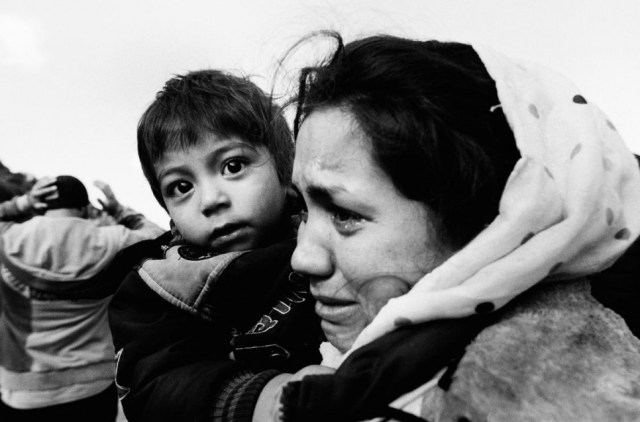
Photographer Giles Duley travelled to countries in the Middle East and Europe in 2015 and 2016 documenting the refugee crisis. In this image an Afghan mother hugs her child and weeps with relief on arrival on the Greek Island of Lesvos.


Singing the book

When a beautiful soprano sang the words Fauzia Sufizada said on her arrival in Australia I did not even try to stop my tears.

I stood still and turned my face up to the sky to let the raindrops fall on it… I will never forget how it felt on my skin and the smell of the wet soil. I looked at Farid and my boys and laughed out loud. I told them I needed a few minutes to just stand in the rain and feel freedom.

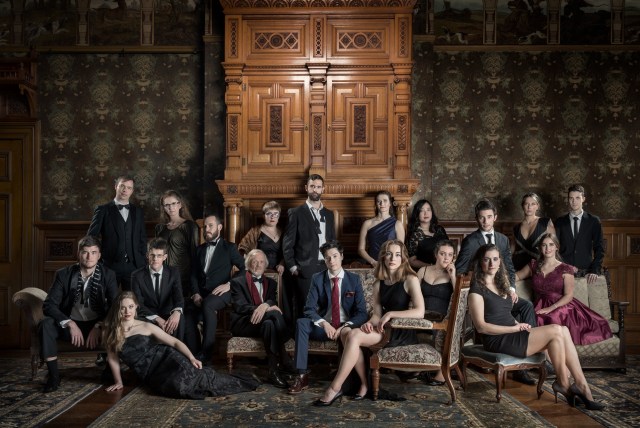
These words from More to the story – conversations with refugees were featured in ‘Uncertain Journeys’, a new work by composer Tom Henry and performed recently by the Australian Chamber Choir.

I had the opportunity to meet Tom and he says he drew inspiration for the work from contemporary accounts of separation from home, culture and family common to the refugee experience. He found a copy of More to the story at the Immigration Museum in Melbourne while doing research for his composition and used some words from both Fauzia and Farid’s stories.

The Sufizadas and I feel incredibly honoured to be part of Tom’s moving work, which also features the words of other refugees and extracts from the Ghazals (short sonnet-like poems) by the fourteenth century Persian poet known as Hafiz of Shiraz.

The Choir, under the direction of Douglas Lawrence, will be performing ‘Uncertain Journeys’ as part of a new program around the east coast of Australia before going on tour to Italy Austria and Germany.

The choir has made five CDs and given over 200 performances – many of which have been recorded for broadcast on ABC Classic FM.   We have our fingers crossed that one day we might hear ‘Uncertain journeys’ on the airwaves.

AusChamberChoir2017image

It takes courage to be a refugee

As a writer and researcher I remain concerned about the lack of empathy toward refugees and asylum seekers, as well as the simplistic narratives told by mainstream media. Refugees are vulnerable people who are fleeing war, violence and persecution in their home countries, and don’t deserve to be met with such overwhelming ignorance and fear.

Many of my friends tell me – “no-one chooses to become a refugee”.

As people who have faced persecution because of who they are (their race, nationality or membership of a persecuted group) or what they believe (their religion or political opinion), refugees need courage:

  • The courage not to deny identity or beliefs in the face of persecution.
  • The courage to leave all that is familiar and step into the unknown in search of peace.
  • The courage to keep going in the face of devastating loss, difficulty and despair.
  • The courage to begin again, to work hard and to maintain hope in an unfamiliar land.

The Australian Red Cross has listed five things to make a difference for refugees in your community, that we could all think about doing in 2017.  I love the fact that the first tip is to get informed and understand the facts.

Refugee Week is Australia’s peak annual activity to raise awareness about the issues affecting refugees and celebrate the positive contributions made by refugees to Australian society – this year it will be held from 18 to 24 June. Celebrated since 1986, Refugee Week coincides with World Refugee Day on 20 June.

In Australia, the theme for Refugee Week is “With courage let us all combine”. Taken from the second verse of the national anthem, the theme celebrates the courage of refugees and of people who speak out against persecution and injustice.  You can find out more about Refugee Week from the Refugee Council of Australia website.

Refugee-Week-2017