The Perth Writers Week is almost here. It starts on Monday 19 February and runs until Sunday 25 February. I am pleased to be involved again this year, and particularly to be chairing two discussions that demonstrate, once again, that there is always more to the story.
Manal campaigns for women’s rights. Her life story of being raised under a religion of strict fundamentalism to her change to an activist who fights women’s equality in a society that is unequal is incredible. Her book Daring to Drive is a story of resilience. I can’t wait for the conversation.
Manal will also be participating on panel conversation on Saturday called ‘Free to Love, Free to Learn’. She is joined by Amal Awad who has written a book that is a must read for anyone who wants to understand the Middle East. It’s called Beyond Veiled Clichés. The third participant is Tess Woods who draws on her Egyptian heritage, cross cultural marriage and her insider’s knowledge of professional football (She’s a physio in her day job). Her book is called Beautiful Messy Love and is set in Western Australia.
Will Yeoman, who is curating his first festival, has also catered for my love of crime writing. I re-unite with Alan Carter who splits his time between Australia and New Zealand these days. We’ll be discussing his new book Marlborough Man at a free event on Wednesday at the fabulous Perth city library.
The full program is available on line or you can pick up a free, easy to read, printed program from most good bookstores. If you are not in Western Australia, some of the Perth Writers Week sessions will be recorded by ABC radio and available as podcasts.
This time last year I wrote a blog looking back on the previous year for people from a refugee background. In 2018 I thought I would direct my gaze towards the future.
While I don’t have a crystal ball, I hope that 2018 holds the promise of better things for over than 65 million people worldwide, who are refugees, asylum seekers or displaced people. The situation in places like Yemen and Bangladesh reminds us there is much to do.
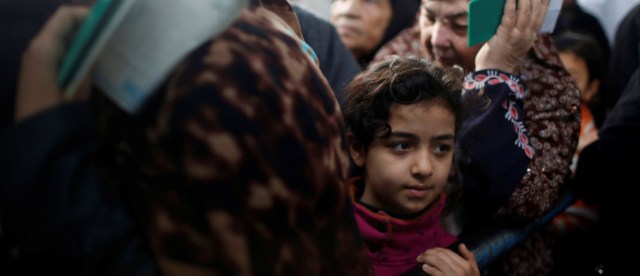
Photographer – Mohammad Salem
The refugee crisis remains a global issue requiring a global solution. Nearly one in every 110 people is fleeing war or persecution. This cannot be managed by one nation, governing body or multinational organisation alone. I read an interesting article ahead of the 2018 World Economic Forum held in Davos, Switzerland that asked: What if multinational businesses welcomed refugees displaced by social and political upheaval and worked with governing bodies to assimilate them into our global workplaces?
I’ll share one example on the Davos website that recently moved me. After making a 2,300-mile journey to Berlin, Mohammad Basel Alyounes, a Syrian refugee and accountant by profession, was greeted by a German news crew. When asked what he hoped for his new life in Germany, he said, “I want to work for Ernst & Young (EY).” An EY manager in Germany saw the interview, used social media to locate Alyounes — and EY hired him. He now works with their German Diversity Charter refugee support team.
Wouldn’t be great if more companies around the world took this approach?
Some countries continue to do more than others, just as individually some people do more than others. I’ve loved talking to people who have got involved with volunteering and working with refugees. There are some ideas on this website of organisations you could consider helping, either by volunteering time or donating money.
In Australia, our harsh Sovereign Borders policy remains in place and we continue to only accept around 13,000 refugees a year through our humanitarian program (plus a one-time additional 12,000 people from Syria). Canada accept 250,000 refugees per year.
Some bright news in 2017 included the re-settlement in the US of several hundred men who had been detained on Manus Island indefinitely by the Australian government – although many more wait for an outcome. In a recent edition of The Saturday paper there was a particularly moving article written by Imran Mohammad who is a Rohingya refugee held on Manus.
Peaceful protests continue on Manus
Also pleasing is the increasing number of university scholarships being provided to those who came to Australia seeking asylum.
Personally, I feel the number of Australian voices speaking out about inhumane policies in relation to refugees is increasing and getting louder. One of my main hopes for the year ahead is that more people take the time to learn about what is really happening in Australia and around the world. My go-to resources in Australia are The Refugee Council of Australia and The Guardian Australiawhich is usually the only newspaper that provides detailed factual reporting about the issues and thoughtful insights. The latest opinion piece from Tim Costello, Chief Advocate for World Vision, comparing his visits to Bangladesh and Manus Island makes sombre reading.
Sometimes, it is hard to stay positive and not be overwhelmed by the sheer size of the problem, but I always remind myself that making a difference in one person’s life can sometimes be enough.
I love this time of the year when you can sink into a good book. Depending on where you are in the world, you could be reading in your deck chair in the summer garden or snuggled up in your favourite chair by the fire. I’m really looking forward to taking a break from work and study and some guilt-free reading time
As the year comes to a close it can be a time for reflection, regardless of your culture or religion. I’ve been thinking about the many interesting and inspiring books I have read this year and wanted to give you some recommendations. It’s hard to pick the best but I have chosen two fiction and two non-fiction books for your summer/winter reading list or as a Christmas gift suggestion.
Fiction
Shokoofeh Azar’s The Enlightenement of the Greengage Treeis an introduction to the wonderful world of magical realism and I highly recommend this for a different reading experience.
This year I re-read an old favourite and thought I would include it. Café Scheherazade by Arnold Zable traces the experience of Jewish survivors whose lives reflect the courage of refugees everywhere. Arnold is one of my favourite authors – a master story teller.
Non- fiction
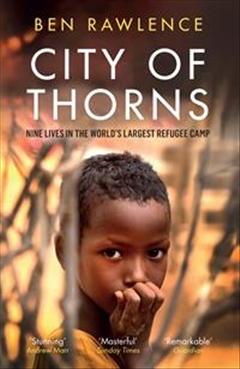
City Of Thornsby Ben Rawlence is my stand out book for the year. It traces nine lives in the world’s largest refugee camp, Dadaab in Kenya. It is haunting and at the same time inspiring. I was lucky enough to meet and interview Ben at this year’s Perth Writers Festival.
Not Quite Australian by Peter Mares is easy to read and informative at the same time. I learnt so much from this book. Peter discusses how temporary migration is changing Australia. Did you know there are more than a million temporary migrants living in Australia today? Case studies, personal stories and supporting data are compelling in this book.
There are so many more books and I am sure you have your own favourites… I’d love to hear from you about your list.
Season’s greetings to all and happy reading.
P.S. I am really looking forward to a new release called The Power of Good People – surviving Sri Lanka’s Civil War by Para Paheer with Alison Corke.
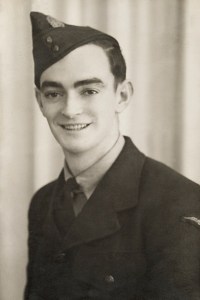
My late father was driven by a set of simple values all his life: that all people deserve respect and dignity whoever they are. He often said, ‘I don’t care if you are the Queen of England or a street sweeper – we’re all human and just the same.’
Those values were imprinted on me and today help define who I am. Every day as I continue my PhD studies in human rights and the writing of refugee stories I am reminded of my Dad’s values and by the common threads of humanity that bind us all.
I had the chance to reflect on this a few weeks ago at the Australian Academy of the Humanities two day symposium with its theme of humanitarianism and human rights. Academics, writers and thinkers discussed what it meant to be human and compassionate and what happens when we are not.
My dad would have laughed about the application of academic and social theories to something he saw as so straight forward. I can imagine my explanations of why I needed to study and research these issues as well as be an advocate for human rights. I think it would have baffled him.
However, he would have been horrified at the racist policies of Pauline Hanson’s One Nation party and the election of Donald Trump with his nationalistic and divisive views. We would have talked about why people are frightened and how that fear has been shrouded in a security discussion that positions asylum seekers and refugees as potential terrorists… or someone different to us… someone seen as ‘other’. I’m sure he would have been concerned about security issues too, but we would have come back to our shared values of respect and dignity when we discussed the situation on Manus Island or the treatment of people by the Australian government who have been found to be refugees and still don’t have permanent residency and access to the services they need.
Kim Scott, Author
If he’d been at the event he also would have loved writer Kim Scott’s moving and intimate portrait of his life as young Aboriginal boy searching for an identity and a sense of belonging. While my dad was never short of a word, and certainly had strong views on many issues in society, he loved meeting people from different backgrounds and went out of his way to do so. He loved a good story and he listened well. He was empathetic – although he would have told me not to use fancy words.
Like many writers and commentators, I have come to believe that this lack of empathy for others allows some in society to express more racist views and to see human rights violations as ‘not their concern.’ Without empathy, my dad’s values of dignity and respect for everyone seem a distant concept.
I really enjoyed the anthology edited by Tom Keneally and Rosie Scott. A country too far features fiction, memoir, poetry and essays about seeking asylum by 27 of Australia’s best writers including: Anna Funder, Kim Scott, Raimond Gaita, Christos Tsiolkas, Gail Jones, Les Murray and Dorothy Hewitt.
It was released in 2013 and I can remember attending a writer’s festival event to hearTom and Rosie talk about how the book came together. Rosie talked about the way in which the best writers can get to the heart of things because of their clarity of language and powerful insights. Tom, in in his eloquent way, reminded politicians that the inflammatory and inaccurate language they were using was de-humanising. In the introduction to the book he wrote “the fact that they are talking about the most marginalised people on earth – deeply traumatised refugees who have lost their countries, homes and families through disasters of every kind – is lost in a storm of venom and cliché.”
It is a powerful book of unique voices and experiences.
Little did I know that it also inspired another book in another country. While on holiday, I spent my obligatory self-indulgent morning trailing over all the floors of Foyles Bookshop in London and came across A Country of Refuge – an anthology of writing about asylum seekers by outstanding British and Irish writers. Editor Lucy Popescu conceived of the idea in 2014 when she received her copy of A country too far just as the European refugee crisis began to make news when thousands of people fled across the Mediterranean into Europe.
Featuring outstanding writers like Sebastian Barry, Rose Tremain, Marina Lewycka and William Boyd, it takes the same approach as A country too far, combining, memoir, short fiction and essays with poetry. Barry’s opening short story ‘Fragment of a journal, author unknown’ recalls Ireland’s famine years in the nineteenth century when tens of thousands of starving people risked voyages across the Atlantic in hazardous coffin ships. Many disturbing parallels can be drawn between the exodus of the famine years and the current refugee crisis.
The book is poignant and thought-provoking.
Both anthologies are highly readable and can be picked up and put down as the mood strikes, which given the topic, is not a bad way to read and reflect on them.
Barbara Kingsolver, praising the skill required to write a memorable short story, described the form as entailing ‘the successful execution of large truths delivered in tight spaces.’ All The writing in A Country of Refuge and A country too far may be short, but you won’t forget what you read for a long time.
A Country of Refuge – edited by Lucy Popescu (Unbound, 2016)
While I was on holidays recently I put together a list of some of the most interesting books about refugees that I have found, and added it the website. This reading list is not exhaustive, but it should have something for everyone. My recommended book list includes books about:
Personal stories,
The Australian situation,
The European situation,
Fiction, and
Other interesting reads.
Some of the books are very new and some were published a while ago. One published over 10 years ago is still a wonderful read – The rugmaker of Mazar-e-Sharif is likely to remain an Australian classic for many years to come. New publications such as The New Odyssey – the story of Europe’s refugee crisis are wonderfully researched, but give you a personal perspective on the current global situation.
I have also included some fiction, as book clubs contact me for recommendations. What is the what by Dave Eggers, for example, is heart breaking but rewarding at the same time. I’m not sure why some book clubs don’t feel comfortable taking on non-fiction – you couldn’t go wrong with Talking about Jane Austen in Baghdad by Bee Rowlatt and May Witwit or City of Thorns by Ben Rawlence.
I’ll keep adding to the list and I would love to hear about other recommendations.
The sky is like a friend for a prisoner, because around you everything is metal fences, but the sky, they cannot take the sky.
These words are from a book of stories from people who have been detained by the Australian government for seeking asylum. Each person reveals in their own words their journey, daily struggles, their fears, hopes and dreams.
The title of the book comes from Behrouz Boochani’s story. Behrouz is a Kurdish journalist and writer who fled from Iran. He has been in detention on Manus Island since August 2013. He writes and reports from inside the detention centre when he can and has over 4,000 followers on Facebook. A film he shot entirely on his mobile phone about the life and treatment of refugees detained offshore, premiered at the Sydney Film Festival recently.
As I read Behrouz’s story and others by people of refugee background, I moved between admiration for people’s resilience and optimism to despair and anger.
The editors have collated the testimonies of more than 20 refugees from Iran, Iraq, Sudan and Afghanistan. Some have had their claims for asylum granted and have gone on to become outstanding members of the Australian community. Munjed is a surgeon who had to leave Iraq because he refused to mutilate army deserters. Now that our society has decided not to waste his gifts, he is working again and specialising in prosthetic limbs.
My friend Jamila from Afghanistan has also told her story. She was placed in detention as a five year old child with her mother and brother. Thankfully after some time her family were re-united and she now studies law at university in Perth. Others, unfortunately continue to languish in detention.
As Maxine Beneba Clarke writes: ‘This book will make Australians ask –again – of ourselves; what kind of people are we and how did we possibly let it come to this?’
The not-for-profit group Behind the Wire is responsible for They Cannot Take the Sky. I suggest you take a look at their website – as well as information on the book they have a podcast, audio stories, videos and a series of portrait photographs. They are also currently running an outstanding exhibition at the Immigration Museum in Melbourne and I certainly hope it tours widely. It was developed in collaboration with the Museum by Behind the Wire and a volunteer reference committee of individuals with lived experience of seeking asylum.
When a beautiful soprano sang the words Fauzia Sufizada said on her arrival in Australia I did not even try to stop my tears.
I stood still and turned my face up to the sky to let the raindrops fall on it… I will never forget how it felt on my skin and the smell of the wet soil. I looked at Farid and my boys and laughed out loud. I told them I needed a few minutes to just stand in the rain and feel freedom.
These words from More to the story – conversations with refugees were featured in ‘Uncertain Journeys’, a new work by composer Tom Henry and performed recently by the Australian Chamber Choir.
I had the opportunity to meet Tom and he says he drew inspiration for the work from contemporary accounts of separation from home, culture and family common to the refugee experience. He found a copy of More to the story at the Immigration Museum in Melbourne while doing research for his composition and used some words from both Fauzia and Farid’s stories.
The Sufizadas and I feel incredibly honoured to be part of Tom’s moving work, which also features the words of other refugees and extracts from the Ghazals (short sonnet-like poems) by the fourteenth century Persian poet known as Hafiz of Shiraz.
The Choir, under the direction of Douglas Lawrence, will be performing ‘Uncertain Journeys’ as part of a new program around the east coast of Australia before going on tour to Italy Austria and Germany.
The choir has made five CDs and given over 200 performances – many of which have been recorded for broadcast on ABC Classic FM. We have our fingers crossed that one day we might hear ‘Uncertain journeys’ on the airwaves.
Diverse voices matter in Australia more than ever. Ways of being here is pocket book-sized collection of four short stories that showcases the work of four talented African writers living in Australia – Raefeif Ismail, Yirga Gelaw Woldeyes, Tinashe Jakwa and Yout A Alaak.
Maxine Beneba Clarke writes in her introduction: “Black people of African descent – black diaspora settlers and migrants and descendants of such – have been living in Australia for over 200 years. Yet local African diaspora fiction has been markedly absent from Australian shelves”.
Ways of being here is a terrific read. You can read it slowly, dipping into it over time, or in a few hours on an afternoon or evening you might have free. Either way, I guarantee you will want to read it several times. These beautifully written stories will capture your imagination and your attention. The four write of love, loss, the challenge of living between cultures, intergenerational clashes, of being made welcome and of being isolated.
Rafeif Ismail’s moving story, ‘Light at the end’, about two young women has language that sings off the page with emotion. He writes: “When did you become this desperate, desolate thing? When did the world’s colours dull and laughter have a price? Fear is the chain you wear, shackling you between walls of loneliness, shame, regret and, most terribly, hope.”
Yirga Gelaw Woldeyes story, ‘When the sky looks like the belly of a donkey’, tackles the cultural challenges of starting a new life in Australia – a place so different from your home country. Yirga also captures what could be a group of typical Aussie blokes with insightful writing. The story about Ermi, usually mis-pronounced by many of his workmates as Army, is one I have heard from many migrants and people of refugee background. It is about starting at the bottom of the ladder, trying to fit in and always missing the people left behind. I laughed and I cringed but by the end of the story I smiled with hope.
All four short stories provide a valuable opportunity to reflect about the lives of others.
Ways of being here is published by Margaret River Press and the Centre for Stories, 2017
“No one wants to admit that the temporary camp of Dadaab has become permanent,” Ben Rawlence writes in his haunting book City of Thorns. Ben visited the camp for the first time as a researcher for Human Rights Watch. The next year he returned for what would be the first of seven separate visits to follow and write about the lives of nine inhabitants.
I highly recommend this book because it gives those of us from a privileged background real insight into everyday life in a refugee camp.
He captures the daily lives and stories of nine people caught in limbo at Dadaab. The camp was originally founded in 1992 to serve the 90,000 refugees fleeing Somalia’s civil war. No one imagined that an entire generation of children would be raised there, or that so many more refugees would rush in, as the political chaos and famine in Somalia continued. “Neither the past, nor the present, nor the future is a safe place for a mind to linger for long,” he continues. “To live in this city of thorns is to be trapped mentally, as well as physically.”
I met Ben at the Perth Writers Festival and was fortunate enough to interview him on a panel with other writers. He is deep thinker who has witnessed the best and worst of humanity. He articulated what I have come to understand – thousands of people in many different refugee camps around the world have little hope of leaving. They are waiting for a new beginning that sadly may never come.
He mixes the portraits of the camp’s residents with big-picture accounts of the regional turmoil that drove them there (famine, the ascendance of Al Shabaab, corruption in the government and civil war). I was interested in his style of writing and the desire to personalise the stories of refugees and give context about countries and the situations they face because it is the way I wrote More to the story- conversations with refugees.
His stories about the people in Dadaab are brutally honest and insightful. I found as a reader I became invested in their lives. What happened to Muna and Monday and the others? I worried about Guled, a former child soldier, and my heart ached for Kheyro and her determination to get an education. After many years in camp Muna and Monday were some of the lucky ones to be re-settled in Australia. I breathed a sigh of relief but Ben explained at the Festival that while their lives were safe, unfortunately things had not gone well since they arrived. Sometimes that is the reality when people arrive in a new country and face other challenges on top of the trauma they may have already experienced.
The book demonstrates extraordinary human resilience and the choices people have to make to survive.
City of Thorns by Ben Rawlence is published by Portobello, 2016.






 Bookshop in London and came across A Country of Refuge – an anthology of writing about asylum seekers by outstanding British and Irish writers. Editor Lucy Popescu conceived of the idea in 2014 when she received her copy of A country too far just as the European refugee crisis began to make news when thousands of people fled across the Mediterranean into Europe.


 journalist and writer who fled from Iran. He has been in detention on Manus Island since August 2013. He writes and reports from inside the detention centre when he can and has over 4,000 followers on Facebook. A film he shot entirely on his mobile phone about the life and treatment of refugees detained offshore, premiered at the Sydney Film Festival recently.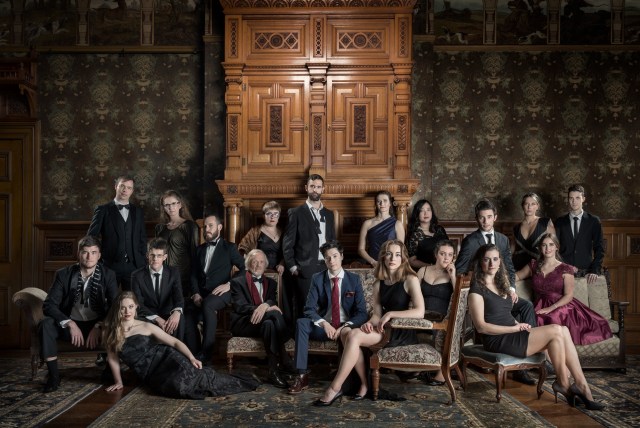
 alented African writers living in Australia – Raefeif Ismail, Yirga Gelaw Woldeyes, Tinashe Jakwa and Yout A Alaak.
 returned for what would be the first of seven separate visits to follow and write about the lives of nine inhabitants.
 More to the Story