Finding Freedom

Welcome to Refugee Week. Held each year around World Refugee Day on 20 June, it’s all about increasing awareness of the issues refugees face and the contributions they make in our communities.  

The Refugee Week theme this year is Finding Freedom: Diversity in Community.

Most of us in Australia don’t have to think about freedom; it just is. But when I was writing my two books about refugees the concept of freedom and what it meant came up so often.   

I stood still and turned my face up to the sky to let the raindrops fall on it. Farid kept telling me to hurry up and get out of the rain. I will never forget how it felt on my skin and the smell of the wet soil. I looked at Farid and my boys and laughed out loud. I told them I needed a few minutes to just stand in the rain and feel freedom.

These are words my friend Fauzia used one afternoon as we shared a coffee. She was talking about when she arrived in Australia and was reunited with her husband Farid at Perth Airport after seven years. In fear of the Taliban, Farid had set out to find a new life for them in Australia. You can read more about Fauzia and Farid’s story on the More to the Story website.

Whenever I talk to refugees, they are always grateful for their freedom. The journey towards freedom represents the challenging path that many refugees take, escaping oppression, uncertainty and persecution for safety in a new place.  

In these new spaces, community is more than just a physical place or a group of people; community is a lifeline. It offers refugees safety, belonging, and the strength to rebuild. Every day millions of people across the world embark on dangerous journeys for the sole purpose of finding safety and freedom. From Australia to nations across the globe, settling into a new environment after experiencing the perils of a refugee’s journey can also provide the opportunity to live, to love and to dream.

This coming refugee week I urge you to get involved in some of the many events taking place around the world. In Perth, where I live, there are so many opportunities whether it’s at the local library, council, church or school. You can find out more on the Refugee Council of Australia website

When we understand the people, their vulnerability, and their issues, we all play a part in helping refugees to find freedom and community.
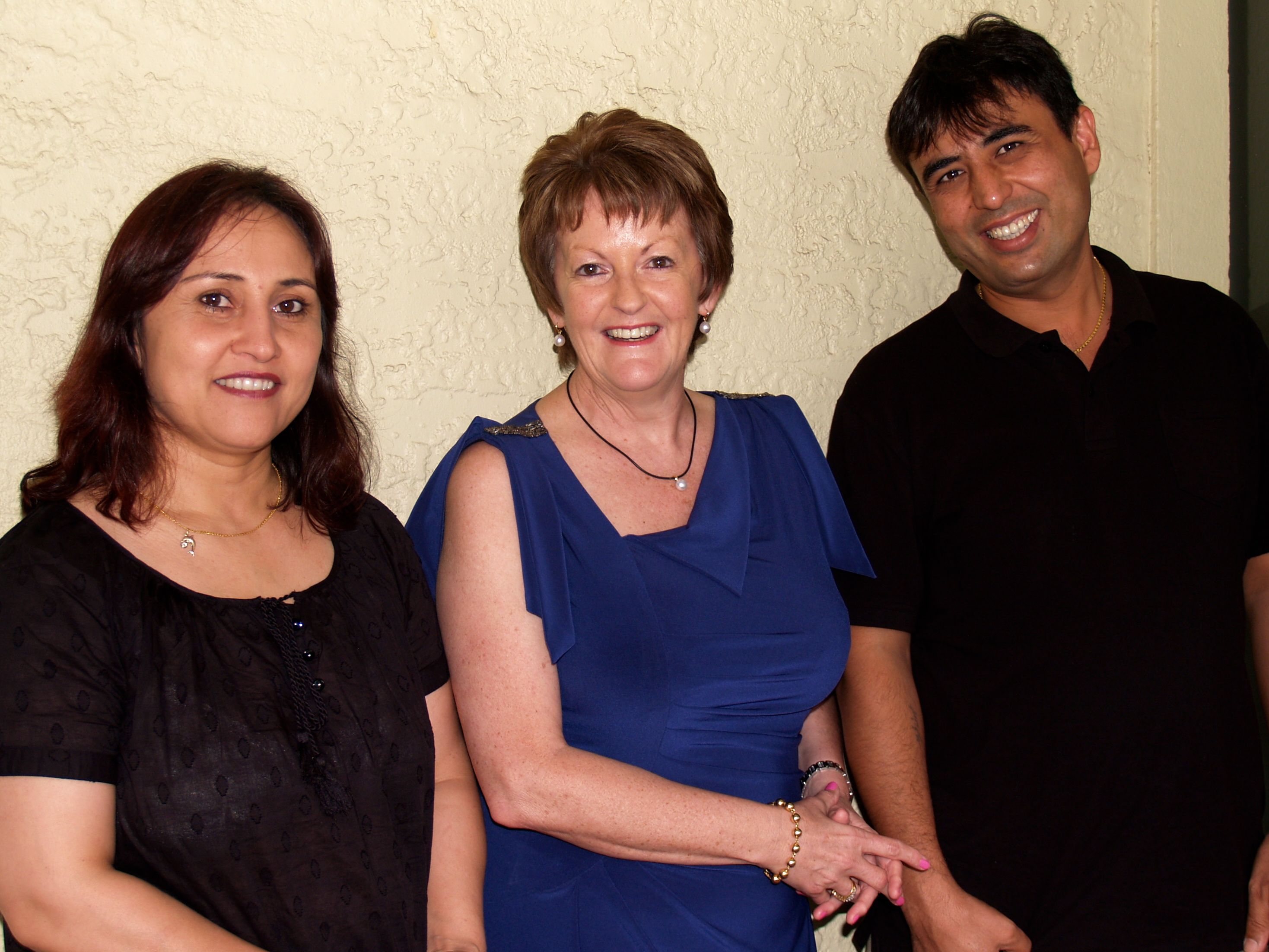
Farid and Fauzia with Rosemary

The Missing Children of Europe

An international investigation has found that tens of thousands of unaccompanied child migrants – 47 each day on average – have vanished after arriving in Europe over the past three years. 

While doing other research, I came across three organisations who specialise in tracking lost migrant and refugee children and was appalled and taken aback by my ignorance. 

Research by the journalist collective Lost in Europe revealed that at least 51,433 unaccompanied refugee children and young people who were previously in the care of the state went missing across Europe between 2021 and 2023.

According to the data collected in the latest investigation, Italy has more registered missing unaccompanied minors than any other country that provided data, with 22,899, followed by Austria (20,077), Belgium (2,241), Germany (2,005) and Switzerland (1,226).

The actual number of missing children may be even higher as gathering complete information is difficult, with some countries in Europe not even collecting data on missing unaccompanied minors according to a statement by the Lost in Europe project.

Ylva Johansson, the EU Commissioner for Home Affairs responsible for migration, in an interview with the German news portal rbb24 – a member of the Lost in Europe network – linked the problem to Europe’s “broken migration system”.

Child protection organisations like Missing Children Europe have confirmed that unaccompanied child migrants and refugees are at higher risk of abuse and are easily influenced by traffickers.

Many who arrive in Europe have already been exploited by smugglers to pay off debts or because they hold control over their loved ones or their passports.

A 2022 study by researchers at Ghent University – The Childmove Project – found that more than 80 percent of children experience physical violence during their migration to Europe. 

We should all care about this. How can we stay silent? 

Sexual Harassment of Migrant and Refugee Women

I came across an interesting study recently about sexual harassment in the workplace involving migrant and refugee women in Australia

This is the first national study of migrant and refugee women’s experiences, understandings and responses to workplace sexual harassment of its type. Given it is five years on from the launch of the #MeToo movement, I initially found this quite surprising.  On reflection, I realised of course that refugee and migrant women’s voices are often silent in our national societal debates.

The research found that just under half (46%) of the migrant and refugee women in this study of 700 women across Australia had experienced at least one form of sexual harassment in the workplace in the last five years in Australia. The women in this sample rarely experienced only one type of sexual harassment or reported only one incident. Men were most frequently the harassers in the workplace. Across all incident types, those in senior positions were reported as engaging in sexually harassing behaviour in the workplace most frequently, followed closely by clients.

The most frequent experiences included: indecent phone calls/messages of a sexual nature, sexually suggestive comments or jokes, intrusive questions about private life or physical appearance or staring or leering that was intimidating. These experiences are often common to all women regardless of background, but still disturbing.

The researchers delved deeper to ask why and participants believed the harassment was most often motivated because of their gender and/or sex or their race and religion. The researchers comment that they found harassment deeply connected to race and religion. Few women reported their experiences formally.

As women of a non-migrant and refugee background find their voices more, this study also helps us to understand the additional challenges of leaving your home and trying to make a new one whilst navigating cultural differences and sometimes sexual harassment. There is also a handy Fact Sheet on this study

Embracing Vulnerability

I recently co-authored an academic article with my colleague Dr. Susan Beth Rottmann, Assistant Professor at Özyeğin University in Turkey. Susan and I met at a conference in Madrid and discovered we had a mutual interest in writing about the lives of refugees.

Called Embracing vulnerability in writing migrant lives, our article explores how an anthropologist like Susan, and a life writer like me, need to be open to making themselves vulnerable when sharing peoples’ stories.

Vulnerability is not only an experience of migrants and refugees but is also experienced by researchers and writers. Susan and I discuss the ethical and political practice of vulnerability with regards to writing peoples’ stories and how we both used our own stories to enhance the readers’ understanding. Even with our different backgrounds, we found lot of common ground in our approaches. We also look at the risks associated with this kind of approach – one which does attract criticism.

When there is trust, the vulnerable storyteller, the vulnerable narrator, and the vulnerable reader open the door to different ways of imagining a fairer and more just society.

Susan draws heavily on her fascinating research over many years with German-Turkish migrant women and Syrian refugees. She focusses particularly on one story about her friend Leyla which was published in the 2019 book In pursuit of belonging: forging an ethical life in European-Turkish spacesI draw on my research and writing experience with people from a refugee background who have settled in Australia, using examples from More to the story – conversations with refugees and my research for my doctorate on refugees and life writing.

I’m very pleased that our article was recently published in the prestigious journal a/b: Auto/Biography Studies. While you would generally need a paid subscription, the publisher has provided me with some free online copies to share with my network. So, if you are interested in reading the full article, you may be able to access it via this link

Having afternoon tea with (L-R) Farid, Paul, Piok and Fauzia, some of the people who shared their story with me for More to the story-conversations with refugees

Reflections this Refugee Week

Unity is the theme of refugee week this year and I can’t think of anything more apt. The volatility of life in recent times has shown us unequivocally that we need to work together, often merely to survive, let alone to thrive and progress.

Refugees make such a positive impact in this country. If you look, there are inspiring stories everywhere. I particularly enjoyed reading Hava Rezaie’s story about her work as a refugee women’s rights advocate in Afghanistan, Iran and now in Australia.

Sharing food has always been a special part of refugee week and many television channels have been featuring programs dedicated to food from different countries made by refugees.  Here is a selection of recipes from refugees that you might enjoy exploring. 

Finally the Refugee Council of Australia is advocating for over 6,000 refugees who are stuck in an indeterminable limbo.  These children, women and men have already been granted permanent humanitarian visas to enter Australia. But they’ve been denied entry – some missing out by mere days when the borders closed because of the pandemic. On every level, this is just a dreadful situation. 

In just over a year of COVID-related travel restrictions, more than 500,000 people have been able to enter Australia. These include returning citizens and permanent residents but also many who are neither – including movie stars, tennis players, business people and skilled migrants who were given automatic exemptions.

From refugees living without work rights for over seven years in Indonesia, to those in sprawling refugee camps in Jordan, families are now trapped, awaiting our nation to fulfil its promise to get them to safety.   

My hope is that we never lose sight of those people in vulnerable situations. Let’s take the opportunity to start afresh and rebuild our lives together… in unity. 

Amina’s story

“Australia is my home now, not Sudan.  Everything is normal here.  People don’t have guns pointing at you and your family.   I feel safe,”

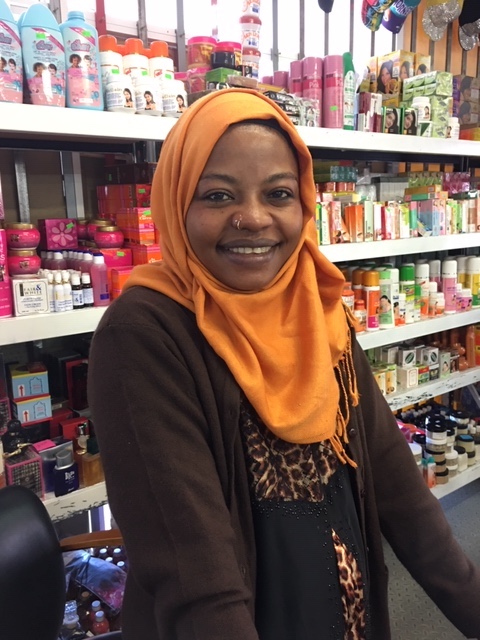
Amina is a refugee from Sudan who escaped persecution to come to Australia with her husband and children.  After a very difficult decade for the family, in 2000 Amina’s husband explained to his family that they must escape from their country.  They could all see the violence was worsening.  Amina sighed and quietly told me: ‘you can’t live like that.’

“Our family needed to be safe and away from all the fighting.  We were locked in our home a lot of the time.   Villages, and even people, were being set on fire around us.  My husband travelled ahead of us to secure somewhere safe in neighbouring Egypt.  I was glad to get out.  I was scared of the violence, but I was also scared of what the future would hold for my family.”

Everyone settled in Egypt as best they could and seven months after fleeing the horrors of Darfur and claiming refugee status through the UNHCR the family were accepted as refugees by Australia for re-settlement.

“I didn’t know what to expect.  This country called Australia seemed so far away and we were leaving my mother, father, brother, and other family behind.  When we moved into our first rented place in Perth, we had nothing.  No furniture – nothing.  I couldn’t imagine how we were going to manage in this strange country as I spoke no English.  I persevered and gradually I began to feel better.  Australia was normal and safe.  There was nobody with a gun.”

She made an effort to become involved in new things and joined the language classes and other activities at the Edmund Rice Centre WA. “It opened my eyes to how life could be. Everyone was so friendly.   No-one was judgmental and it didn’t matter what country you came from, or what your religion was everyone was treated equally. It was like a big family. I knew I had found my place.  I had a family again.  I belonged.

Amina was very motivated to learn and grew in confidence working in a variety of different jobs as well as alongside her husband in his business over many years. Recently she decided to seek another employment opportunity in aged care. She gathered all her study certificates, most of which are qualifications for working with the elderly, wrote a resume, was offered an interview and was ultimately successful, returning triumphantly to celebrate her new job with her friends and family.

Amina has seven children who are all doing well at school and university.   Her husband owns and manages a retail outlet and they have called Australia home for nearly 20 years. I thought back to how Amina described herself when she arrived in Australia as a frightened, lonely woman who knew no-one. Over the years she has studied to become a successful businesswoman with a close knit, loving family.

“Of course, I am much happier now.  We are settled and in our own home and we have become Australian citizens. I’m still tired with all the work, of course, but that’s ok most of the time.”

Father of the Lost Boys

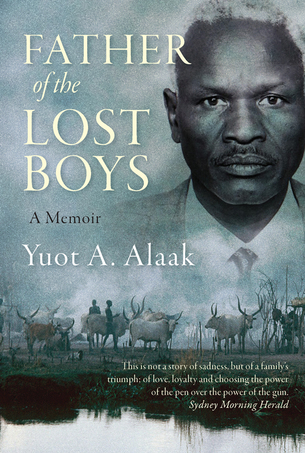
Father of the lost boys is Yuot A. Alaak’s memoir of walking through the deserts and the jungles across three continents in Africa to seek safety after his home was destroyed in the second Civil War between North and South Sudan. 

I interviewed Yuot during the 2021 Festival of Literature and Ideas in Perth and had the pleasure of spending time with him while he shared his story.

It is a remarkable testament to his grit and fortitude, but it is also an ode to his father, who as an educator and important community leader in South Sudan, was responsible for leading 20,000 boys and associated refugee groups from Ethiopia to Sudan and on to the safety of Kakuma refugee camp in Kenya.

The group became known as ‘the lost boys of Sudan’ and for many years their story and suffering were unknown.  Yuot writes “we kept waiting for the United Nations to come and help us,. Often the boys were under attack from not only the North Sudanese but also from the military of South Sudan that wanted to recruit the boys as child soldiers. Yuot himself trained as a child soldier when he was nine years old.

The boys first became refugees when they reached Ethiopia. During this time Yuot’s father was imprisoned and tortured. They were told by radio that he was dead and believed this to be the case for many years. Thankfully, his father lived and managed to find his way to the family and the lost boys.  He took on a leadership role with the refugees. Yuot’s father always said, “the pen is mightier than the sword” and did all he could to keep the boys safe from various opposing forces.

Organising his charges into groups of 1,000 with a head teacher, several other teachers, head boys and a few soldiers, he marshalled the big groups of boys in a military like operation to criss-cross various countries.

One of the more gripping parts of this memoir is the crossing of the Gilo River by the group. Fighting a swollen river with strong currents, Yuot’s father obtained twelve canoes and in a mass exodus they shuttled as many boys as possible across the river in canoes all day and all night. Some of the boys swam across on their own and they feared for their lives. Some drowned and some were taken by crocodiles.   In the end not all escaped as they were fired upon by competing armies.

Yuot writes passionately about the rest of their trek and arrival at Kakuma where they were the first refugees in the camp. Now decades later the refugee camp houses 180,000 people. 

His pride in his father, who is truly a remarkable man, shines through.  Eventually all the family were reunited and Yuot explains how they escaped to Nairobi where they still feared for their lives.  They were finally accepted as refugees by Australia years later.  

This is a story of triumph. There is humour too, as Yuot describes settling into his new home and learning what it meant to become an Australian.

Yuot arrived in Australia at the age of 14 and spoke no English.  He went on to learn the language, finish Year 12, and be accepted to university where he obtained degrees in engineering and geoscience.  He now works for one of Australia’s largest mining companies and enjoys writing.

This is an inspiring read and the publisher Fremantle Press has provided some great book club notes.

The Year of Welcome

Refugee Week is held every year in June to recognise the important role refugees play in society. This year the focus is on welcome. Living in a world of COVID-19 has often meant we’ve been thinking about ourselves and our own safety, but we shouldn’t forget those on the margins, whether as part of the Black Lives Matter Campaign or refugees and asylum seekers needing our help.

The Refugee Council of Australia has fabulous resources on their website, but I particularly recommend the facts page.  There is so much misinformation and propaganda on refugees, and this page provides a counterbalance. Refugee week is a great time to learn more.

From 14 to 20 June there are many activities available on-line. Refugee week promotes harmony and togetherness, aiming to unite individuals, communities, and organisations from many different backgrounds behind a common cause. “Through Refugee Week, we aim to provide an important opportunity for asylum seekers and refugees to be seen, listened to and valued.”

The welcome theme is also a reminder that, regardless of our differences, we all share a common humanity.  The organisers have joined forces with SBS Food Online. You’ll be able to watch and cook along with people from refugee backgrounds as they share delicious dishes from their home cuisines and tell us what each dish means to them.

Members of Australia’s refugee communities are also offering up their talents to bring an exciting week of entertainment.  Think creative arts, thought-provoking discussions, movies and more. 

For a full list of events and other opportunities in Australia so you can get involved, go to the website.

Hope and a home

Much loved Australian actor Kate Blanchett has collaborated with the United Nations refugee agency UNHCR and film website IMDb to share a “Films of Hope” lockdown watch list which she says will put the spotlight on the growing struggles faced by refugees.

images

In this time of COVID-19 it is easy to find yourself focussing inward and concentrating on what life means for you.  These films shine a spotlight on vulnerable others.  The films are inspirational, and I think this can take us away from own worries.  Perhaps for some of us, it limits the amount of light entertainment we are mindlessly streaming in isolation!

The two-time Academy Award winner has curated six films which focus and explore themes around human resilience and isolation as well as what it means to have hope and a home.

The selection features movies from around the world including several of my favourites Babel, The Other Side of Hope, News from Home and The Joy Luck Club. I also add another of my favourites about displacement and home that is not on the list — Lion.

UNHCR Australia National Director Naomi Steer said she hoped Ms Blanchett’s watch list will help connect people but also remind them of the importance of supporting others during the pandemic.

If you have time, please think about making a donation to one of the many agencies working with refugees.  I find it is positive for my state of mind to reach out and help others.  The two agencies I am involved with need financial and other support now –    Edmund Rice Centre WA and CARAD

At the same time watch a movie and be inspired!

joy luck club


The “refugee woman” label

Refugees are not a homogenous collective of people.

As I have highlighted throughout my work over many years the word “refugee” often has negative connotations, despite the many achievements of people from a refugee background.  When we talk about “a woman refugee”, these assumptions grow.

Researchers Lenette and Cleland have demonstrated there are recurring themes in how women from a refugee background are portrayed in the media and by some NGOs. A detailed analysis of UNHCR publication images demonstrate that the common picture of a refugee has been reframed in the last 60 years from “the heroic, political – mainly male – individual to a nameless flood of poverty-stricken women and children”

Refugees are often depicted as vulnerable mothers with children or babies that echo the Christian image of the Madonna and child. This imagery supports the representation of a woman with no political agency or voice and is often used by NGOs and the media to elicit sympathy. In these circumstances, one can often underestimate the fact that people, even in stressful situations, are more robust and are capable of making decisions. This kind of image erases the refugee voice, and renders their stories unheard.

Given refugees often experience war, veteran war correspondent Kate Adie reminds us that “the history of the war has been almost entirely written by men…and many general histories have no female names in the index”.

Surely, we all must support Aide’s view that women should not be written out of history.

Oboz uchodzcow Jowle w Garowe , Somalia