The year ahead

This time last year I wrote a blog looking back on the previous year for people from a refugee background. In 2018 I thought I would direct my gaze towards the future.

While I don’t have a crystal ball, I hope that 2018 holds the promise of better things for over than 65 million people worldwide, who are refugees, asylum seekers or displaced people. The situation in places like Yemen and Bangladesh reminds us there is much to do.

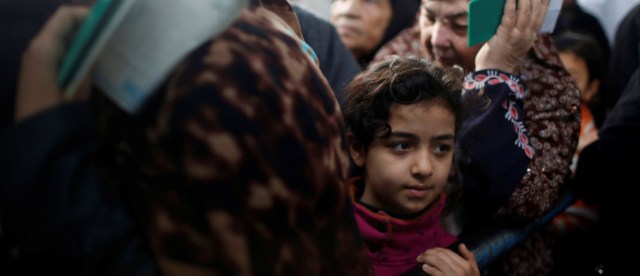
refugees fleeing - by Mohammed Salem
Photographer – Mohammad Salem

The refugee crisis remains a global issue requiring a global solution. Nearly one in every 110 people is fleeing war or persecution. This cannot be managed by one nation, governing body or multinational organisation alone. I read an interesting article ahead of the 2018 World Economic Forum held in Davos, Switzerland that asked: What if multinational businesses welcomed refugees displaced by social and political upheaval and worked with governing bodies to assimilate them into our global workplaces?

I’ll share one example on the Davos website that recently moved me. After making a 2,300-mile journey to Berlin, Mohammad Basel Alyounes, a Syrian refugee and accountant by profession, was greeted by a German news crew. When asked what he hoped for his new life in Germany, he said, “I want to work for Ernst & Young (EY).” An EY manager in Germany saw the interview, used social media to locate Alyounes — and EY hired him. He now works with their German Diversity Charter refugee support team.

Wouldn’t be great if more companies around the world took this approach?

Some countries continue to do more than others, just as individually some people do more than others. I’ve loved talking to people who have got involved with volunteering and working with refugees. There are some ideas on this website of organisations you could consider helping, either by volunteering time or donating money.

In Australia, our harsh Sovereign Borders policy remains in place and we continue to only accept around 13,000 refugees a year through our humanitarian program (plus a one-time additional 12,000 people from Syria). Canada accept 250,000 refugees per year.

Some bright news in 2017 included the re-settlement in the US of several hundred men who had been detained on Manus Island indefinitely by the Australian government – although many more wait for an outcome. In a recent edition of The Saturday paper there was a particularly moving article written by Imran Mohammad who is a Rohingya refugee held on Manus.

Manus protests
Peaceful protests continue on Manus

Also pleasing is the increasing number of university scholarships being provided to those who came to Australia seeking asylum.

Personally, I feel the number of Australian voices speaking out about inhumane policies in relation to refugees is increasing and getting louder. One of my main hopes for the year ahead is that more people take the time to learn about what is really happening in Australia and around the world.  My go-to resources in Australia are The Refugee Council of Australia and The Guardian Australia which is usually the only newspaper that provides detailed factual reporting about the issues and thoughtful insights. The latest opinion piece from Tim Costello, Chief Advocate for World Vision, comparing his visits to Bangladesh and Manus Island makes sombre reading.

For a global perspective, I follow the United Nations six monthly reports and updates and Human Rights Watch as well as a number of other sites listed on this website.

Sometimes, it is hard to stay positive and not be overwhelmed by the sheer size of the problem, but I always remind myself that making a difference in one person’s life can sometimes be enough.

Human rights begin close to home

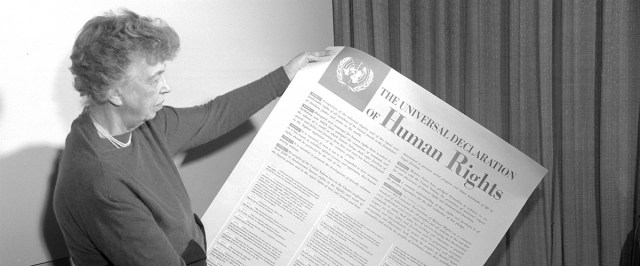
Eleanor Roosevelt HRD“Where after all do universal human rights begin? In small places, close to home – so close and so small that they cannot be seen on any maps of the world.”

Eleanor Roosevelt (pictured), chair of the drafting committee of the Universal Declaration of Human Rights, said these words 70 years ago when the Declaration was launched. She went on to say unless these rights have meaning close to home they will have little meaning anywhere else.   This is surely something on which to reflect during International Human Rights Day on 10 December 2017.

This is a milestone document that proclaims the inalienable rights which everyone is entitled to as a human being – regardless of race, colour, religion, sex, language, political or other opinion, national or social origin, property birth or other status. The United Nations General Assembly adopted the declaration in 1948. It is the most translated document in the world available in more than 500 languages. There’s more information on the United Nations website.

Wherever you are – there will be all sorts of events to recognise the day.   I’ll be attending a meeting at the Centre for Stories to discuss forming a Western Australian chapter of PEN, which is the worldwide association of writers that emphasises the role of literature in mutual understanding and world culture. PEN is also concerned with opposing restraints of freedom of expression and working to promote literacy itself.

The Universal Declaration of Human Rights empowers us all and reminds us of what we all have in common – our humanity. The principles enshrined in the Declaration are as relevant today as they were in 1948. We need to stand up for our own rights and those of others.


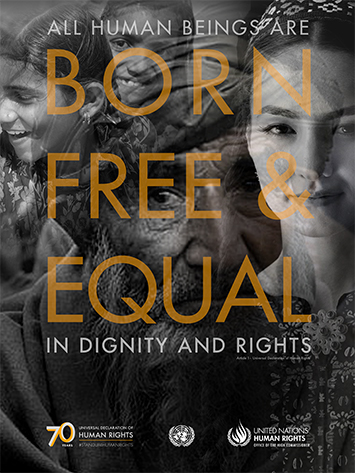
UDHR Poster idea C2


It takes courage to be a refugee

As a writer and researcher I remain concerned about the lack of empathy toward refugees and asylum seekers, as well as the simplistic narratives told by mainstream media. Refugees are vulnerable people who are fleeing war, violence and persecution in their home countries, and don’t deserve to be met with such overwhelming ignorance and fear.

Many of my friends tell me – “no-one chooses to become a refugee”.

As people who have faced persecution because of who they are (their race, nationality or membership of a persecuted group) or what they believe (their religion or political opinion), refugees need courage:

  • The courage not to deny identity or beliefs in the face of persecution.
  • The courage to leave all that is familiar and step into the unknown in search of peace.
  • The courage to keep going in the face of devastating loss, difficulty and despair.
  • The courage to begin again, to work hard and to maintain hope in an unfamiliar land.

The Australian Red Cross has listed five things to make a difference for refugees in your community, that we could all think about doing in 2017.  I love the fact that the first tip is to get informed and understand the facts.

Refugee Week is Australia’s peak annual activity to raise awareness about the issues affecting refugees and celebrate the positive contributions made by refugees to Australian society – this year it will be held from 18 to 24 June. Celebrated since 1986, Refugee Week coincides with World Refugee Day on 20 June.

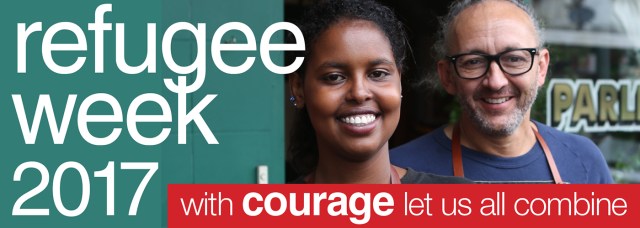
In Australia, the theme for Refugee Week is “With courage let us all combine”. Taken from the second verse of the national anthem, the theme celebrates the courage of refugees and of people who speak out against persecution and injustice.  You can find out more about Refugee Week from the Refugee Council of Australia website.

Refugee-Week-2017


Stocking the pantry

CARAD is a fabulous organisation in Western Australia that has assisted thousands of refugees and asylum seekers with services such as settlement support, advocacy, referral, financial aid, English lessons, homework support and emergency supplies, including food and other pantry items.

As winter approaches and the number of CARAD’s non-income asylum seeker clients has food donationsincreased, the pantry is running low and they need your help. They’re looking for donations of the following:

cooking oil, sugar, salt, pepper, plain flour, cereal, instant coffee, tea, long-life milk, basmati rice, tinned tuna, tinned tomatoes, tinned fruit, honey, dried chickpeas or lentils, nuts and dried fruit, shavers, shaving cream, body wash or soap, toothbrushes, shampoo, male and female deodorant, laundry detergent, dish washing liquid, and tissues.

You can drop off your donations to their office at 245 Stirling St, Perth, Monday to Friday between 9am – 4pm.

Please spread the word.

For those of you who are keen to get involved and support some of our most vulnerable asylum seekers and refugees, volunteering with organisations such as CARAD is a great option. They have volunteering information sessions coming up, held at the CARAD office on:

  • Monday 22 May from 12-1 pm
  • Wednesday 24 May from 5.30-6.30 pm

Sessions will cover what CARAD does, the specific volunteer roles available, and the process for becoming involved. After attending an information session, volunteers will then be invited to participate in a ‘Building Bridges’ Training Course. To register your attendance please email sellie@carad.org.au.

Seeking Volunteers

I am always heartened by the amount of people I meet who want to get involved and make a difference in the lives of refugees and asylum seekers. The Australian Red Cross is currently offering one such opportunity in Perth. It is looking for volunteers to help our community better understand the real situation faced by people seeking asylum in Australia.

Volunteers are required to help Red Cross deliver educational workshops to schools and community groups in Western Australia, teaching people about the asylum seeker journey and why people seek protection in Australia.

If this sounds like something you would like to do, The Red Cross is hosting a volunteer training day coming up on Saturday 21 January. More information is on the In Search of Safety Volunteer Training flyer.

The Red Cross is a wonderful global organisation with a commitment to help people in need, regardless of nationality, race, religious beliefs, class or political opinions. It has been working with people impacted by migration – including people seeking protection – for almost 100 years.

red_cross-logo

2016 in review

I thought I would take this opportunity to reflect on 2016 in relation to refugees, asylum seekers and the importance of stories to help us understand what is happening in the world.  There were many low points, but also some inspiring highlights that made me marvel at the strength and humanity of others. I hope you’ll take time to read this longer post from me.

It was a challenging year in Australia and the international community. The conflict in Syria worsened but I am hopeful that the tentative peace deal brokered by the Russians may help.   syrian-refugeesThe escalating violence and insecurity continued in South Sudan and Yemen.   We saw an amazing welcome initially from Angela Merkel and Germany in welcoming thousands of fleeing refugees as the crisis of displaced people had a dramatic impact in Europe. Populist groups in the UK, USA, Austria, Denmark, Germany, France and the Netherlands used the world’s biggest refugee crisis to spread fear and hate, inflaming tensions about people who may be different to us. In Australia where I live, the re-emergence of the One Nation party led by Pauline Hanson, has reflected these sentiments.

Walls, both physical and metaphorical, have been built in countries around the world to stop many of the people most in need from seeking help. According to the UNHCR, 1 in every 113 people globally is now either an asylum-seeker, internally displaced or a refugee.

As a writer and former journalist, I followed with fascination and often despair the twitter postings of Bana al-Abed, a young seven-year-old girl whose postings offered the world a glimpse into the deprivation and violence in the besieged city of Aleppo. Bana and her family were recently evacuated to the Turkish capital.

I worried about writer and journalist friends in some of the world’s trouble spots. I could only be thankful that people like my friend Karl Schembri were able to post on the ground reports from tragic situations in Yemen and Syria. Ben Doherty and the team from nauru-filesGuardian Australia continued to lead the way with the most in-depth updates on the refugee and asylum seeker situation as it related to Australia. In a global exclusive, the Nauru files which included over 2,000 documents showing the despair and horror of Australia’s offshore detention, were leaked to the Guardian. This was followed by graphic reports on the ABC’s 4 Corners that also screened around the world.

I know, as someone who worked in news for many years, a picture can tell a story “better than a thousand words” In 2015 it was the image of Aylan, the two-year-old Syrian refugee, lying face down on a Turkish beach that seemed to galvanise western countries into responding to the urgency of the Syrian refugee crisis. Australia increased its refugee intake by 12,000 to help Syrian and Iraqi refugees.  After a very slow start (why did it take nearly a year?) 2016 finally saw some of these refugees arrive in Australia.

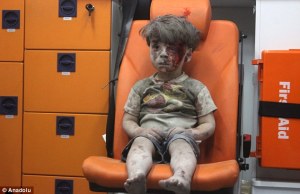
In 2016 it was the image of young Oman in the back of the ambulance, which I am sure will show up in all your news feeds, as one of the photos of the year. oman-in-ambulanceThis photograph and video seemed particularly poignant and tragic to me. Oman was wearing shorts and a t-shirt featuring a cartoon character. His hands were in his lap. In a moment of pure horror, he lifted his left hand to his face, ran his fingers through his hair and then back down the side of his face before putting his hands back in his lap. He looked at the palm of his hand covered in blood and, unsure what to do, turns it over and wipes it on the seat. In that moment, he could have been our son, our grandson, our brother or our nephew, trying to get something off his hand. He looked straight at the camera, from a bright orange seat in the back of an ambulance where medics were rescuing people amidst the violence and chaos, towards the voices. He blinked and looked away… but I couldn’t look away from Oman.
yusra-mardiniOn a brighter note there was the uplifting news of a refugee team being selected for the Rio Olympics. I was drawn to 17 year old Yusra Mardini who saw terror in the eyes of her fellow passengers as the inflatable dinghy she was in trying to cross the Mediterranean began taking on water. Most of the people in the boat could not swim, but 17-year-old Yusra could, and she dragged them to safety.

The year ended with good news in Australia with a landmark decision in the Federal Court of Australia that ruled against the Minister of Immigration on the question of citizenship for people of refugee background. The case, brought by the Refugee Council of Australia with pro bono legal support, provides hope for 10,231 people that the department confirmed were in similar situations. This group of people from a refugee background have had their citizenship applications ‘put in the bottom drawer’, as the Department has dragged its feet in offering this large group of new Australians citizenship.

Personally, it was an amazing year with my book More to the story –conversations with refugees published by Margaret River Press selling very well. There are a small number of copies left that can be purchased online. I participated in writers festivals- the highlights being Big Sky in Geraldton and the Perth Writers Festival. I was a guest at community events, such as the Katanning Harmony Festival, where I gave the address on Australia Day. I gave library talks and attended book clubs throughout the year to help raise awareness about refugees and asylum seekers. Throughout the year I met hundreds of people, many of whom told me they were inspired to volunteer for organisations working with people from a refugee background including CARAD, Refugee Rights Action Network and Joining the Dots’ Welcome Dinner Project. More of you have signed up to receive information or made donations to organisations like the Refugee Council of Australia,  Australian Red Cross, Amnesty International and Edmund Rice Centre WA where I am proud to serve on the board. I truly believe that hundreds of people who have read the personal stories featured in the book have taken time to reflect on what is happening around the world and in their own lives.

MYAN group 2016One of the year’s highlights for me was my involvement with Shout Out, a public speaking program for young people from a refugee and migrant background run by the Multicultural Youth Advocacy Network. I feel very privileged to have been a part of helping some fabulous young people to develop their personal stories and public speaking skills.

Perhaps the most satisfying experiences in 2016 came in schools where I spoke. I started the year on a high with the Margaret River Senior High School Social Justice group – why don’t more schools have a group like this?  I visited schools in the Geraldton region and elsewhere around Western Australia, and ended my engagements at Churchlands Senior High School with a day full of talks to different classes. We know that many schools around Australia now have More to the Story in their school libraries or are studying it as part of the curriculum.

I continued to be inspired by my close friends – Paul and Naw Bi from Burma; John, Farid and Fauzia from Afghanistan; Piok and Akech from South Sudan. We made more new friends as our lives became more involved with people from a refugee background – some of whom I hope will feature in my next book. We celebrated Karen New Year, Eid and other festivals with people of different cultural backgrounds. We heard sad stories, tragic stories and inspirational and happy stories

And finally I made good progress on my doctoral studies about life writing and human rights in relation to refugees. I am approaching the half way mark of a four year course and I hope my research and writing might make a small difference. As 2016 drew to a close I like to believe that hope can shine a bright light in darkness.  There are some thoughts on this from World Vision that you might like to read.

I hope you’ll keep following this website in 2017. You can sign up to follow it and receive information as I post – just click the button on the right.  Sometimes it is helpful to have useful information about an issue in one place and don’t forget you can contact me via the website or join in the conversation via the More to the Story facebook page.

I wish everyone peace in the coming year.

Landmark Win Provides Hope

I’m pleased to report that last week after a long fought case, The Federal Court ruled against the Minister for Immigration on the question of citizenship for people of refugee background.

The Court found the Minister had ‘unreasonably delayed’ making decisions on citizenship applications, depriving eligible former refugees from having their full rights as Australian citizens.

The case, brought by the Refugee Council of Australia with pro bono legal support, provides renewed hope for 10,231 people that the department confirmed were in the same situation. This large group, although eligible for citizenship, have had their applications ‘put in the bottom drawer’, as the Department dragged its feet in completing this simple but important task.

Lawyers for the former refugees argued that these delays have been unreasonable and appear discriminatory.

The Court heard that the excessive delays have caused significant anxiety for the many thousands affected, as they have been unable to reunite with their families while their citizenship remains in limbo.

Tim O’Connor, acting CEO of the Refugee Council of Australia, said “this decision is a landmark ruling, providing hope for over 10,000 people around Australia who have been denied justice by the Immigration Department. Our government has denied them basic rights to stability and importantly, family reunion, through slow and targeted decision-making. Today’s ruling recognises this injustice and represents a first step towards a resolution for thousands and a chance for them to start to rebuild their lives.”

The Refugee Council of Australia do terrific work in promoting the development of humane, lawful and constructive policies towards refugees and asylum seekers. Find out how you can support its work and get involved here.

refugee-council-of-australia-logo


Human Rights Day

The Centre for Stories in Northbridge Western Australia is holding a special event on Human Rights Day, Saturday 10 December, involving Yirga Gelaw Woldeyes, Mary Ann Kenny, Baden Offord, John Ryan and Yasue Arimitsu. You may not know their names, but all these people make a difference in our world. They will be sharing the stories and books that have influenced and impacted upon their human rights work.  Come along and listen. If you aren’t in WA – look for an event near you so you can take participate in International Human Rights Day.

Human Rights Day commemorates the day on which, in 1948, the United Nations General Assembly adopted the Universal Declaration of Human Rights. In 1950, the Assembly passed a resolution inviting all States and interested organisations to observe 10 December of each year as Human Rights Day.

The United Nations asks that on Human Rights Day we reaffirm our common humanity. In our current global environment I hope we can all take time to reflect on these issues more. Whoever we are and wherever we are, we can make a difference…. in the street, in school, at work, in public transport or at the voting booth. It’s up to all of us to understand the issues and the true stories so that we can defend the rights of a refugee or migrant, a person with disabilities, an LGBT person, a woman, a child, indigenous peoples, a minority group, or anyone else at risk of discrimination or violence.

Personally, I can’t think of a better way to mark Human Rights Day than to attend this Centre for Stories event. The speakers are all significant voices in the human rights movement and I’m sure this event will sell out very fast. If you are interested I urge you to reserve your place soon. I’ll look forward to seeing you there or hearing about your activities elsewhere in Australia and around the world.

hrd-logo

Youth Advocacy in WA

It was a real pleasure to attend the first 2016 Multicultural Youth Advocacy Network (MYAN) Forum in WA recently.

The Network is the peak body on multicultural youth issues, representing the needs and interests of young people from refugee and migrant backgrounds. It has offices in every State and Territory and the WA organisation is very active www.myan.org.au/wa/

It holds networking forums regularly for all agencies and groups who are concerned with multi-cultural youth issues. The theme for the first forum was refugees and asylum seekers. During my visit, I met representatives from so many groups and agencies doing outstanding work with our young people: the Red Cross, the Police Department, Princess Margaret Hospital, local Councils, agencies like Communicare as well as organisations like Beyond Blue.

I was invited to speak about my book. I also focused on the need to not just advocate, but to also share positive stories and to correct mis-information so we can engage in better conversations.

My talk was followed by moving and thoughtful presentations from a number of young people who attended a special youth summit about refugees and asylum seekers. Apart from sharing their own personal life stories as refugees, they also presented some suggestions for changing the dialogue about refugees. One of the many things this group has done is start a wonderful Facebook page called Young Refugees of Western Australia which regularly posts positive news stories about young people. Check it out!

I was also delighted to meet Jamila Jafri at the event and to hear her story of fleeing Afghanistan with her mother and her younger brother when she was five years old. She is now 20 and studying at university in Australia. You can read her story on http://behindthewire.org.au/


Volunteers Needed

CARAD is a fabulous organisation in Western Australia that has assisted more than 5000 refugees and asylum seekers with services such as settlement support, advocacy, referral, emergency and financial aid, English lessons and homework support. For those of you who are keen to get involved and support some of our most vulnerable asylum seekers and refugees, volunteering with organisations such as CARAD is a great option.

CARAD runs an Application Assistance Workshop (AAW) program that helps people with reading and writing assistance as clients collect the information and documents needed for their application under the temporary protection visa “Fast track” system.

Volunteers are needed for workshops on Saturday mornings during December 2015 and February 2016. If you are already a trained volunteer and current member of CARAD, who has excellent comprehension skills and is comfortable working one-on-one with clients, please contact CARAD at eira.clapton@gmail.com.

If you are interested in helping with this program, but not yet trained, CARAD are conducting a AAW training day on Saturday 7th February 2016. You will need to be available on either Wednesday or Thursday evenings or Saturday afternoons from February 2016 for at least a six month commitment. You can register your interest by sending an email to secretary@carad.org.au

CARAD logo