Stories that shape us

Isn’t this a great theme for a writer’s festival?   I’m looking forward to participating in the Margaret River Readers and Writers festival that runs from 1-3 June in the picturesque south west of WA.

Each of us builds a narrative about ourselves and I’m lucky enough to interview three writers with many layers to their stories. Even though two are fiction writers, each has been influenced by their own stories.

Still glowing from her Stella Award short listing, I will interview my friend Shokoofeh Azar about her book The Enlightenment of the Greengage Tree. It is a chance for us to visit the world of magical realism and understand real life events in Iran after the 1979 revolution. It is the moving story of a family told in the style of classical Persian literature.  Here is an excellent interview with Shokoofeh that gives you some more information.

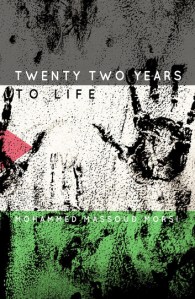
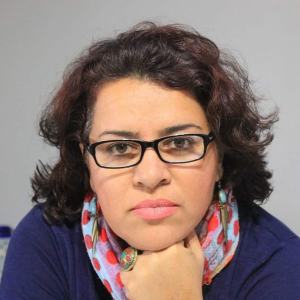
My second interview is with Mohammed Massoud Morsi an Egyptian/Danish/Australian writer. If you visit his website you’ll see he is a photographer and so much more. I spent two hours with him over coffee this week and we could have talked for much longer. We will be discussing his latest book, Twenty Two Years to Life, which is a work of fiction, based on a true story. His raw and powerful words took me, as the reader, to the realities of daily life for an ordinary family living in Gaza.

My final interview is with Sisonke Msimang. We will trace her life through the lens of race, gender and democracy. Sisonke’s memoir is called ‘Always Another Country’. If you get a chance have a look at her TED talk. you will hear her question our emphasis on storytelling, as well as spotlight the decline of facts.

I round out my festival participation in an enticing session called Coffee and the Papers on Sunday morning. Fellow panellists Ian Parmeter, Nikki Gemmel and Chris Nixon and I will dissect recent news events. Should be interesting!

I’ll let you know about any new writers I discover at Margaret River.

Enlightenment of the greengage tree cover  twenty-two-years-to-life cover  always another country book cover

Writing is like breathing

I am thrilled for my friend Shokoofeh Azar, who has been shortlisted for this year’s Stella Prize.

A major literary award, the Stella Prize seeks to recognise and celebrate Australian women writers’ contribution to literature and champion cultural change. Named after one of Australia’s iconic female authors, Stella Maria Sarah ‘Miles’ Franklin, the prize was awarded for the first time in 2013.

On a previous blog I reviewed Shokoofeh’s book The enlightenment of the greengage tree and I highly recommend it to everyone.

I also recommend listing to a great interview with her on the Stella website. It’s a Q&A format and I just love Shokoofeh’s answers: “First of all, I am a writer because I can’t stop myself writing. Writing, like breathing, is essential to my life. Secondly, it’s the only way I know to fight for my values in Australia and Iran, and for humankind.”

The 2018 Stella Prize winner will be announced this week – on the evening of Thursday 12 April.

Books of the year

I love this time of the year when you can sink into a good book. Depending on where you are in the world, you could be reading in your deck chair in the summer garden or snuggled up in your favourite chair by the fire. I’m really looking forward to taking a break from work and study and some guilt-free reading time

As the year comes to a close it can be a time for reflection, regardless of your culture or religion. I’ve been thinking about the many interesting and inspiring books I have read this year and wanted to give you some recommendations. It’s hard to pick the best but I have chosen two fiction and two non-fiction books for your summer/winter reading list or as a Christmas gift suggestion.

Fiction

Shokoofeh Azar’s The Enlightenement of the Greengage Tree is an introduction to the wonderful world of magical realism and I highly recommend this for a different reading experience.

This year I re-read an old favourite and thought I would include it. Café Scheherazade by Arnold Zable traces the experience of Jewish survivors whose lives reflect the courage of refugees everywhere.   Arnold is one of my favourite authors – a master story teller.

Non- fiction

City Of Thorns by Ben Rawlence is my stand out book for the year.   It traces nine lives in the world’s largest refugee camp, Dadaab in Kenya. It is haunting and at the same time inspiring.   I was lucky enough to meet and interview Ben at this year’s Perth Writers Festival.

Not Quite Australian by Peter Mares is easy to read and informative at the same time.  I learnt so much from this book. Peter discusses how temporary migration is changing Australia. Did you know there are more than a million temporary migrants living in Australia today? Case studies, personal stories and supporting data are compelling in this book.

There are so many more books and I am sure you have your own favourites… I’d love to hear from you about your list. 

Season’s greetings to all and happy reading.

P.S. I am really looking forward to a new release called The Power of Good People – surviving Sri Lanka’s Civil War by Para Paheer with Alison Corke.


A Country of Refuge

I really enjoyed the anthology edited by Tom Keneally and Rosie Scott. A country too far features fiction, memoir, poetry and essays about seeking asylum by 27 of Australia’s best writers including: Anna Funder, Kim Scott, Raimond Gaita, Christos Tsiolkas, Gail Jones, Les Murray and Dorothy Hewitt.

It was released in 2013 and I can remember attending a writer’s festival event to hearTom and Rosie talk about how the book came together. Rosie talked about the way in which the best writers can get to the heart of things because of their clarity of language and powerful insights. Tom, in in his eloquent way, reminded politicians that the inflammatory and inaccurate language they were using was de-humanising. In the introduction to the book he wrote “the fact that they are talking about the most marginalised people on earth – deeply traumatised refugees who have lost their countries, homes and families through disasters of every kind – is lost in a storm of venom and cliché.”

It is a powerful book of unique voices and experiences.

Little did I know that it also inspired another book in another country. While on holiday, I spent my obligatory self-indulgent morning trailing over all the floors of Foyles A Country of RefugeBookshop in London and came across A Country of Refuge – an anthology of writing about asylum seekers by outstanding British and Irish writers.  Editor Lucy Popescu conceived of the idea in 2014 when she received her copy of A country too far just as the European refugee crisis began to make news when thousands of people fled across the Mediterranean into Europe.

Featuring outstanding writers like Sebastian Barry, Rose Tremain, Marina Lewycka and William Boyd, it takes the same approach as A country too far, combining, memoir, short fiction and essays with poetry. Barry’s opening short story ‘Fragment of a journal, author unknown’ recalls Ireland’s famine years in the nineteenth century when tens of thousands of starving people risked voyages across the Atlantic in hazardous coffin ships. Many disturbing parallels can be drawn between the exodus of the famine years and the current refugee crisis.

The book is poignant and thought-provoking.

Both anthologies are highly readable and can be picked up and put down as the mood strikes, which given the topic, is not a bad way to read and reflect on them.

Barbara Kingsolver, praising the skill required to write a memorable short story, described the form as entailing ‘the successful execution of large truths delivered in tight spaces.’ All The writing in A Country of Refuge and A country too far may be short, but you won’t forget what you read for a long time.

A Country of Refuge – edited by Lucy Popescu (Unbound, 2016)

Recommended reading

While I was on holidays recently I put together a list of some of the most interesting books about refugees that I have found, and added it the website. This reading list is not exhaustive, but it should have something for everyone. My recommended book list includes books about:

  • Personal stories,
  • The Australian situation,
  • The European situation,
  • Fiction, and
  • Other interesting reads.

Some of the books are very new and some were published a while ago. One published over 10 years ago is still a wonderful read – The rugmaker of Mazar-e-Sharif is likely to remain an Australian classic for many years to come. New publications such as The New Odyssey – the story of Europe’s refugee crisis are wonderfully researched, but give you a personal perspective on the current global situation.

I have also included some fiction, as book clubs contact me for recommendations. What is the what by Dave Eggers, for example, is heart breaking but rewarding at the same time. I’m not sure why some book clubs don’t feel comfortable taking on non-fiction – you couldn’t go wrong with Talking about Jane Austen in Baghdad by Bee Rowlatt and May Witwit or City of Thorns by Ben Rawlence.

I’ll keep adding to the list and I would love to hear about other recommendations.

‘I have stories I want to tell’

Want to read a magical story about an amazing family set alongside a gripping political commentary?  The enlightenment of the greengage tree by my good friend Shokoofeh Azar, which will be launched this week in Australia, does just that.Enlightenment of the greengage tree cover

Living a large part of her life in Iran means most of Shokoofeh’s writing has been published in Farsi. This is her first novel to be written and translated into English with Western readers in mind. It is an opportunity for us to experience the art of Persian story-telling in the style of magical realism at its best. Alice Pung wrote in an early review: ‘It is incredible. I have never heard such a voice before… Azar writes about Iranian history with the lightness of a feather’s touch. Transcendental, brilliant and beautiful.

Shokoofeh came to Australia in 2010 as a political refugee by boat. Sadly sometimes Australians find this the most interesting thing about her. On a blog by Rashida Murphy, another novelist, Shokoofeh said: ‘Surviving a boat journey does not define a person for life. How I got here is not what I’m about. I have stories I want to tell. I paint. I’m a mother.’

Shokoofeh’s book is published by the small independent publisher Wild Dingo and is being launched by Professor Baden Offord, the Director of the Centre for Human Rights Education on Friday 18 August at the Centre for Stories.

This is a book that represents the rich literary tradition of Iran. I loved it.

Shokoofeh Azar

They Cannot Take the Sky

The sky is like a friend for a prisoner, because around you everything is metal fences, but the sky, they cannot take the sky.

These words are from a book of stories from people who have been detained by the Australian government for seeking asylum.  Each person reveals in their own words their journey, daily struggles, their fears, hopes and dreams.

The title of the book comes from Behrouz Boochani’s story.  Behrouz is a Kurdish They cannot take the sky coverjournalist and writer who fled from Iran. He has been in detention on Manus Island since August 2013. He writes and reports from inside the detention centre when he can and has over 4,000 followers on Facebook. A film he shot entirely on his mobile phone about the life and treatment of refugees detained offshore, premiered at the Sydney Film Festival recently.

As I read Behrouz’s story and others by people of refugee background, I moved between admiration for people’s resilience and optimism to despair and anger.

The editors have collated the testimonies of more than 20 refugees from Iran, Iraq, Sudan and Afghanistan. Some have had their claims for asylum granted and have gone on to become outstanding members of the Australian community. Munjed is a surgeon who had to leave Iraq because he refused to mutilate army deserters. Now that our society has decided not to waste his gifts, he is working again and specialising in prosthetic limbs.

My friend Jamila from Afghanistan has also told her story. She was placed in detention as a five year old child with her mother and brother. Thankfully after some time her family were re-united and she now studies law at university in Perth. Others, unfortunately continue to languish in detention.

As Maxine Beneba Clarke writes: ‘This book will make Australians ask –again – of ourselves; what kind of people are we and how did we possibly let it come to this?

The not-for-profit group Behind the Wire is responsible for They Cannot Take the Sky. I suggest you take a look at their website – as well as information on the book they have a podcast, audio stories, videos and a series of portrait photographs. They are also currently running an outstanding exhibition at the Immigration Museum in Melbourne and I certainly hope it tours widely.  It was developed in collaboration with the Museum by Behind the Wire and a volunteer reference committee of individuals with lived experience of seeking asylum.