Finding Freedom

Welcome to Refugee Week. Held each year around World Refugee Day on 20 June, it’s all about increasing awareness of the issues refugees face and the contributions they make in our communities.  

The Refugee Week theme this year is Finding Freedom: Diversity in Community.

Most of us in Australia don’t have to think about freedom; it just is. But when I was writing my two books about refugees the concept of freedom and what it meant came up so often.   

I stood still and turned my face up to the sky to let the raindrops fall on it. Farid kept telling me to hurry up and get out of the rain. I will never forget how it felt on my skin and the smell of the wet soil. I looked at Farid and my boys and laughed out loud. I told them I needed a few minutes to just stand in the rain and feel freedom.

These are words my friend Fauzia used one afternoon as we shared a coffee. She was talking about when she arrived in Australia and was reunited with her husband Farid at Perth Airport after seven years. In fear of the Taliban, Farid had set out to find a new life for them in Australia. You can read more about Fauzia and Farid’s story on the More to the Story website.

Whenever I talk to refugees, they are always grateful for their freedom. The journey towards freedom represents the challenging path that many refugees take, escaping oppression, uncertainty and persecution for safety in a new place.  

In these new spaces, community is more than just a physical place or a group of people; community is a lifeline. It offers refugees safety, belonging, and the strength to rebuild. Every day millions of people across the world embark on dangerous journeys for the sole purpose of finding safety and freedom. From Australia to nations across the globe, settling into a new environment after experiencing the perils of a refugee’s journey can also provide the opportunity to live, to love and to dream.

This coming refugee week I urge you to get involved in some of the many events taking place around the world. In Perth, where I live, there are so many opportunities whether it’s at the local library, council, church or school. You can find out more on the Refugee Council of Australia website

When we understand the people, their vulnerability, and their issues, we all play a part in helping refugees to find freedom and community.
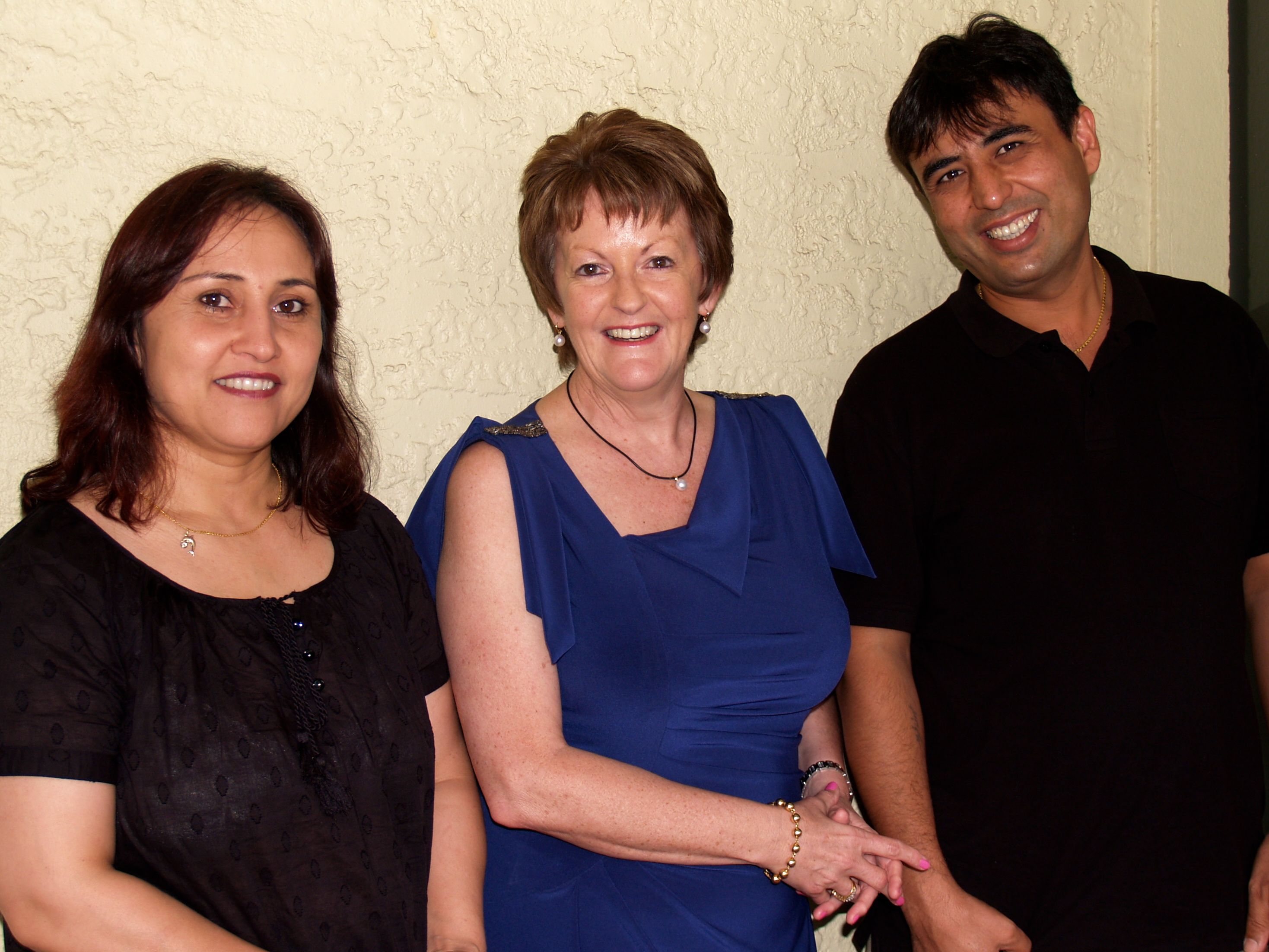
Farid and Fauzia with Rosemary

A Permanent Home at Last

Thousands of refugees living and working in Australia will be granted permanent residency after ten years in limbo living with Temporary Protection Visas or Safe Haven Enterprise Visas.

My Afghan friend said he cried when he heard the news.  He, like many other refugees with temporary status, is working and paying taxes. He works in the mining sector after having successfully gained a scholarship to study for a university degree in Australia. He already had one degree from India and is a fine upstanding young man.   

Why wouldn’t we want him as an Australian citizen?  He is a refugee who fled from persecution by the Taliban in fear for his life.  For years I have asked myself why the Australian government was persecuting him further.

This week’s announcement from the Albanese Government is a life changer for over 19,000 refugees who entered Australia prior to the dreadful ‘Operation Sovereign Borders’ policy that was enacted in 2013.  This policy centred around then immigration minister Scott Morrison’s mantra of ‘stop the boats’ and was applied to anyone who had arrived by boat to seek protection in Australia before 19 July 2013.  

Since then, those with temporary visas had to reapply every few years for their visa despite having been found to be refugees seeking asylum.  Restrictions also included no possibility of reuniting with families, no support for tertiary study, travel restrictions and limited access to disability and other social supports.

The Refugee Council of Australia is celebrating this long-awaited policy change, which was a Labor election promise. “Today’s announcement from Immigration Minister Andrew Giles is righting almost a decade of an inhumane policy which achieved nothing but untold harm and trauma to people who sought protection in Australia,” said Chief Executive Officer Paul Power. 

You can read more on their website or in the Guardian Australia.

These changes have been hailed by refugee advocates across Australia as “a victory of unity and compassion over division and fear”.

Today I am once again proud to be an Australian.

Reflections on Refugee Week

We have just finished Refugee Week which was celebrated with major events around the world. The week aims to promote harmony and togetherness with the theme this year of Healing. The importance of human connections has been underscored by the pandemic and the lessons from this can help our community in so many ways. 

We can draw upon shared hardship to heal wounds, to learn from each other and to move forward. Healing can occur through storytelling, through community and through realisation of our intrinsic interconnectedness as individuals. The common theme is a reminder that, regardless of our differences, we all share a common humanity.

I spent some time during the week reflecting on the change of government in Australia and hoping conditions can be re-set for so many people who came as asylum seekers to Australia and whose lives currently remain in limbo.

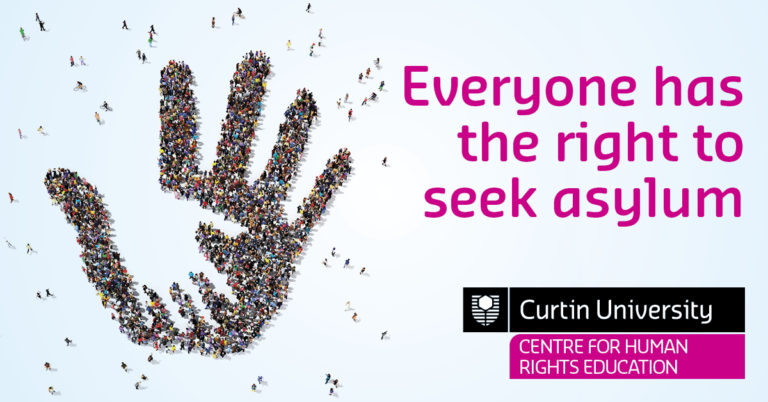
One of the organisations of which I am a director is CARAD – the Centre for Asylum Seekers, Refugees and Detainees. Along with the Centre for Human Rights Education at Curtin University where I partly studied my doctorate, CARAD is extremely active in advocacy for those people with lived asylum seeker and refugee experience including those on temporary protection visas. Our new Prime Minister Anthony Albanese said before the election that his government would oppose temporary protection visas. Right now in Australia more than 15,000 people of various nationalities are on temporary protection visas.

We need to keep them to their word.

I am in Europe at the moment and am watching with horror as the United Kingdom introduces its “Rwanda policy.” This policy will mean people who come seeking asylum by boat across the English Channel will be sent to Rwanda for processing. The UK Prime Minister has said they modelled this approach on Australia’s offshore processing – how horrible! These asylum seekers have little chance of a getting any sort of visa.

People are being punished all around the world for fleeing persecution and seeking asylum. The United Nations High Commissioner for Refugees strictly states that it is not illegal to seek asylum. 

Where has our humanity gone?

Australia must do more

The Australian government has made much of its assistance to Afghan refugees claiming it has already accepted 3,000 refugees from the country. What they don’t say is that the 3,000 is simply a part of our existing humanitarian intake of just 13,750 places. 

We have done nothing extra to help a country and its people in crisis. Nothing.

The Refugee Council of Australia is calling on the Australian Government to provide an additional 20,000 humanitarian visas to refugees from Afghanistan in its new brief

What’s the scale of the problem? At the beginning of 2021, 2.6 million citizens of Afghanistan were refugees, 239,000 were seeking asylum and 2.9 million were internally displaced. The Taliban’s takeover of the country, culminating in the capture of Kabul in August 2021, is resulting in ever-increasing displacement. By September 2021, UNHCR had reported 22,120 newly arrived refugees in neighbouring countries and 592,531 people internally displaced since January 2021.

Many more people in Afghanistan are yet to be displaced but fear for their lives because of their work as women’s rights activists, human rights defenders, government officials or staff employed by embassies or western armed forces or because of their religion, ethnicity, or sexual orientation.

For a personal view read the story written anonymously for the Guardian newspaper by a young woman in Kabul who was burning and hiding all her educational certificates in fear of the Taliban. 

So as an affluent and safe country, Australia must do more. Helping just 3,000 people is not enough. The Refugee Council is lobbying the government to accept 20,000 refugees. We have done it before when we assisted Chinese Vietnamese and Syrian and Iraqi refugees in crisis. 

We have a long relationship with Afghanistan. Over 20 years, Australia deployed 39,000 defence personnel to Afghanistan at a cost of $10 billion and spent $1.9 billion on projects to support women’s empowerment, human rights, education, health, and good governance. 

We can’t just sit by and let all our excellent work disappear under the hands of the Taliban. We need to step up and match the work done by other countries around the world.

Accepting 3,000 refugees is not enough.

Reflections this Refugee Week

Unity is the theme of refugee week this year and I can’t think of anything more apt. The volatility of life in recent times has shown us unequivocally that we need to work together, often merely to survive, let alone to thrive and progress.

Refugees make such a positive impact in this country. If you look, there are inspiring stories everywhere. I particularly enjoyed reading Hava Rezaie’s story about her work as a refugee women’s rights advocate in Afghanistan, Iran and now in Australia.

Sharing food has always been a special part of refugee week and many television channels have been featuring programs dedicated to food from different countries made by refugees.  Here is a selection of recipes from refugees that you might enjoy exploring. 

Finally the Refugee Council of Australia is advocating for over 6,000 refugees who are stuck in an indeterminable limbo.  These children, women and men have already been granted permanent humanitarian visas to enter Australia. But they’ve been denied entry – some missing out by mere days when the borders closed because of the pandemic. On every level, this is just a dreadful situation. 

In just over a year of COVID-related travel restrictions, more than 500,000 people have been able to enter Australia. These include returning citizens and permanent residents but also many who are neither – including movie stars, tennis players, business people and skilled migrants who were given automatic exemptions.

From refugees living without work rights for over seven years in Indonesia, to those in sprawling refugee camps in Jordan, families are now trapped, awaiting our nation to fulfil its promise to get them to safety.   

My hope is that we never lose sight of those people in vulnerable situations. Let’s take the opportunity to start afresh and rebuild our lives together… in unity. 

International Human Rights Day

During this week we celebrated International Human Rights Day.  On the 10th of December we remembered the day the Universal Declaration of Human Rights was proclaimed in 1948.   It is a milestone document that guides much of international law today covering the inalienable rights which everyone is entitled to as a human being, regardless of race, colour, religion, sex, language, political opinion, national or social origin, property, birth, or other status.

In this year of COVID19 the theme is recover better- stand up for human rights.  The pandemic exposed failures and exploitation of poorer people around the world.   While there were heart-warming examples of people coming together in more caring ways during COVID19, I feel those suffering in refugee camps were almost forgotten.  

Social distancing simply isn’t possible for the one million Rohingya refugees who live in Cox’s Bazar refugee camp, in south eastern Bangladesh. Families live in close quarters inside flimsy bamboo shacks, using communal toilets and water facilities. Sometimes the most basic items, such as soap, are lacking. It is one of the most densely populated places on earth.

I think how lucky I am to live in Western Australia where life has been relatively normal with exceptionally low case numbers. But then I reflect on the cruelty of the Australian government’s decision to slash support to people seeking asylum in the 2020-21 Budget. This decision, according to the Refugee Council of Australia, puts over 100,000 people, including around 16,000 children, at further risk of homelessness and destitution.  Refugees are living in Australia on various temporary visas because the government will not recognise a large cohort of people who came to Australia seeking asylum.  These are the forgotten people.

During this year, while attempting to publish stories about the lives of refugees, I was told by several publishers that the reading population has “refugee fatigue”. Is that true? If it is, what does it say about our humanity?

Eleanor Roosevelt, one of the declaration’s authors stated, “human rights begin in small places, close to home.” During this week of international rights, I know I could do more in standing up for human rights. Maybe we all could.

Future decision makers

One of the enjoyable aspects about being a writer is that I sometimes have the opportunity to visit schools and talk to students. More to the Story – conversations with refugees has been out in the market for over three years now but it is still being used in a number of high schools around Australia for English, social sciences and several other subjects. The response from students and teachers continues to be heartening.

Recently I visited Churchlands Senior High School in Perth and was so impressed with how the teaching staff were approaching the topic.  Apart from reading chapters of my book (which was lovely to see), some had examined speeches by Julian Burnside QC, others had examined different writers on refugee issues, or the work of a refugee rapper from South Sudan. Students spent time looking at different media reports to understand the power of language and how it is used to empower and disempower.

The overwhelming message from students about how Australia treats asylum seekers is one of astonishment and outrage.  As one young student said to me: ‘I just can’t understand why we treat people like this – it is a fundamental human right to be able to seek asylum.  How does this happen?’

The students wanted to know about Operation Sovereign Borders and what I thought would be a reasonable intake of refugees each year.  I explained the average of 13,000 people wasn’t enough for a large, rich country like Australia and, for me, 100,000 – a similar number to Canada – would be more appropriate.  I also reminded students that they didn’t have to agree with me, and they could build their own positions supported by facts.  The students are examining all the positions that people take on refugees and asylum seekers in Australia and will be working on their own persuasive essays in the coming weeks.

Perhaps the most interesting question was whether I thought attitudes were better now compared to when I returned to Australia ten years ago.  Sadly, I don’t think they are.   Australia remains a contradiction to me.  It is a great multicultural country where people from all over the world live and work happily, but there are pockets that can sometimes become loud and spiteful. I think our obsession with refugees who come by boat and how we treat asylum seekers has hardened over the years.

In fact, I think Australia’s position is dehumanising and mean and violates Australia’s obligations under international law.

That said, one class asked me if I was optimistic about future changes to the legislation and attitudes.  I am, because the decision makers will be young people like my classes.  They are respectful and welcoming to many different nationalities and backgrounds in their classroom. The future is theirs to shape.

Book cover

Truth Telling

Over 120 people gathered at John Curtin Art Gallery last weekend for the Truth Telling and Taking Action symposium about the current situation for asylum seekers in Australia.  It was hosted by a group of service providers, advocates and the Centre for Human Rights Education at Curtin University.

It was a day of storytelling.

Asylum seekers, on many different types of visas, told of their daily lives and how challenging living on these different temporary visas can be. My overwhelming sense was one of uncertainty and worry.  People wake up every day and wonder whether they will be called in to discuss their visa and if they are safe.

How can Australia torment refugees like this?

There are thousands of people seeking asylum living in the Australian community.  Some of these people have come to Australia by plane and sought asylum afterwards. Some of them have come to Australia by boat. The way they came affects whether they are detained, the conditions of their visas, and how their claim for protection is determined.  It’s very complicated.

The Refugee Council of Australia will be spearheading a major campaign from Thursday 14 March leading up to the Federal election called I Choose to be Humane – treat people like people.  All the presenters described how there is a real opportunity to be heard and make a difference in the next few months.  You’ll be able to access the campaign at www.choosehumane.org.au so register your interest now.

Easy-to-read facts and information are also available from the Refugee Council website.  This is one thing we can all do – be more informed about the debate and people’s lives.

Here’s the definition of some common visa types that might be helpful in understanding this issue.

Bridging visa (BV): Temporary visa granted to allow someone to live in the community while they wait for their refugee claim to be finalised.

Temporary Protection Visa (TPV): Three-year temporary protection visa given to someone who came to Australia by boat and is found to be a refugee. At the end of the three years the holder can only apply for another temporary protection visa.

Safe Haven Enterprise Visa (SHEV):  Five-year temporary protection visa that can be granted to someone who came by boast and is found to be a refugee.  At the end of five years, they may be eligible to apply for a permanent visa if they meet that visa’s requirements, but only if they have worked or studied in a designated regional area for at least 3.5 years.

The symposium coincided with Refuge, a Perth Festival exhibition which runs until mid-April, featuring two poignant and timely works – Candice Breitz’s Love Story and Angelica Mesiti’s Mother Tongue. They both utilise cinema and art to present the complex experiences of their immigrant and refugee subjects through music, performance and the spoken word.

Asylum-Seeker-Protest-Rally

Take action

You may have heard recently about how the Australian government is making cuts to the Status Resolution Support Service (SRSS). This program provides asylum seekers in the community, who are awaiting the outcome of their protection visa application, with a basic income (89% of a Centrelink Newstart Allowance) and casework support. New tightened eligibility criteria will mean that around 500 people in Perth may no longer have access to this program.

CARAD logoCARAD is a fabulous organisation in Western Australia that has assisted thousands of refugees and asylum seekers with a range of services. Their latest newsletter reports they are witnessing many people facing destitution and homelessness as a result of no longer having a safety net of financial and casework support available to them.

They are calling on people to take action by finding out the facts and getting involved via the following methods.

ADVOCATE – Engaging with your local Member of Parliament is an effective way of demonstrating that you care about justice, non-discrimination and upholding human rights for all. Advice on how to go about writing to your MP is on the CARAD website.

DONATING FOOD – With more and more people relying on their food bank to provide food for their families CARAD is seeking donations. Their website outlines the food and non-food items that are most often needed.

VOLUNTEER – CARAD has many volunteer roles on offer including homework support, English tuition, assisting with the food bank program, and helping out at the CARAD office. They also have a new Food Truck project just getting off the ground and are looking for people who have skills in vehicle mechanics/maintenance, hospitality/food industry, small business management, marketing or event management. Their volunteer information sessions are held every month – here are the ones coming up:

  • Thursday 26 July, 12pm
  • Tuesday 14 August, 5.40pm
  • Wednesday 15 August, 12pm

More information on volunteering is on the CARAD website. If you would like to get involved in the Food Truck project please contact: foodtruck@carad.org.au.

MEMBERSHIP – By renewing your membership or becoming a CARAD member you will give weight to their vital advocacy work, stay up-to-date on news and events and can actively participate in the organisation. More information on membership and on how to make a donation is on their website.

If you are located elsewhere in Australia there are a range of other organisations you can support that assist asylum seekers and refugees.

take action

Respect and dignity

Rosemarys Dad (1)
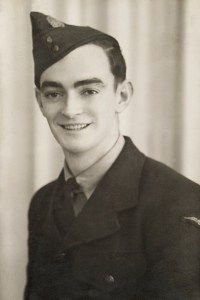
My father, Colin Sayer

My late father was driven by a set of simple values all his life: that all people deserve respect and dignity whoever they are. He often said, ‘I don’t care if you are the Queen of England or a street sweeper – we’re all human and just the same.’

Those values were imprinted on me and today help define who I am. Every day as I continue my PhD studies in human rights and the writing of refugee stories I am reminded of my Dad’s values and by the common threads of humanity that bind us all.

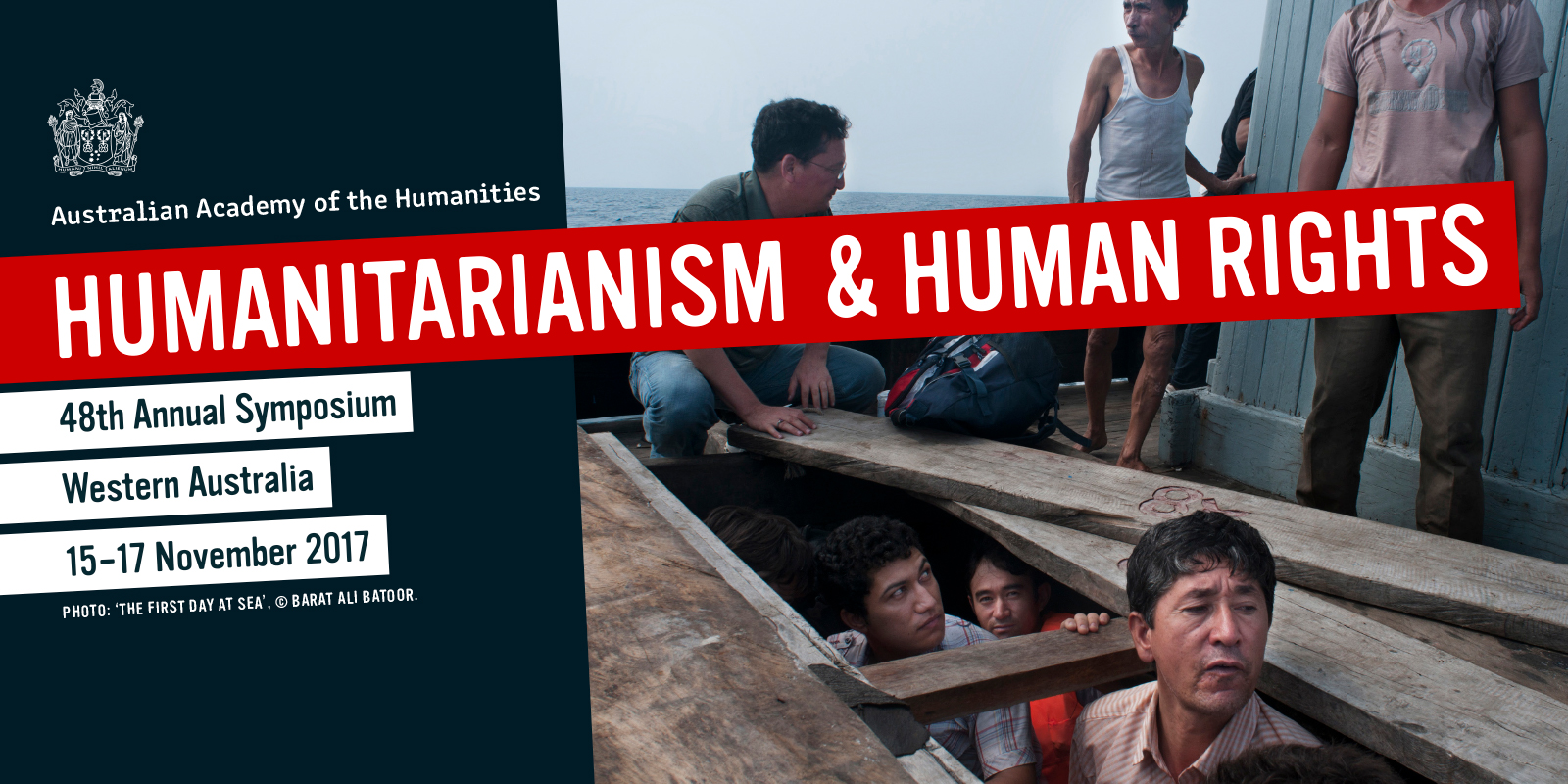
I had the chance to reflect on this a few weeks ago at the Australian Academy of the Humanities two day symposium with its theme of humanitarianism and human rights. Academics, writers and thinkers discussed what it meant to be human and compassionate and what happens when we are not.

My dad would have laughed about the application of academic and social theories to something he saw as so straight forward. I can imagine my explanations of why I needed to study and research these issues as well as be an advocate for human rights. I think it would have baffled him.

However, he would have been horrified at the racist policies of Pauline Hanson’s One Nation party and the election of Donald Trump with his nationalistic and divisive views. We would have talked about why people are frightened and how that fear has been shrouded in a security discussion that positions asylum seekers and refugees as potential terrorists… or someone different to us… someone seen as ‘other’. I’m sure he would have been concerned about security issues too, but we would have come back to our shared values of respect and dignity when we discussed the situation on Manus Island or the treatment of people by the Australian government who have been found to be refugees and still don’t have permanent residency and access to the services they need.

scottkim03
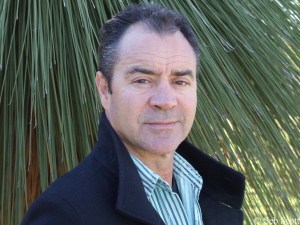
Kim Scott, Author

If he’d been at the event he also would have loved writer Kim Scott’s moving and intimate portrait of his life as young Aboriginal boy searching for an identity and a sense of belonging. While my dad was never short of a word, and certainly had strong views on many issues in society, he loved meeting people from different backgrounds and went out of his way to do so. He loved a good story and he listened well. He was empathetic – although he would have told me not to use fancy words.

Like many writers and commentators, I have come to believe that this lack of empathy for others allows some in society to express more racist views and to see human rights violations as ‘not their concern.’ Without empathy, my dad’s values of dignity and respect for everyone seem a distant concept.

human rights conference
Photograph by Barat Ali Batoor