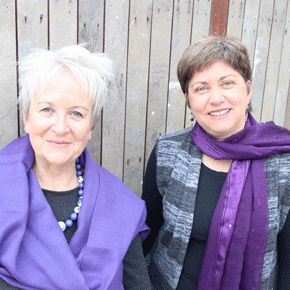
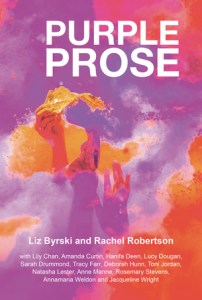
I am very honoured to have been asked to launch Purple Prose at the upcoming Perth Writers Festival on Saturday 20 February at the University of Western Australia.
A wonderful new book of stories published by Fremantle Press, Purple Prose has been written by Australian women answering the question “What does the colour purple mean to you?” It all began with a conversation between Liz Byrski and Rachel Robertson and grew into a book with vibrant, personal stories about love and loss, beauty, art and nature – all inspired by the colour purple.
The launch is in Tropical Grove at 5:30pm and all are welcome. I hope to see you there.
There is a terrific article in the Monthly by Robert Manne that sums up the current situation on Australia’s asylum seeking policy and procedures. Robert Manne is an Emeritus Professor and Vice-Chancellor’s Fellow at La Trobe University.
“Now that the High Court has decided that the offshore detention of asylum seekers is lawful, reports suggest that the Turnbull Government is considering returning 234 asylum seekers to Nauru along with the 33 babies of these asylum seekers born in Australia. Given what everyone knows about the spiritual, psychological and bodily ruin that accompanies indefinite detention on Nauru, if the reports turn out to be true this will be a genuinely monstrous act which will outrage millions of decent citizens.
Outrage and acts of protest, however, are not enough. If things are to change, if the decision is to be reversed, what we need is to try to get the prime minister to acknowledge and to reject the thinking that has brought us to a place where it is now possible that a decision of this kind can be taken by the responsible minister of an important department of the Australian Commonwealth Government.”
As I sang the national anthem alongside members of the Katanning community at the recent Australia Day celebrations, I looked around the faces in the crowd. Many were from migrant and refugee backgrounds. Unlike a lot of people, the newer arrivals standing near me knew the second verse to Advance Australia Fair and sang it with gusto. I often struggle to remember some of the lines, which is a shame because I think they reflect the idea of an inclusive nation so well.
Renowned of all the lands;
For those who’ve come across the seas
We’ve boundless plains to share;
With courage let us all combine
To Advance Australia Fair.
I was frequently reminded of the courage of so many refugees when I met up with several who had shared their stories in the book. It was particularly pleasing to see John Nazary again. John is a proud Hazara man from Afghanistan and as I said in my speech during the official celebrations – John’s story reminds me of the strength and endurance of the human spirit. It was good to hear his family continue to do well in Australia with their studies and work. One son, Zeify, is still enjoying international soccer success with Spanish club Malaga.
It was a wonderful way to celebrate Australia Day. The whole community once again made me feel very welcome. I was also pleased to see Zee Sultani recognised with a Citizenship Award for all her work in the community.
In Katanning, I see an Australia that I am proud to call my home.
Me, John Nazary and Lesley Balinski at the Katanning Australia Day celebrations
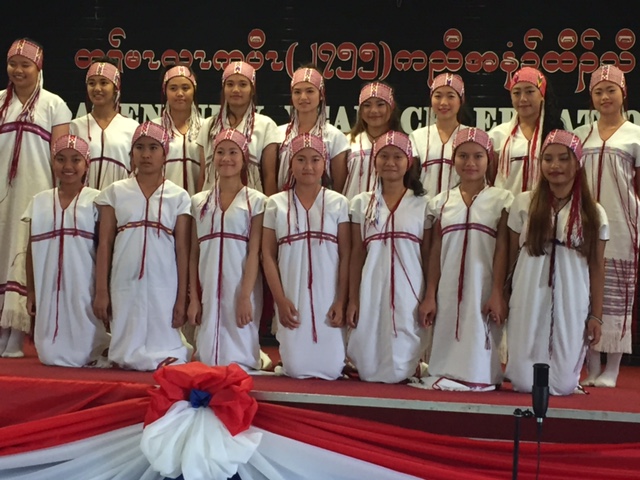
I was pleased to recently attend Karen New Year celebrations in Balcatta, Western Australia. Over 300 members of the Karen community who have settled in Perth from Burma and refugee camps in Thailand came together to celebrate the day with song, dance, speeches and great food.
The community has celebrated New Year for centuries and it was traditionally held around the time of the first harvest in Burma. The New Year celebrations fall on a different day each year in line with phases of the moon and harvest time. The ethnic Karen community are mostly subsistence farmers in eastern Burma, in both the lowland rice-growing plains and hill regions, with large numbers in the central Irrawaddy Delta. However under the Burmese military government thousands have been forced off their land, persecuted and forced to flee.
In the mid-1930s whilst Burma was still under British rule, there was a push to create a Karen National Day in the country. This was unsuccessful in the parliament but a compromise was reached to recognise a single day as Karen New Year nationwide in 1938. Karen communities who have made their homes in other parts of the world continue to recognise the New Year as special day for the Karen people.
Perth’s Karen community is very active throughout Western Australia and it was pleasing to see such strong support from State and Federal politicians and community leaders at this year’s event.
The highlights of the day for me included learning more about the Karen culture, the traditional dancing and, of course, catching up with friends Beauty John, Paul Kyaw and all their families. Paul and Beauty are two of the people who shared their refugee stories in More to the Story. You can see more photos of the event on the Gallery page.
A big thank you to William Yeoman from The West Australian newspaper, who wrote a great article about the morning we spent recently chatting with Fauzia Sufizada and Paul Kyaw, two of the people featured in my book. In case you missed it in the Weekend West on 2-3 January, the full article is now online. Thank you too to the Centre for Stories in Northbridge for hosting our morning tea. William has also written a review of the book – you can read that on the Reviews page.
I would like to say a big thank you to the lovely women of the Koorunga branch of the Country Women’s Association of WA for their hospitality when I recently travelled to Wannamal to talk to them about my new book More to the Story – conversations with refugees.
They were a great group to talk to, with many questions and a wide-ranging discussion on refugees and asylum seekers. They were particularly interested when I spoke about the chapter on Katanning and how I had discovered it was an extraordinary example of a rural community where local people and businesses have a long history of welcoming new arrivals, whatever their nationality, faith or culture. Visiting Katanning’s Harmony Day was one of the many highlights of researching and writing the book.
The CWA of WA has a rich history of improving the welfare and wellbeing of people in our community so it wasn’t surprising that one of the audience asked how they could help. I talked about some of the wonderful organisations that assist new refugees in Western Australia and how they rely on volunteers and donations. You can find more information on Getting Involved and also in the book.
It was my first time talking to a community group about the book and was a very enjoyable experience. And the scones were great!
I have more talks and events coming up in the new year and I’m always open to other suggestions, if you’d like to contact me.
CARAD is a fabulous organisation in Western Australia that has assisted more than 5000 refugees and asylum seekers with services such as settlement support, advocacy, referral, emergency and financial aid, English lessons and homework support. For those of you who are keen to get involved and support some of our most vulnerable asylum seekers and refugees, volunteering with organisations such as CARAD is a great option.
CARAD runs an Application Assistance Workshop (AAW) program that helps people with reading and writing assistance as clients collect the information and documents needed for their application under the temporary protection visa “Fast track” system.
Volunteers are needed for workshops on Saturday mornings during December 2015 and February 2016. If you are already a trained volunteer and current member of CARAD, who has excellent comprehension skills and is comfortable working one-on-one with clients, please contact CARAD at eira.clapton@gmail.com.
If you are interested in helping with this program, but not yet trained, CARAD are conducting a AAW training day on Saturday 7th February 2016. You will need to be available on either Wednesday or Thursday evenings or Saturday afternoons from February 2016 for at least a six month commitment. You can register your interest by sending an email to secretary@carad.org.au
I’m thrilled to announce that More to the Story – conversations with refugees has been officially launched and is now available on line and in bookstores! I’m particularly honoured that two eminent human rights advocates spoke at our two book launch events.
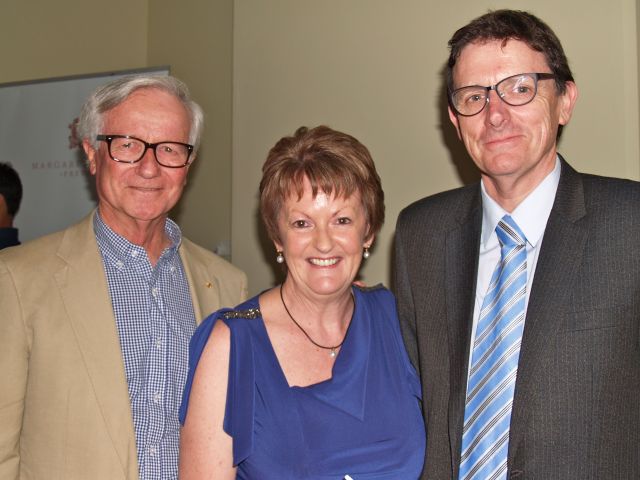
Fred Chaney, long time human rights advocate, Paul Power, CEO of the Refugee Council of Australia with me at the Perth book launch
The first event was held at Riversmith, a brand new café, produce and lifestyle store, in the main street of Margaret River. The Hon Fred Chaney, AO launched the book and spoke about the need for human stories. He said: “This is such a timely book about refugees. Rosemary’s book introduces us to people so we can get to know them. She gives us a human story and that’s important because refugees have been de-humanised in Australian society.”
Paul Power, Chief Executive Officer of the Refugee Council of Australia, spoke at the Perth event, held at the new Centre for Stories in Northbridge. He acknowledged the challenges that refugees face. He said: “As readers we have a unique opportunity to understand more about what it means to be a refugee as we read their personal stories. Combined with these, Rosemary shares her own journey over three years of meeting refugees and their families. We are also introduced to the people who assist refugees in our community.”
Fred, Paul and I thanked the refugees who shared their stories. It was lovely to see so many of the people featured in the book attend the event in Perth. I continue to be inspired by all them.
For more photos of the book launches please go to my newly created Gallery page.
Human Rights Law Centre’s director of advocacy and litigation, Anna Brown, said Australia’s efforts to demonstrate leadership on topics such as the death penalty and the rights of older people had been overshadowed by the wave of condemnation on policies of mandatory detention, offshore processing and boat turnbacks. “Australia’s potential to be a human rights leader is being completely undercut by its tremendously harsh treatment of people seeking asylum,” she said. “Last night at the UN there were calls from nations in every region and political grouping in the world for Australia to change its policies.”
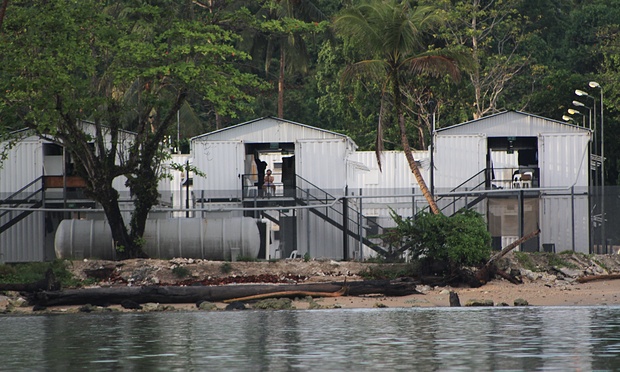
The Australian-run asylum seeker detention centre on Los Negros Island, in Manus province, Papua New Guinea
I’m very pleased to see some good reviews emerging for More the story – conversations with refugees. The latest one is from Steven Carroll from the Sydney Morning Herald, the Age and Canberra Times:
“This collection of refugee’s tales goes behind the headlines and policy debates to put a human face to the issue that has divided the country for years. Among those Sayer interviewed is Paul, one of many Karen people from Burma who fled the country because pro-democracy protesters were being shot by government forces. Paul narrowly missing a massacre. And John, who left Afghanistan because the Taliban were cleansing the country of the Hazara people and he would have been shot or dismembered had he not taken a leaky boat to Australia, where he is now a community leader. One of his sons plays for Cambridge United in the UK second-division. There are many stories of tragedy and triumph here that the country might hear one day above the sloganising.”
To read more reviews please go to the Reviews page.