Excellent article by Julian Burnside

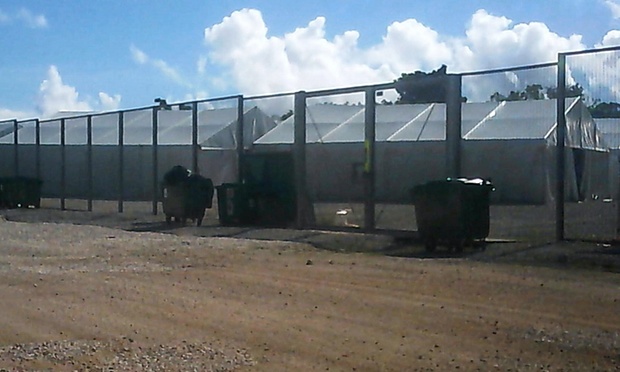
Long time human rights advocate Julian Burnside has written an excellent article in the Guardian Australia asking the question “why can’t we know what is happening on Nauru and Manus Island?”.

This article really resonated with me because two of the refugees featured in my book More to the story came to Australia as refugees seeking asylum and were locked in detention centres. I hope when you read John and Farid’s stories you will understand their difficult choices and the enormous struggles and trauma they faced.

Meanwhile Burnside continues to campaign about the appalling situation in detention centres as this article shows. I wondered why.

Thirteen years ago at the Maribyrnong Detention Centre, an eleven-year-old girl hanged herself with her bedsheet. Her family found her and cut down her strangling body, and she was taken to Austin Hospital in Melbourne, where she remained as a psychiatric inpatient for twelve months. When she was well enough to be discharged, she was taken back into detention.

This is the incident that taught Julian Burnside that his country had “betrayed the principles it once stood for” and since that time Burnside has campaigned continually for the rights of refugees and asylum seekers inspiring other lawyers to work pro bono to help people who have committed no crime.

I am honoured that Julian Burnside has written the foreword to my new book More to the story – conversations with refugees that will be released in November.

offshore detention

Ubud Writers and Readers Festival

I’ve been involved with the wonderful Ubud Writers and Readers Festival for several years now as a presenter and panel moderator. I’m thrilled this year to be there as a presenter and also as a writer and to be able to talk about More to the story – conversations with refugees.

I’m very pleased to be joining award winning writer Mohsin Hamid and other international writers as we discuss refugee issues. Hamid said: “One day human beings will look back and think of us, those who claim to love freedom but legalise migrant detention and deportation, with the same puzzlement that we think of those who legalised slavery”.

For more information about my other sessions go to the Festival website.

UNHCR’s Annual Global Trends Report: World at War

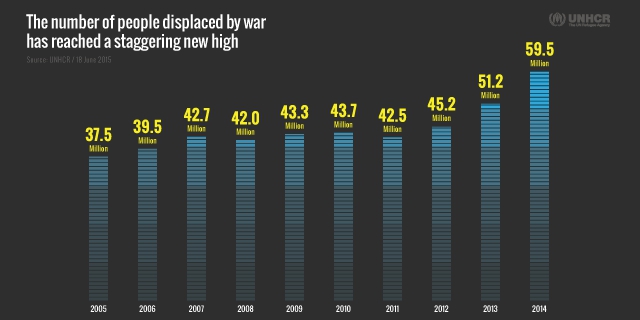
Earlier this year the UNHCR released one of their Global Trends Report that is a must-read. Wars, conflict and persecution have forced more people than at any other time since records began to flee their homes and seek refuge and safety elsewhere. The report said the number of people forcibly displaced at the end of 2014 had risen to a staggering 59.5 million compared to 51.2 million a year earlier and 37.5 million a decade ago.

Globally, one in every 122 humans is now either a refugee, internally displaced, or seeking asylum. If this were the population of a country, it would be the world’s 24th biggest. “We are witnessing a paradigm change, an unchecked slide into an era in which the scale of global forced displacement as well as the response required is now clearly dwarfing anything seen before,” said UN High Commissioner for Refugees António Guterres.

Most alarmingly, however, it showed that over half the world’s refugees are children.

The full Global Trends report with this information and more, and including data on individual countries, demographics, numbers of people returning to their countries, and available estimates of stateless population is available at http://unhcr.org/556725e69.html.

global displacement graph