Harmony, peace and understanding

With Harmony Week over for another year I wanted to focus on the unity and friendship that we all share and highlight some stories from the week’s events that you might find enjoyable.

Harmony Week celebrates Australia’s cultural diversity. It’s about inclusiveness, respect and a sense of belonging for everyone.

In Mirrabooka, located in Perth’s northern suburbs, 112 people from 77 nationalities took part in a drumming circle, which made the Guinness Book of Records.  You can watch the joyful, musical result here.

The dark cloud from the Christchurch massacre hangs over us all still, however there have been remarkable expressions of support for the Muslim community, both in New Zealand and here in Australia.  Here is the link to a story about a Muslim man going to a Mosque and meeting a woman of Christian faith in Canberra.

Of the many celebrations held during Harmony Week, one always close to my heart is the big Harmony Festival in Katanning.  This year they celebrated 10 years for this great community event.  I wrote a chapter about this regional town in Western Australia in More to the story – conversations with refugees, and told the story of John Nazary who lives there.  Katanning is a true multicultural community, the most ethnically diverse regional centre in Western Australia that is home to people from some 50 different language groups.  Katanning has always welcomed refugees and migrants.   You get a sense of their inclusive community from this video on their website.

I hope we can all take the desire for harmony further than this week. Let’s help make our communities, and the world, a better place.

Harmony Week 2019 email footer

Truth Telling

Over 120 people gathered at John Curtin Art Gallery last weekend for the Truth Telling and Taking Action symposium about the current situation for asylum seekers in Australia.  It was hosted by a group of service providers, advocates and the Centre for Human Rights Education at Curtin University.

It was a day of storytelling.

Asylum seekers, on many different types of visas, told of their daily lives and how challenging living on these different temporary visas can be. My overwhelming sense was one of uncertainty and worry.  People wake up every day and wonder whether they will be called in to discuss their visa and if they are safe.

How can Australia torment refugees like this?

There are thousands of people seeking asylum living in the Australian community.  Some of these people have come to Australia by plane and sought asylum afterwards. Some of them have come to Australia by boat. The way they came affects whether they are detained, the conditions of their visas, and how their claim for protection is determined.  It’s very complicated.

The Refugee Council of Australia will be spearheading a major campaign from Thursday 14 March leading up to the Federal election called I Choose to be Humane – treat people like people.  All the presenters described how there is a real opportunity to be heard and make a difference in the next few months.  You’ll be able to access the campaign at www.choosehumane.org.au so register your interest now.

Easy-to-read facts and information are also available from the Refugee Council website.  This is one thing we can all do – be more informed about the debate and people’s lives.

Here’s the definition of some common visa types that might be helpful in understanding this issue.

Bridging visa (BV): Temporary visa granted to allow someone to live in the community while they wait for their refugee claim to be finalised.

Temporary Protection Visa (TPV): Three-year temporary protection visa given to someone who came to Australia by boat and is found to be a refugee. At the end of the three years the holder can only apply for another temporary protection visa.

Safe Haven Enterprise Visa (SHEV):  Five-year temporary protection visa that can be granted to someone who came by boast and is found to be a refugee.  At the end of five years, they may be eligible to apply for a permanent visa if they meet that visa’s requirements, but only if they have worked or studied in a designated regional area for at least 3.5 years.

The symposium coincided with Refuge, a Perth Festival exhibition which runs until mid-April, featuring two poignant and timely works – Candice Breitz’s Love Story and Angelica Mesiti’s Mother Tongue. They both utilise cinema and art to present the complex experiences of their immigrant and refugee subjects through music, performance and the spoken word.

Asylum-Seeker-Protest-Rally

A big weekend of stories and ideas

Regular readers and those of you who know me, understand I am a big supporter of Literary Festivals around the world.   They bring readers and writers together in exchange of stories and ideas.   There’s time for laughter, sadness and reflection.  The Perth Writers Week has just concluded, and I have to say it lived up to expectations.  Here’s some of the writers I interviewed and saw in action which might provide some good reading tips.

What fun I had with children’s writer Dianne Wolfer as we discussed navigating children’s literature at the Perth City Library.   We were lucky enough to have a really engaged group of librarians, teachers and parents attend, all of whom contributed their own ideas and suggestions.  Dianne will be blogging soon about a resource list of ideas she has put together.   I’ll send links once I get it.

Dianne Woolfer and Rosemary Sayer
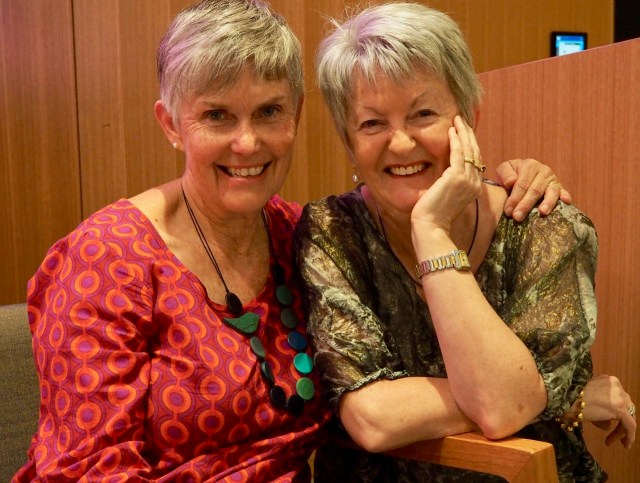
Dianne Woolfer with Rosemary

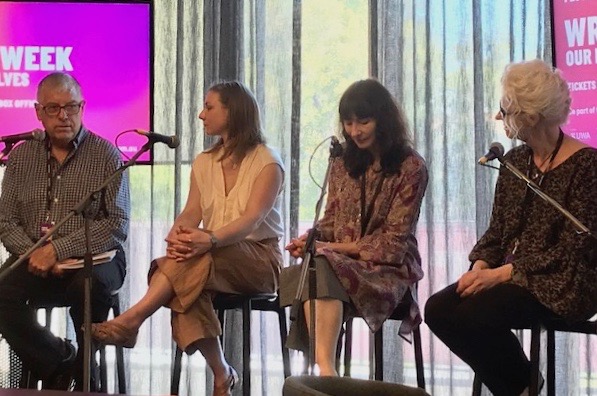
The highlight of the festival for me was attending a Sunday breakfast chaired by the fabulous Alan Dodge, former Art Gallery of WA Director and art historian.  Amanda Curtin, Gail Jones and Amy Sackville were the guests and it was a wonderful opportunity to travel through their books each with an art focus.   The conversation was entertaining and informative – it was a really lovely way to spend a Sunday morning.

Alan Dodge, Amy Sackville, Gail Jones and Amanda Curtin

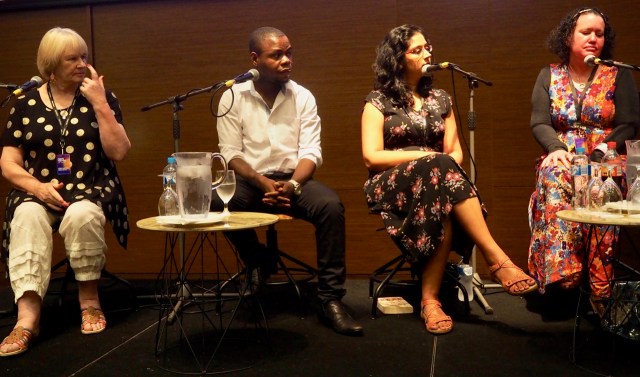
On the last day I chaired a panel with a variety of authors who all grappled with the concepts of freedom, identity and language. Heather Morris, Future D Fidel, Balli Kaur Jaswal and Carly Findlay, are very different people who have written vastly different books. It was interesting however to identify and explore some commonality within the themes we discussed. I highly recommend their books.

Heather Morris, Future D. Fidel, Balli Kaur Jaswal and Carly Findlay

If you have never been to a writer’s festival, look out for one near you.   You can go by yourself or with a friend.  It’s an opportunity to hear from authors and thinkers you know or find new ones to get to know.   You don’t have to do anything other than buy a ticket, turn up and be prepared to enjoy yourself.