A big thank you to William Yeoman from The West Australian newspaper, who wrote a great article about the morning we spent recently chatting with Fauzia Sufizada and Paul Kyaw, two of the people featured in my book. In case you missed it in the Weekend West on 2-3 January, the full article is now online. Thank you too to the Centre for Stories in Northbridge for hosting our morning tea. William has also written a review of the book – you can read that on the Reviews page.
I would like to say a big thank you to the lovely women of the Koorunga branch of the Country Women’s Association of WA for their hospitality when I recently travelled to Wannamal to talk to them about my new book More to the Story – conversations with refugees.
They were a great group to talk to, with many questions and a wide-ranging discussion on refugees and asylum seekers. They were particularly interested when I spoke about the chapter on Katanning and how I had discovered it was an extraordinary example of a rural community where local people and businesses have a long history of welcoming new arrivals, whatever their nationality, faith or culture. Visiting Katanning’s Harmony Day was one of the many highlights of researching and writing the book.
The CWA of WA has a rich history of improving the welfare and wellbeing of people in our community so it wasn’t surprising that one of the audience asked how they could help. I talked about some of the wonderful organisations that assist new refugees in Western Australia and how they rely on volunteers and donations. You can find more information on Getting Involved and also in the book.
It was my first time talking to a community group about the book and was a very enjoyable experience. And the scones were great!
I have more talks and events coming up in the new year and I’m always open to other suggestions, if you’d like to contact me.
CARAD is a fabulous organisation in Western Australia that has assisted more than 5000 refugees and asylum seekers with services such as settlement support, advocacy, referral, emergency and financial aid, English lessons and homework support. For those of you who are keen to get involved and support some of our most vulnerable asylum seekers and refugees, volunteering with organisations such as CARAD is a great option.
CARAD runs an Application Assistance Workshop (AAW) program that helps people with reading and writing assistance as clients collect the information and documents needed for their application under the temporary protection visa “Fast track” system.
Volunteers are needed for workshops on Saturday mornings during December 2015 and February 2016. If you are already a trained volunteer and current member of CARAD, who has excellent comprehension skills and is comfortable working one-on-one with clients, please contact CARAD at eira.clapton@gmail.com.
If you are interested in helping with this program, but not yet trained, CARAD are conducting a AAW training day on Saturday 7th February 2016. You will need to be available on either Wednesday or Thursday evenings or Saturday afternoons from February 2016 for at least a six month commitment. You can register your interest by sending an email to secretary@carad.org.au
I’m thrilled to announce that More to the Story – conversations with refugees has been officially launched and is now available on line and in bookstores! I’m particularly honoured that two eminent human rights advocates spoke at our two book launch events.
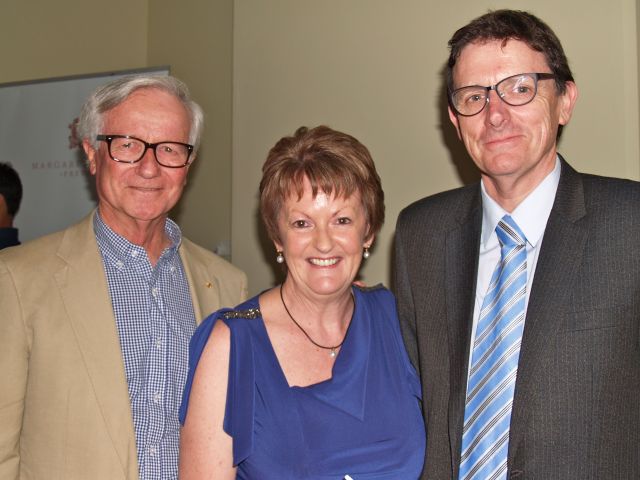
Fred Chaney, long time human rights advocate, Paul Power, CEO of the Refugee Council of Australia with me at the Perth book launch
The first event was held at Riversmith, a brand new café, produce and lifestyle store, in the main street of Margaret River. The Hon Fred Chaney, AO launched the book and spoke about the need for human stories. He said: “This is such a timely book about refugees. Rosemary’s book introduces us to people so we can get to know them. She gives us a human story and that’s important because refugees have been de-humanised in Australian society.”
Paul Power, Chief Executive Officer of the Refugee Council of Australia, spoke at the Perth event, held at the new Centre for Stories in Northbridge. He acknowledged the challenges that refugees face. He said: “As readers we have a unique opportunity to understand more about what it means to be a refugee as we read their personal stories. Combined with these, Rosemary shares her own journey over three years of meeting refugees and their families. We are also introduced to the people who assist refugees in our community.”
Fred, Paul and I thanked the refugees who shared their stories. It was lovely to see so many of the people featured in the book attend the event in Perth. I continue to be inspired by all them.
For more photos of the book launches please go to my newly created Gallery page.
Human Rights Law Centre’s director of advocacy and litigation, Anna Brown, said Australia’s efforts to demonstrate leadership on topics such as the death penalty and the rights of older people had been overshadowed by the wave of condemnation on policies of mandatory detention, offshore processing and boat turnbacks. “Australia’s potential to be a human rights leader is being completely undercut by its tremendously harsh treatment of people seeking asylum,” she said. “Last night at the UN there were calls from nations in every region and political grouping in the world for Australia to change its policies.”
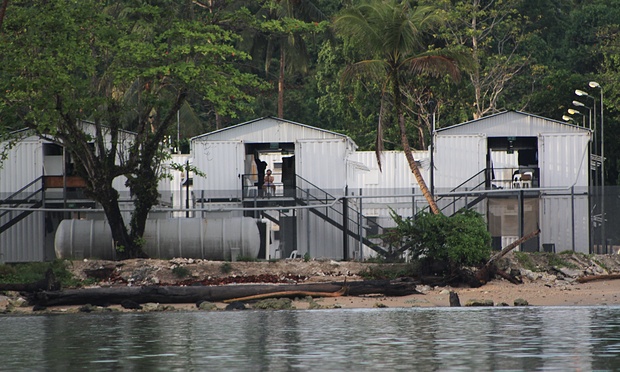
The Australian-run asylum seeker detention centre on Los Negros Island, in Manus province, Papua New Guinea
I’m very pleased to see some good reviews emerging for More the story – conversations with refugees. The latest one is from Steven Carroll from the Sydney Morning Herald, the Age and Canberra Times:
“This collection of refugee’s tales goes behind the headlines and policy debates to put a human face to the issue that has divided the country for years. Among those Sayer interviewed is Paul, one of many Karen people from Burma who fled the country because pro-democracy protesters were being shot by government forces. Paul narrowly missing a massacre. And John, who left Afghanistan because the Taliban were cleansing the country of the Hazara people and he would have been shot or dismembered had he not taken a leaky boat to Australia, where he is now a community leader. One of his sons plays for Cambridge United in the UK second-division. There are many stories of tragedy and triumph here that the country might hear one day above the sloganising.”
To read more reviews please go to the Reviews page.
I’ve just been at the Ubud Writers and Readers Festival in Bali discussing my book. I participated in a fascinating panel discussion about global refugee issues with fellow writers Mohsin Hamid, Monica Cantieni, Antoine Cassar. Thanks to our fabulous chair Ashwini Devare who kept the conversation flowing. It was a very thoughtful and inspiring and experience for me.
Long time human rights advocate Julian Burnside has written an excellent article in the Guardian Australia asking the question “why can’t we know what is happening on Nauru and Manus Island?”.
This article really resonated with me because two of the refugees featured in my book More to the story came to Australia as refugees seeking asylum and were locked in detention centres. I hope when you read John and Farid’s stories you will understand their difficult choices and the enormous struggles and trauma they faced.
Meanwhile Burnside continues to campaign about the appalling situation in detention centres as this article shows. I wondered why.
Thirteen years ago at the Maribyrnong Detention Centre, an eleven-year-old girl hanged herself with her bedsheet. Her family found her and cut down her strangling body, and she was taken to Austin Hospital in Melbourne, where she remained as a psychiatric inpatient for twelve months. When she was well enough to be discharged, she was taken back into detention.
This is the incident that taught Julian Burnside that his country had “betrayed the principles it once stood for” and since that time Burnside has campaigned continually for the rights of refugees and asylum seekers inspiring other lawyers to work pro bono to help people who have committed no crime.
I am honoured that Julian Burnside has written the foreword to my new book More to the story – conversations with refugees that will be released in November.
I’ve been involved with the wonderful Ubud Writers and Readers Festival for several years now as a presenter and panel moderator. I’m thrilled this year to be there as a presenter and also as a writer and to be able to talk about More to the story – conversations with refugees.
I’m very pleased to be joining award winning writer Mohsin Hamid and other international writers as we discuss refugee issues. Hamid said: “One day human beings will look back and think of us, those who claim to love freedom but legalise migrant detention and deportation, with the same puzzlement that we think of those who legalised slavery”.
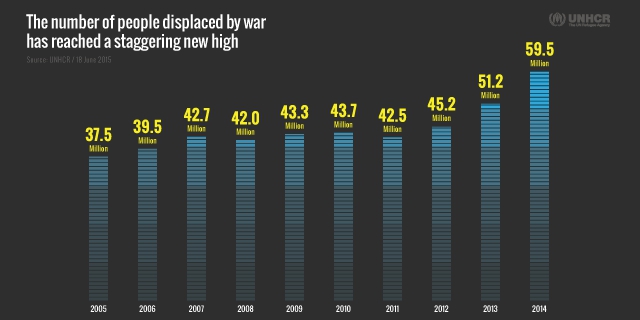
Earlier this year the UNHCR released one of their Global Trends Report that is a must-read. Wars, conflict and persecution have forced more people than at any other time since records began to flee their homes and seek refuge and safety elsewhere. The report said the number of people forcibly displaced at the end of 2014 had risen to a staggering 59.5 million compared to 51.2 million a year earlier and 37.5 million a decade ago.
Globally, one in every 122 humans is now either a refugee, internally displaced, or seeking asylum. If this were the population of a country, it would be the world’s 24th biggest. “We are witnessing a paradigm change, an unchecked slide into an era in which the scale of global forced displacement as well as the response required is now clearly dwarfing anything seen before,” said UN High Commissioner for Refugees António Guterres.
Most alarmingly, however, it showed that over half the world’s refugees are children.
The full Global Trends report with this information and more, and including data on individual countries, demographics, numbers of people returning to their countries, and available estimates of stateless population is available at http://unhcr.org/556725e69.html.



 More to the Story