International Human Rights Day

Human rights are about people. They are about you and your life: your needs and wants and fears; your hopes for the present and the future.” 

This quote is from United Nations Human Rights High Commissioner, Volker Türk, to mark this year’s Human Rights Day on 10 December. Born out of the Universal Declaration of Human Rights, this day celebrates human rights achievements and calls for continuous progress in protecting the rights and freedoms of all people

In this conflicted world we need to consider people’s human rights more than ever, yet sadly this is not happening.

Under the theme “Our rights, our future, right now” this year’s campaign focuses on how human rights are a pathway to solutions, as they play a critical role as a preventative, protective and transformative force for good, particularly in times of crises. By establishing, recognising and adhering to a common set of values and principles that apply universally, human rights help to avoid violations, conflicts, and abuses before they happen.

I like to think we can aspire to this, but several weeks ago the United Nations released its annual assessment of global humanitarian needs.

It’s a grim document, but I urge you to read it.

The report, known as the Global Humanitarian Overview, surveys the dozens of man-made and natural disasters around which the UN has mounted a response over the current year. It also projects the crises expected to demand international attention in 2025. The report estimates that 305 million people across 32 countries and nine refugee-hosting regions will require humanitarian assistance in the coming year, with a staggering price tag of $47 billion.

Many of these crises are well-known to those who follow the news: Gaza, Sudan, Syria, Ukraine and Afghanistan. Many others have faded from the headlines but remain massive in scale, such as Yemen, Democratic Republic of the Congo, and Burma.

What can you do? To feel less helpless my husband and I donate regularly to local Perth agencies helping refugees and asylum seekers like CARAD. Their A Place to Call Home Campaign provides vital support to individuals and families navigating the challenges of displacement and seeking safety. We also donate to Medecin Sans Frontieres, a global health agency working around the world in hot spots. I also write about the issues – reading everything I can from trusted sources so I can advocate with full knowledge.

So, remember use your vote and your voice when you can. There are local, national and international issues to champion.

Waiting 134 Years for Gender Equality

When our granddaughter was born 20 years ago, and I was still heavily involved in the corporate sector, I believed she would see much better gender equality when she entered the workforce than I was experiencing in Australia at the time.

The latest report from the World Economic Forum’s Gender Equality Index has shown me how wrong I was. We are 134 years from closing the global gender gap. How disheartening! Some of this can be related to a general global slowdown and the pandemic but certainly not much of it.

This year, the Global Gender Gap Index benchmarks gender parity across 146 countries, providing a basis for robust cross-country analysis. It makes for interesting reading and the ranking tables of countries around the world by sector are fascinating.

Australia has made limited progress to the country index, up two places since the 2023 edition to now being ranked 24th in the world for gender equality. That said, the UK is ranked 14th and the United States continues to be ranked 43rd, so some are citing this as a reason for hope. However, when I see New Zealand is ranked fourth I wonder how we can keep getting it so wrong and still do little to nothing about it.

With a ranking of 42, Australia falls well behind on economic participation and opportunity. Australia’s ranking on educational attainment is also behind, now ranked 84th of the 146 countries. Where Australia does do well is on political empowerment and we score an impressive 17th for women in political positions. 

Earlier this year the Minister for Women launched the Australian Government’s Working for Women: A Strategy for Gender Equality. It sets out a path to make progress towards the vision of gender equality over the next 10 years, with a focus on five priority areas: gender-based violence; unpaid and paid care; economic equality and security; health; and leadership, representation and decision-making. We can only hope this strategy is successful.

While the World Economic Forum does report some optimism, it notes the election results we have seen so far in 2024 do not point to a general trend of more women getting elected – outside of a bright spot in Mexico which just recently elected its first female president.

Iceland again takes first place on the gender equity rankings having led the index for a decade and a half.  It is the only country to have closed more than 90 per cent of its gender gap. European and Scandinavian countries continue to do better than Australia.

I recommend the report to you.

Gambling Scourge

The headline figures are shocking enough. Australians spend more per capita on gambling than anywhere else in the world.  We also lose more per capita – an estimated $25 billion a year! Can you believe that?

I have a family member with a gambling addiction, and it is sad to see what this has done to him over the years and how isolated he has become. Addiction to gambling is no different to any other addiction be it drugs or alcohol. You just get hooked in so far you can’t escape. The statistics above are not those indicative of people having a fun flutter on the weekend or buying a lotto ticket.

A study of Coroner’s Court data found that gambling addiction had contributed to 184 suicides in Victoria over eight years, the vast majority involving men aged between 17 and 44.

Lenore Taylor in the Guardian has written several excellent articles on gambling addition and the role advertising plays. Surely the torrent of gambling advertising on TV screens and social media feeds is adding to this crisis. I, for one, am sick of the fact that I can’t watch my football team play without a bombardment of betting adds.   I fear it is becoming normalised for children and young people as they view sport on their screens. I have a friend who says her son can frequently quote the betting odds on a game just as much as he can quote his team’s selections.

A recent parliamentary report called for a phased comprehensive ban on all advertising on all media – broadcast and online, that leaves no room for circumvention because partial bans on advertising do not work. The report also found that Australians are intensely frustrated and annoyed by current levels of gambling advertising and are concerned about the harm caused, especially to young people.

Australia successfully banned tobacco advertising so I can’t see why this ban wouldn’t work –  except the gambling lobby, the media and sporting codes are very powerful and so far, have stopped any attempts to curb it.

This is something we all must advocate against for the sake of our young people and those already addicted.

Finding Freedom

To coincide with Refugee Week this year, the United Nations has released its latest Global Trends Report. It’s not happy reading but it’s essential we all understand what’s happening in our world.

One in every 69 people, or 1.5 per cent of the entire world’s population, is now forcibly displaced. This is nearly double the 1 in 125 people who were displaced a decade ago.

At the end of 2023, an estimated 117.3 million people worldwide were forcibly displaced due to persecution, conflict, violence, human rights violations, and events seriously disturbing the public order. Based on operational data, UNHCR estimates that forced displacement has continued to increase in the first four months of 2024 and by the end of April 2024 is likely to have exceeded 120 million. 

It’s important for us to remember that behind every number is a person – and over half of them are children.

The increase to 117.3 million at the end of 2023 constitutes a rise of 8 per cent or 8.8 million people compared to the end of 2022. This continues a series of year-on-year increases that has lasted 12 years.

Filippo Grandi, the UN High Commissioner for Refugees reminds us “that behind these stark and rising numbers lie countless human tragedies.” He says, “this suffering must galvanise the international community to act urgently to tackle the root causes of forced displacement.”

This year’s Refugee Week theme “Finding Freedom” – with a focus on family – encapsulates the profound journey of resilience, strength, and unity that defines the refugee experience. For most of us family is one of the most important things in our life. Families can provide love, support, safety and belonging. 

Many refugees are separated from their family, often for decades, sometimes forever.

You can read stories about families taking the journey, families left behind and families welcoming new arrivals, and find more information on the Refugee Week website.

It’s easy to get caught up in the 24-hour news cycle and only hear about one issue; but there are many more not making the news. Please donate to organisations like CARAD and Edmund Rice Centre WA.  Search out other organisations if you are located outside Western Australia. 

These organisations rely on public support to be able to continue to do their incredibly valuable work supporting refugees.

The Missing Children of Europe

An international investigation has found that tens of thousands of unaccompanied child migrants – 47 each day on average – have vanished after arriving in Europe over the past three years. 

While doing other research, I came across three organisations who specialise in tracking lost migrant and refugee children and was appalled and taken aback by my ignorance. 

Research by the journalist collective Lost in Europe revealed that at least 51,433 unaccompanied refugee children and young people who were previously in the care of the state went missing across Europe between 2021 and 2023.

According to the data collected in the latest investigation, Italy has more registered missing unaccompanied minors than any other country that provided data, with 22,899, followed by Austria (20,077), Belgium (2,241), Germany (2,005) and Switzerland (1,226).

The actual number of missing children may be even higher as gathering complete information is difficult, with some countries in Europe not even collecting data on missing unaccompanied minors according to a statement by the Lost in Europe project.

Ylva Johansson, the EU Commissioner for Home Affairs responsible for migration, in an interview with the German news portal rbb24 – a member of the Lost in Europe network – linked the problem to Europe’s “broken migration system”.

Child protection organisations like Missing Children Europe have confirmed that unaccompanied child migrants and refugees are at higher risk of abuse and are easily influenced by traffickers.

Many who arrive in Europe have already been exploited by smugglers to pay off debts or because they hold control over their loved ones or their passports.

A 2022 study by researchers at Ghent University – The Childmove Project – found that more than 80 percent of children experience physical violence during their migration to Europe. 

We should all care about this. How can we stay silent? 

Count Her In

Today is International Women’s Day with the theme Count Her In: Invest in Women. Accelerate Progress. Within the wide array of announcements, events and launches that are happening all around the world, two have stood out for me as highly significant and very meaningful. 

The first is that Ireland is holding a national referendum on the day to remove from their constitution the outdated idea that a ‘woman’s place is in the home’.

The constitution’s clause, which dates to 1937, says: “The State recognises that by her life within the home, woman gives to the State a support without which the common good cannot be achieved. The State shall, therefore, endeavour to ensure that mothers shall not be obliged by economic necessity to engage in labour to the neglect of their duties in the home.”

Proponents argue that the constitution does not truly reflect the Ireland and world we live in today and needs to be modernised. Let’s hope that is a no brainer for voters.

The second is that France, the first country to enshrine the right to abortion in its constitution, today will be holding a ‘sealing ceremony’ – a tradition reserved for only the most significant laws. Crowds gathered at the Eiffel Tower in Paris on Monday as the words “my body, my choice” were shown up in lights on the monument. People celebrated as French lawmakers gathered to vote on the ammendment giving women the ‘guaranteed freedom’ to choose an abortion. It is a big step forward for reproductive rights in Europe.

Closer to home the Workplace Gender Equality Agency released the latest information on gender pay gaps which has once again highlighted the disparity in pay between men and women in Australia. Gender pay gaps are not a direct comparison of like roles. Instead, they show the difference between the average or median pay of women and men across organisations, industries, and the workforce as a whole.

Across all industries in Australia, women are earning on average less than men. Currently at 21.7%, the gender pay gap in Australia is a persistent and pervasive issue that undermines women’s earnings and our place in society.

For us to truly ‘Count Her In: Invest in Women. Accelerate Progress.’, then closing the gender pay gap would be a good start.

Sexual Harassment of Migrant and Refugee Women

I came across an interesting study recently about sexual harassment in the workplace involving migrant and refugee women in Australia

This is the first national study of migrant and refugee women’s experiences, understandings and responses to workplace sexual harassment of its type. Given it is five years on from the launch of the #MeToo movement, I initially found this quite surprising.  On reflection, I realised of course that refugee and migrant women’s voices are often silent in our national societal debates.

The research found that just under half (46%) of the migrant and refugee women in this study of 700 women across Australia had experienced at least one form of sexual harassment in the workplace in the last five years in Australia. The women in this sample rarely experienced only one type of sexual harassment or reported only one incident. Men were most frequently the harassers in the workplace. Across all incident types, those in senior positions were reported as engaging in sexually harassing behaviour in the workplace most frequently, followed closely by clients.

The most frequent experiences included: indecent phone calls/messages of a sexual nature, sexually suggestive comments or jokes, intrusive questions about private life or physical appearance or staring or leering that was intimidating. These experiences are often common to all women regardless of background, but still disturbing.

The researchers delved deeper to ask why and participants believed the harassment was most often motivated because of their gender and/or sex or their race and religion. The researchers comment that they found harassment deeply connected to race and religion. Few women reported their experiences formally.

As women of a non-migrant and refugee background find their voices more, this study also helps us to understand the additional challenges of leaving your home and trying to make a new one whilst navigating cultural differences and sometimes sexual harassment. There is also a handy Fact Sheet on this study

Nelson Mandela Human Rights Lecture

“So long as poverty, injustice and gross inequality persist…none of us can truly rest.”

Nelson Mandela

Gillian Triggs, former President of the Human Rights Commission in Australia and now the UNHCR Assistant High Commissioner for Protection, recently delivered the fourth annual Nelson Mandela Human Rights Lecture

This year is the 75th anniversary of the Universal Declaration of Human Rights. This critical document has inspired the entire body of international commitments to protect people around the world.

Gillian argued that we desperately need pilot programs to identify the most urgent needs of refugees who are on route to another country and to provide accurate information about regular, safe and legal pathways.  People on the move often lack access to basic services and don’t possess formal documentation or visas. They are especially vulnerable to detention, trafficking, and gender-based violence – especially women and children.

In June, the UN Refugee Agency released its Global Trends report observing that by the end of 2022 over 108.4 million people worldwide had been forcibly displaced, including a record number of 36 million refugees.

The Universal Declaration recognises two crucial rights: to seek and enjoy asylum from persecution (article 14) and the right to a nationality (article 15).  Australia contravenes article 14 with its refugee policy, as do most countries around the world today, while millions of people are on the move fleeing war and persecution. There is much debate and anguish about how to manage the flows of people, particularly from North Africa into Europe.   There are no easy solutions and no one country can solve this issue. It needs a co-ordinated global response and I fear that is going to be difficult.

Gillian argues that the 1951 convention remains viable as an effective legal foundation for refugee protection, but there are many who believe the Convention, and indeed the United Nations, is “no longer fit for purpose”.

There is a Global Refugee Forum in December 2023 that she is confident will show how the international community has been willing to shoulder a share of the burden for those displaced and to find long term solutions. I hope we see this, but I have my doubts. 

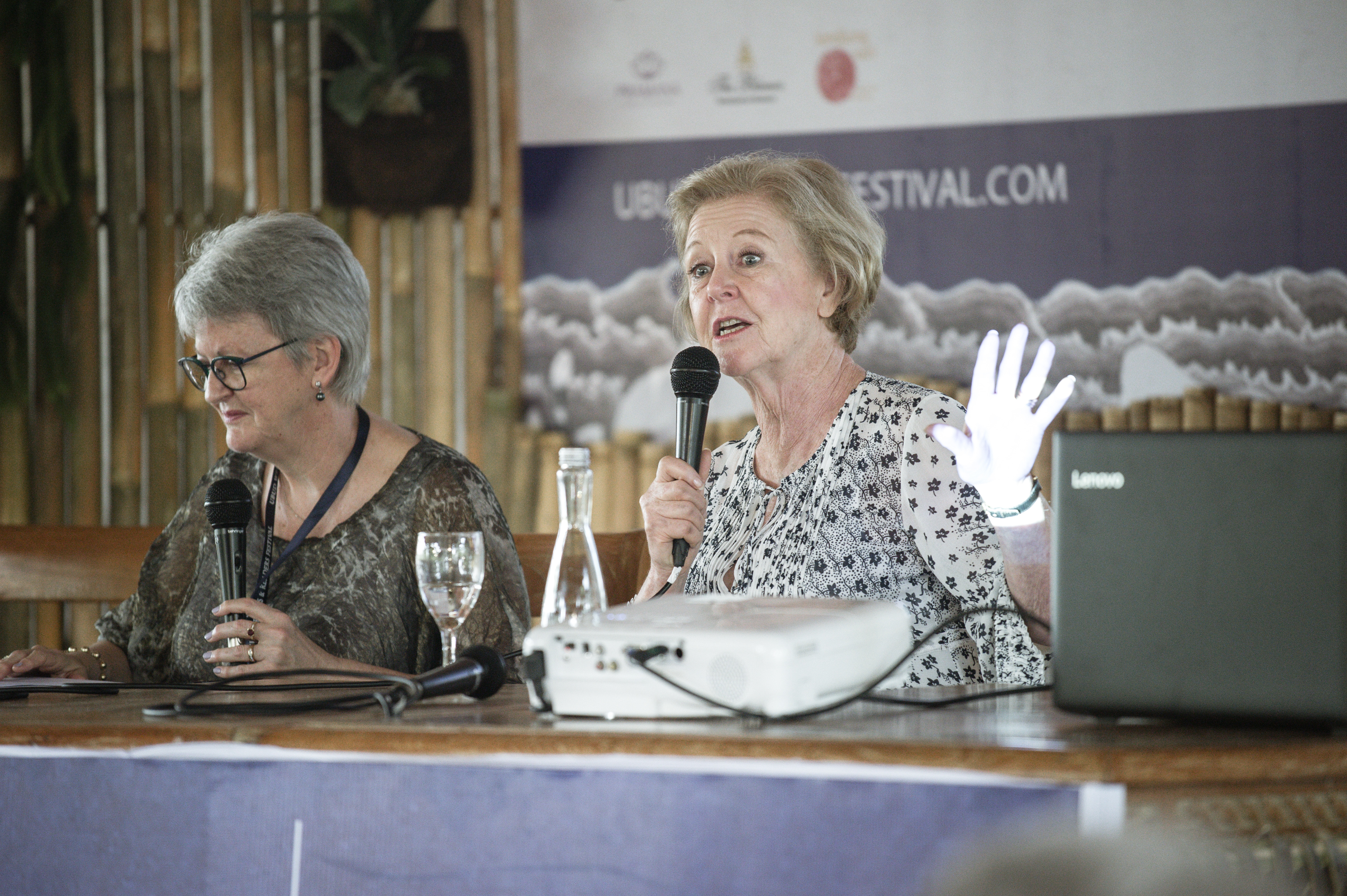
Gillian Triggs has risen on the international stage taking this key position at the UNHCR. I was privileged to interview her at the Ubud Readers and Writers Festival several years ago when she had released her book Speaking Up. It provides valuable insights into her time in leadership roles in Australia and the political pressure to which she was subjected. I still highly recommend the book.

The State of the World’s Human Rights

Two important reports have recently been released that paint a sobering picture of human rights across the globe. 

Amnesty International’s Annual Report highlights the double standards throughout the world on human rights and the failure of the international community to unite around consistently applied human rights and universal values. 

The West’s robust response to Russia’s aggression against Ukraine contrasts sharply with a deplorable lack of meaningful action on grave violations by some of their allies including Israel, Saudi Arabia, and Egypt.

We need less hypocrisy, less cynicism, and more consistent, principled and ambitious action by all states to promote and protect all rights” said Agnès Callamard, Secretary General of Amnesty International.

The report also talks about the significant deterioration of women and girls’ rights across the world – rights to life, health, security, education, autonomy and sexuality. Women’s rights and freedom to protest are threatened as states fail to protect and respect rights at home. Callamard makes the point that “states’ hunger to control the bodies of women and girls, their sexuality and their lives leaves a terrible legacy of violence, oppression and stunted potential.”

As the Universal Declaration of Human Rights turns 75, Amnesty International insists that a rules-based international system must be founded on human rights and applied to everyone, everywhere.

The UNHCR mid 2022 global trends report provides statistics and trends relating to refugees, asylum-seekers, internally displaced people and stateless people. This report tells us that 103 million people have been forcibly displaced by persecution, conflict, violence, human rights violations and events that seriously disturbed public order – an increase on last year. 

There are 32.5 million refugees worldwide, with Turkey continuing to host the greatest number of refugees with 3.7 million. Interestingly, 76% of people originated from just six countries: Syria, Venezuela, Ukraine, Afghanistan, South Sudan, and Burma.

This year the Australian government is planning to issue 17,875 refugee and humanitarian visas. We could do a lot more, don’t you think? We are rich country with plenty of space and we are crying out for workers in the city and the regions.

Embracing Vulnerability

I recently co-authored an academic article with my colleague Dr. Susan Beth Rottmann, Assistant Professor at Özyeğin University in Turkey. Susan and I met at a conference in Madrid and discovered we had a mutual interest in writing about the lives of refugees.

Called Embracing vulnerability in writing migrant lives, our article explores how an anthropologist like Susan, and a life writer like me, need to be open to making themselves vulnerable when sharing peoples’ stories.

Vulnerability is not only an experience of migrants and refugees but is also experienced by researchers and writers. Susan and I discuss the ethical and political practice of vulnerability with regards to writing peoples’ stories and how we both used our own stories to enhance the readers’ understanding. Even with our different backgrounds, we found lot of common ground in our approaches. We also look at the risks associated with this kind of approach – one which does attract criticism.

When there is trust, the vulnerable storyteller, the vulnerable narrator, and the vulnerable reader open the door to different ways of imagining a fairer and more just society.

Susan draws heavily on her fascinating research over many years with German-Turkish migrant women and Syrian refugees. She focusses particularly on one story about her friend Leyla which was published in the 2019 book In pursuit of belonging: forging an ethical life in European-Turkish spacesI draw on my research and writing experience with people from a refugee background who have settled in Australia, using examples from More to the story – conversations with refugees and my research for my doctorate on refugees and life writing.

I’m very pleased that our article was recently published in the prestigious journal a/b: Auto/Biography Studies. While you would generally need a paid subscription, the publisher has provided me with some free online copies to share with my network. So, if you are interested in reading the full article, you may be able to access it via this link

Having afternoon tea with (L-R) Farid, Paul, Piok and Fauzia, some of the people who shared their story with me for More to the story-conversations with refugees