Everyone Belongs

It’s Harmony Week which is the celebration that aims to recognise our diversity and bring together Australians from all different backgrounds.

It’s about inclusiveness, respect and a sense of belonging for everyone.​ Over half of Australians were born overseas or have at least one parent who was born overseas. As a day of anti-racial discrimination, this year’s theme is “Everyone Belongs”.

Many of the refugees who I have interviewed over the years are enormously grateful to Australia for giving them a home when they were forced to flee persecution in their own country. As my friend Paul, a Karen man from Burma, told me he still remembers what he said when he arrived in Australia : “I am a free man. I can smell freedom in the air.” You can read more about Paul on my website.

I don’t have to think about freedom in Australia, it just is. But during this Harmony Week it’s hard not to think about places where people are living without harmony. Burma, Israel and Gaza, Ukraine and Haiti to name a few.  

Harmony Week is celebrated during the week that ​include 21st March, which is also the United Nations International Day for the Elimination of Racial Discrimination. The Australian government has been criticised for continuing to call the 21st March Harmony Day, instead of joining with the world community to celebrate the International Day for the Elimination of Racial Discrimination.

I’m pleased to think about harmony and inclusion this week, but I still feel Australia is a fundamentally racist country like so many others. Critics argue that Australia’s failure to commit to the purpose of the UN day has hindered our efforts to understand, fund, and develop research into problems stemming from systemic racism. There’s an interesting article that delves into this issue here.

But I think we should all try and attend a Harmony Week event and focus on the fact that in our country everyone should belong. How can we make people feel more comfortable? My approach is to read about places around the world to understand both the good and the bad. Sometimes you find a lot of harmony where you least expect it.

Rosemary and Paul

Count Her In

Today is International Women’s Day with the theme Count Her In: Invest in Women. Accelerate Progress. Within the wide array of announcements, events and launches that are happening all around the world, two have stood out for me as highly significant and very meaningful. 

The first is that Ireland is holding a national referendum on the day to remove from their constitution the outdated idea that a ‘woman’s place is in the home’.

The constitution’s clause, which dates to 1937, says: “The State recognises that by her life within the home, woman gives to the State a support without which the common good cannot be achieved. The State shall, therefore, endeavour to ensure that mothers shall not be obliged by economic necessity to engage in labour to the neglect of their duties in the home.”

Proponents argue that the constitution does not truly reflect the Ireland and world we live in today and needs to be modernised. Let’s hope that is a no brainer for voters.

The second is that France, the first country to enshrine the right to abortion in its constitution, today will be holding a ‘sealing ceremony’ – a tradition reserved for only the most significant laws. Crowds gathered at the Eiffel Tower in Paris on Monday as the words “my body, my choice” were shown up in lights on the monument. People celebrated as French lawmakers gathered to vote on the ammendment giving women the ‘guaranteed freedom’ to choose an abortion. It is a big step forward for reproductive rights in Europe.

Closer to home the Workplace Gender Equality Agency released the latest information on gender pay gaps which has once again highlighted the disparity in pay between men and women in Australia. Gender pay gaps are not a direct comparison of like roles. Instead, they show the difference between the average or median pay of women and men across organisations, industries, and the workforce as a whole.

Across all industries in Australia, women are earning on average less than men. Currently at 21.7%, the gender pay gap in Australia is a persistent and pervasive issue that undermines women’s earnings and our place in society.

For us to truly ‘Count Her In: Invest in Women. Accelerate Progress.’, then closing the gender pay gap would be a good start.

An Unhappy Christmas

At this time of year we can be overwhelmed by images and footage of laughing, loving and happy families. The reality, however, is that this time can be very stressful and unhappy. For many, it is downright dangerous. The added financial stresses, coupled with an environment in which families are spending more time together in confined spaces, can lead to an increase in incidents of violence.

Anyone who works in family and domestic violence support will tell you they see a huge increase in need around this time of year. Crisis support hotlines can experience a surge of 25 to 30 per cent on Christmas Day and Boxing Day alone, while crisis relief and emergency housing programs can see spikes of up to 40 per cent.

The ANROWS National Community Attitudes Towards Violence Against Women report shows 91 per cent of respondents believe that violence against women is an issue in Australia. However, a majority of Australians still don’t believe that violence against women occurs in all communities, including their own.

In additional to physical and sexual violence, women from migrant and refugee backgrounds are particularly vulnerable to financial abuse, reproductive coercion and immigration related violence such as withholding documents, threats of visa cancellations or deportation.

If someone is in an abusive relationship, this time of year does provide opportunities where friends and family can more easily notice and identify red flags and offer support. 

For help and advice where I live in Western Australia, you can call the Women’s Domestic Violence Helpline on 1800 007 339. You can also access local information on all family and domestic violence services at the Centre for Women’s Safety and Wellbeing.

Anywhere in Australia help can be found by calling 1800 Respect on 1800 737 732. They also have some excellent resources on their website.

Similar support services can be found outside Australia, so if you need help, please remember you are not alone.

Nelson Mandela Human Rights Lecture

“So long as poverty, injustice and gross inequality persist…none of us can truly rest.”

Nelson Mandela

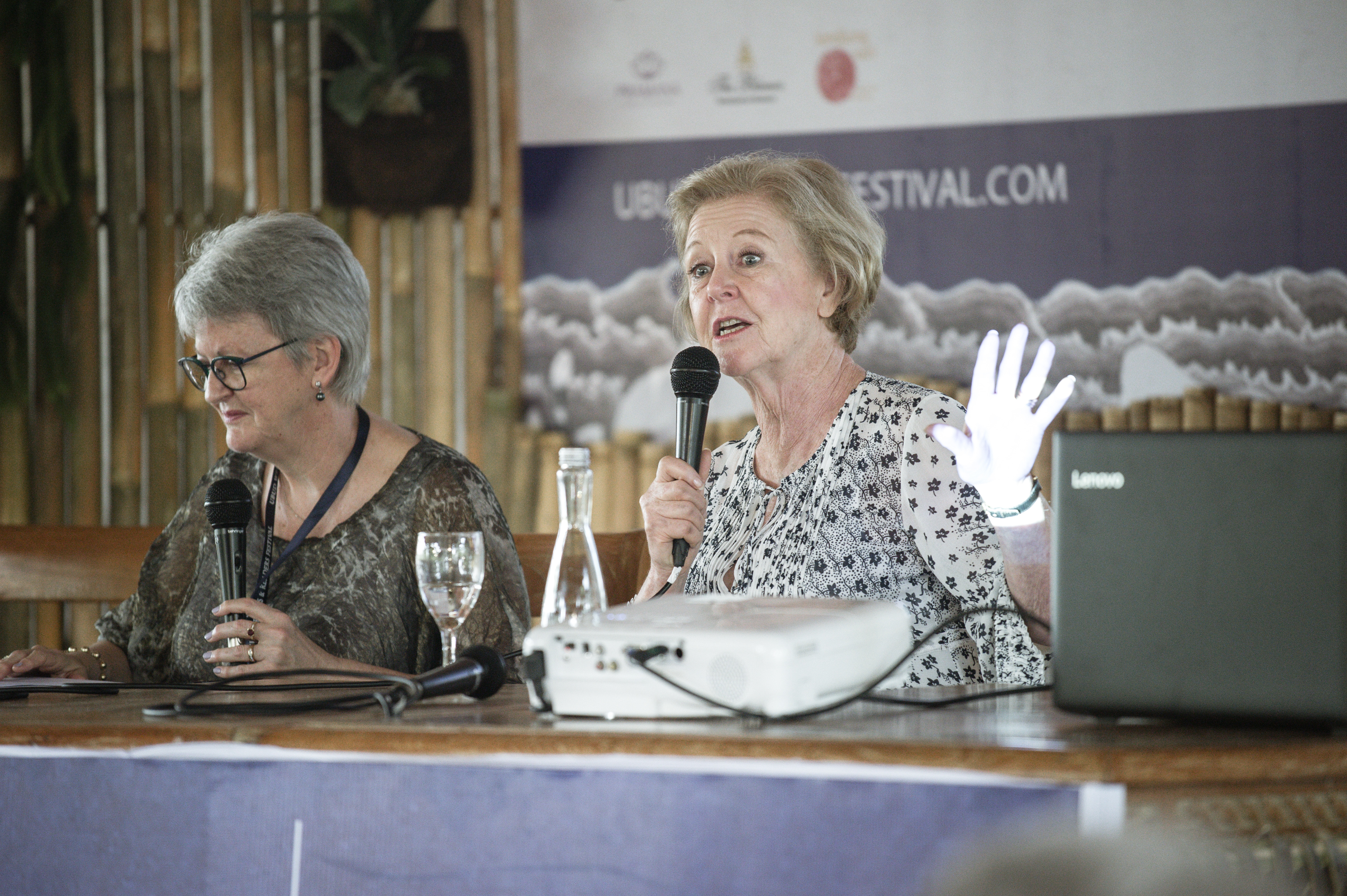
Gillian Triggs, former President of the Human Rights Commission in Australia and now the UNHCR Assistant High Commissioner for Protection, recently delivered the fourth annual Nelson Mandela Human Rights Lecture

This year is the 75th anniversary of the Universal Declaration of Human Rights. This critical document has inspired the entire body of international commitments to protect people around the world.

Gillian argued that we desperately need pilot programs to identify the most urgent needs of refugees who are on route to another country and to provide accurate information about regular, safe and legal pathways.  People on the move often lack access to basic services and don’t possess formal documentation or visas. They are especially vulnerable to detention, trafficking, and gender-based violence – especially women and children.

In June, the UN Refugee Agency released its Global Trends report observing that by the end of 2022 over 108.4 million people worldwide had been forcibly displaced, including a record number of 36 million refugees.

The Universal Declaration recognises two crucial rights: to seek and enjoy asylum from persecution (article 14) and the right to a nationality (article 15).  Australia contravenes article 14 with its refugee policy, as do most countries around the world today, while millions of people are on the move fleeing war and persecution. There is much debate and anguish about how to manage the flows of people, particularly from North Africa into Europe.   There are no easy solutions and no one country can solve this issue. It needs a co-ordinated global response and I fear that is going to be difficult.

Gillian argues that the 1951 convention remains viable as an effective legal foundation for refugee protection, but there are many who believe the Convention, and indeed the United Nations, is “no longer fit for purpose”.

There is a Global Refugee Forum in December 2023 that she is confident will show how the international community has been willing to shoulder a share of the burden for those displaced and to find long term solutions. I hope we see this, but I have my doubts. 

Gillian Triggs has risen on the international stage taking this key position at the UNHCR. I was privileged to interview her at the Ubud Readers and Writers Festival several years ago when she had released her book Speaking Up. It provides valuable insights into her time in leadership roles in Australia and the political pressure to which she was subjected. I still highly recommend the book.

The State of the World’s Human Rights

Two important reports have recently been released that paint a sobering picture of human rights across the globe. 

Amnesty International’s Annual Report highlights the double standards throughout the world on human rights and the failure of the international community to unite around consistently applied human rights and universal values. 

The West’s robust response to Russia’s aggression against Ukraine contrasts sharply with a deplorable lack of meaningful action on grave violations by some of their allies including Israel, Saudi Arabia, and Egypt.

We need less hypocrisy, less cynicism, and more consistent, principled and ambitious action by all states to promote and protect all rights” said Agnès Callamard, Secretary General of Amnesty International.

The report also talks about the significant deterioration of women and girls’ rights across the world – rights to life, health, security, education, autonomy and sexuality. Women’s rights and freedom to protest are threatened as states fail to protect and respect rights at home. Callamard makes the point that “states’ hunger to control the bodies of women and girls, their sexuality and their lives leaves a terrible legacy of violence, oppression and stunted potential.”

As the Universal Declaration of Human Rights turns 75, Amnesty International insists that a rules-based international system must be founded on human rights and applied to everyone, everywhere.

The UNHCR mid 2022 global trends report provides statistics and trends relating to refugees, asylum-seekers, internally displaced people and stateless people. This report tells us that 103 million people have been forcibly displaced by persecution, conflict, violence, human rights violations and events that seriously disturbed public order – an increase on last year. 

There are 32.5 million refugees worldwide, with Turkey continuing to host the greatest number of refugees with 3.7 million. Interestingly, 76% of people originated from just six countries: Syria, Venezuela, Ukraine, Afghanistan, South Sudan, and Burma.

This year the Australian government is planning to issue 17,875 refugee and humanitarian visas. We could do a lot more, don’t you think? We are rich country with plenty of space and we are crying out for workers in the city and the regions.

A Permanent Home at Last

Thousands of refugees living and working in Australia will be granted permanent residency after ten years in limbo living with Temporary Protection Visas or Safe Haven Enterprise Visas.

My Afghan friend said he cried when he heard the news.  He, like many other refugees with temporary status, is working and paying taxes. He works in the mining sector after having successfully gained a scholarship to study for a university degree in Australia. He already had one degree from India and is a fine upstanding young man.   

Why wouldn’t we want him as an Australian citizen?  He is a refugee who fled from persecution by the Taliban in fear for his life.  For years I have asked myself why the Australian government was persecuting him further.

This week’s announcement from the Albanese Government is a life changer for over 19,000 refugees who entered Australia prior to the dreadful ‘Operation Sovereign Borders’ policy that was enacted in 2013.  This policy centred around then immigration minister Scott Morrison’s mantra of ‘stop the boats’ and was applied to anyone who had arrived by boat to seek protection in Australia before 19 July 2013.  

Since then, those with temporary visas had to reapply every few years for their visa despite having been found to be refugees seeking asylum.  Restrictions also included no possibility of reuniting with families, no support for tertiary study, travel restrictions and limited access to disability and other social supports.

The Refugee Council of Australia is celebrating this long-awaited policy change, which was a Labor election promise. “Today’s announcement from Immigration Minister Andrew Giles is righting almost a decade of an inhumane policy which achieved nothing but untold harm and trauma to people who sought protection in Australia,” said Chief Executive Officer Paul Power. 

You can read more on their website or in the Guardian Australia.

These changes have been hailed by refugee advocates across Australia as “a victory of unity and compassion over division and fear”.

Today I am once again proud to be an Australian.

Stand up for Human Rights

Today there is more need than ever to stand up for Human Rights.  There are wars and disregard for human rights in Ukraine, Iran, Afghanistan, Burma, as well as many other places around the world. This means we need to keep informed and always thinking about how we can raise awareness of human rights issues.  

The slogan for this year’s Human Rights Day on 10 December was “Dignity, Freedom, and Justice for All” with the call to action as #StandUp4HumanRights. The 75th anniversary of the Universal Declaration of Human Rights (UDHR) will be celebrated on 10 December 2023. Ahead of this milestone celebration there will be a year-long campaign to showcase the UDHR by focusing on its legacy, relevance and activism. Take a look at the terrific video below.

I was fortunate to mark this year’s Human Rights Day listening to a PEN sponsored event with the fabulous Peter Greste. 

Peter had a 30-year career as an award-winning foreign correspondent for the BBC, Reuters, CNN, and Al Jazeera, reporting from some of the world’s most volatile places. He was based in Afghanistan, former Yugoslavia, Latin America and Africa, and covered conflicts across those regions and in the Middle East. He is best known for becoming a headline himself when he and two of his colleagues were arrested in Cairo while working for Al Jazeera and charged with terrorism offences. In letters smuggled from prison, Peter described their incarceration as an attack on press freedom. He was released after a long international campaign. His book The First Casualty is a must read.

The news media has traditionally been viewed as the guardian of the public interest and as a watchdog on the activities of government. Yet much of the contemporary press are reliant on private business – and a model that that has changed completely thanks to the internet.  Greste asked us to reconsider journalism as a public good rather than a commercial enterprise and for us to develop of a set of regulatory and funding mechanisms to make it serve that purpose. 

As a former journalist, I was horrified to understand that some journalists now have KPIs surrounding the number of eyeballs or views that each one of their stories brings the news organisation.  It explains some of the strange headlines that I see online.  Why write about human rights or local council issues when a story highlighting a celebrity doing something inane is likely to draw more views and thus mean job success for you?

Whatever happened to the objectivity of journalism?

I highly recommend listening to Peter Greste talk about human rights and the importance of a free press in an interview with Margaret Throsby, who is famous for her interviews with high profile people linking them with their favourite music.

Respecting people of all ages

We have recently celebrated Ageism Awareness Day which is an opportunity to draw attention to the existence and impacts of ageism in Australia. It plays a critical role in changing community attitudes and building a world where all people of all ages are valued and respected and their contributions are acknowledged.

Alarmingly on a global scale 1 in 2 people are ageist. That is half of the world’s population who hold negative attitudes about ageing and older people.

Within Australia it is a highly accepted form of prejudice. From a personal perspective of someone who is 60 I know I am invisible at some shops and cafés. I often get overlooked for another person. My invisibility became obvious a few years ago when I let my hair go grey.  There is still so much negativity about women with grey hair, while on men it supposedly looks distinguished.

My older friends warn me I have not seen anything yet. My 70-year-old friend says she started to notice people talking down her as if she was stupid a few years ago.   Why would people think age equals stupidity? In many other cultures age equals wisdom and respect.

Council on the Ageing Australia Chief Executive, Ian Yates, said that while Australia has taken some steps in learning how to end ageism, there is still a very long way to go.

“Ageism is endemic in Australia,” Mr Yates said. “The Australian Human Rights Commission last year found that 90 per cent of Australians agree that ageism exists in this country, yet we are still yet to see some of the simple, concrete measures that older Australians have been asking for put in place to address this critical issue.”

On the brighter side, I still sit on two boards and write and my husband who is older than me sits on at least five boards or councils. We travel and participate in community events and spend time with family. We do not feel our age is holding us back. I do now see older workers now at my local hardware store and occasionally at a café.   With so much worker shortage in hospitality and other sectors, some of our older Australians are ready to fill those gaps.   

People of all ages, including older Australians, should be valued and respected and have their contributions acknowledged. Throughout their lives, from start to finish. The video below really sums up the issues around ageism.  Actor Bryan Brown, a youthful 75 years of age, really gets it.  I urge you to watch it. If you are having trouble viewing the video, you can find it on the EveryAGE Counts website.

One Year Since Afghanistan Fell

 “Victory and Freedom!” 

This chant rang out from central Kabul this week as hundreds of Taliban fighters and commanders gathered to mark a year since the group swept into Kabul ending a long, brutal war and upending the lives of millions. 

As expected, the return of this oppressive regime has in fact resulted in loss of freedoms for Afghan people, especially women.  Over the last year the Taliban have implemented the following policies:

  • Blocked Afghan girls from getting an education
  • Fired 125,000 women from government jobs
  • Revoked women’s right to drive
  • Fired 80 per cent of female journalists
  • Controlled what women wear and where they can travel
  • Changed the Ministry of Women’s Affairs to the Ministry of Vice and Virtue

You can find out more in this thoughtful article in Women’s Agenda

I have just finished reading August in Kabul by Australian photo journalist Andrew Quilty. One of the last foreign journalists left in Kabul as Afghanistan fell, Quilty shows through personal stories how naïve the Allied Forces, led by the Americans, were in believing they could negotiate towards a peaceful power-sharing.

It must be said that the Taliban’s military victory would never have come without the ineptitude and malfeasance of successive administrations in Kabul and their armed forces, and the hubris of the American-led international military coalition,” writes Quilty.

Another foreign affairs expert, David Kilcullen, has co-authored a book with Greg Mills The Ledger: Accounting for failure in Afghanistan which delves into 20 years of mistakes and missteps by the West in Afghanistan. “After confidently assuring everybody that the Taliban were not likely to come anywhere near Kabul within a year, we saw the collapse of 16 out of the 34 provinces in about two days, and all of the rest bar one in another week.” You can listen to a terrific interview with Kilcullen here

Neither of these books are easy reads and they made me angry on so many levels: what a waste of twenty years of peacebuilding in the country; fear for women under Taliban rule again; and how incompetent the evacuation was for Afghan people who had collaborated with the allies. I am grateful that family of my friends Farid and Fauzia were able to get out and start a new life here in Western Australia.

REUTERS/Adnan Abidi

Reflections on Refugee Week

We have just finished Refugee Week which was celebrated with major events around the world. The week aims to promote harmony and togetherness with the theme this year of Healing. The importance of human connections has been underscored by the pandemic and the lessons from this can help our community in so many ways. 

We can draw upon shared hardship to heal wounds, to learn from each other and to move forward. Healing can occur through storytelling, through community and through realisation of our intrinsic interconnectedness as individuals. The common theme is a reminder that, regardless of our differences, we all share a common humanity.

I spent some time during the week reflecting on the change of government in Australia and hoping conditions can be re-set for so many people who came as asylum seekers to Australia and whose lives currently remain in limbo.

One of the organisations of which I am a director is CARAD – the Centre for Asylum Seekers, Refugees and Detainees. Along with the Centre for Human Rights Education at Curtin University where I partly studied my doctorate, CARAD is extremely active in advocacy for those people with lived asylum seeker and refugee experience including those on temporary protection visas. Our new Prime Minister Anthony Albanese said before the election that his government would oppose temporary protection visas. Right now in Australia more than 15,000 people of various nationalities are on temporary protection visas.

We need to keep them to their word.

I am in Europe at the moment and am watching with horror as the United Kingdom introduces its “Rwanda policy.” This policy will mean people who come seeking asylum by boat across the English Channel will be sent to Rwanda for processing. The UK Prime Minister has said they modelled this approach on Australia’s offshore processing – how horrible! These asylum seekers have little chance of a getting any sort of visa.

People are being punished all around the world for fleeing persecution and seeking asylum. The United Nations High Commissioner for Refugees strictly states that it is not illegal to seek asylum. 

Where has our humanity gone?