Stand up for Human Rights

Today there is more need than ever to stand up for Human Rights.  There are wars and disregard for human rights in Ukraine, Iran, Afghanistan, Burma, as well as many other places around the world. This means we need to keep informed and always thinking about how we can raise awareness of human rights issues.  

The slogan for this year’s Human Rights Day on 10 December was “Dignity, Freedom, and Justice for All” with the call to action as #StandUp4HumanRights. The 75th anniversary of the Universal Declaration of Human Rights (UDHR) will be celebrated on 10 December 2023. Ahead of this milestone celebration there will be a year-long campaign to showcase the UDHR by focusing on its legacy, relevance and activism. Take a look at the terrific video below.

I was fortunate to mark this year’s Human Rights Day listening to a PEN sponsored event with the fabulous Peter Greste. 

Peter had a 30-year career as an award-winning foreign correspondent for the BBC, Reuters, CNN, and Al Jazeera, reporting from some of the world’s most volatile places. He was based in Afghanistan, former Yugoslavia, Latin America and Africa, and covered conflicts across those regions and in the Middle East. He is best known for becoming a headline himself when he and two of his colleagues were arrested in Cairo while working for Al Jazeera and charged with terrorism offences. In letters smuggled from prison, Peter described their incarceration as an attack on press freedom. He was released after a long international campaign. His book The First Casualty is a must read.

The news media has traditionally been viewed as the guardian of the public interest and as a watchdog on the activities of government. Yet much of the contemporary press are reliant on private business – and a model that that has changed completely thanks to the internet.  Greste asked us to reconsider journalism as a public good rather than a commercial enterprise and for us to develop of a set of regulatory and funding mechanisms to make it serve that purpose. 

As a former journalist, I was horrified to understand that some journalists now have KPIs surrounding the number of eyeballs or views that each one of their stories brings the news organisation.  It explains some of the strange headlines that I see online.  Why write about human rights or local council issues when a story highlighting a celebrity doing something inane is likely to draw more views and thus mean job success for you?

Whatever happened to the objectivity of journalism?

I highly recommend listening to Peter Greste talk about human rights and the importance of a free press in an interview with Margaret Throsby, who is famous for her interviews with high profile people linking them with their favourite music.

Reflections on Refugee Week

We have just finished Refugee Week which was celebrated with major events around the world. The week aims to promote harmony and togetherness with the theme this year of Healing. The importance of human connections has been underscored by the pandemic and the lessons from this can help our community in so many ways. 

We can draw upon shared hardship to heal wounds, to learn from each other and to move forward. Healing can occur through storytelling, through community and through realisation of our intrinsic interconnectedness as individuals. The common theme is a reminder that, regardless of our differences, we all share a common humanity.

I spent some time during the week reflecting on the change of government in Australia and hoping conditions can be re-set for so many people who came as asylum seekers to Australia and whose lives currently remain in limbo.

One of the organisations of which I am a director is CARAD – the Centre for Asylum Seekers, Refugees and Detainees. Along with the Centre for Human Rights Education at Curtin University where I partly studied my doctorate, CARAD is extremely active in advocacy for those people with lived asylum seeker and refugee experience including those on temporary protection visas. Our new Prime Minister Anthony Albanese said before the election that his government would oppose temporary protection visas. Right now in Australia more than 15,000 people of various nationalities are on temporary protection visas.

We need to keep them to their word.

I am in Europe at the moment and am watching with horror as the United Kingdom introduces its “Rwanda policy.” This policy will mean people who come seeking asylum by boat across the English Channel will be sent to Rwanda for processing. The UK Prime Minister has said they modelled this approach on Australia’s offshore processing – how horrible! These asylum seekers have little chance of a getting any sort of visa.

People are being punished all around the world for fleeing persecution and seeking asylum. The United Nations High Commissioner for Refugees strictly states that it is not illegal to seek asylum. 

Where has our humanity gone?

Everybody Belongs

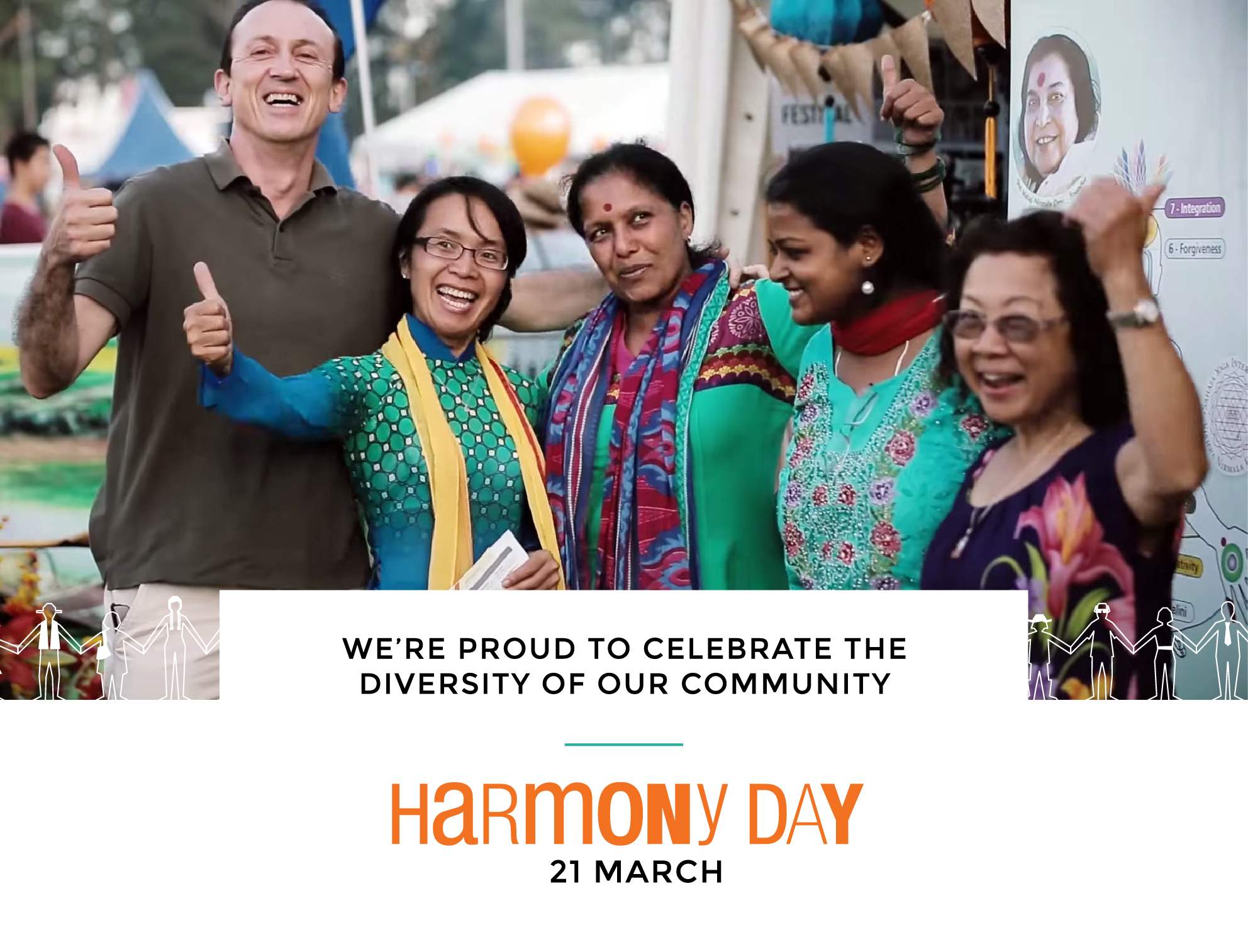
Australia is a vibrant and multicultural country — from the oldest continuous culture of our first Australians to the cultures of our newest arrivals from around the world.  This Harmony Week 15 – 21 March, that is worth celebrating.  

We especially come together to celebrate Harmony Day on 21 March. Created in 1999 to celebrate unity and diversity, Harmony Day was originally an Australian celebration but is now marked worldwide by conscientious citizens. The continuing theme of Harmony Day is Everybody Belongs.

Here are nine stories that will inspire you during the week. Called Food, Faith and Love in WA they were put together by the WA Office of Multicultural Interests and one of my favourite places, the Centre for Stories

An integrated multicultural Australia is an integral part of our national identity. All people who migrate to Australia bring with them some of their own cultural and religious traditions, as well as taking on many new traditions. Collectively, these traditions have enriched our nation.

There are some fascinating statistics about Australia’s diversity that can be good conversation-starters:

  • Nearly half (49%) of Australians were born overseas or have at least one parent who was,
  • We identify with over 300 ancestries,
  • Since 1945, more than 7.5 million people have migrated to Australia,
  • 85 per cent of Australians agree multiculturalism has been good for Australia,
  • Apart from English, the most common languages spoken in Australia are Mandarin, Arabic, Cantonese, Vietnamese, Italian, Greek, Tagalog/Filipino, Hindi, Spanish and Punjabi.

It’s been heartening to see sport and the arts around the world unite in anti-racism messages over the last several years.  Teams make a stand on the pitch/ground/court before every game. Sport transcends culture. It breaks down barriers and helps to build inclusive communities. Sport brings people together by sharing a common goal.

Our cultural diversity is one of our greatest strengths and is at the heart of who we are. 

It makes Australia a great place to live.

Human Rights Day

Human Rights Day is observed every year on 10 December – the day on which the United Nations General Assembly adopted, in 1948, the Universal Declaration of Human Rights.

As the chair of the United Nations Human Rights Commission, Eleanor Roosevelt was the driving force in creating the 1948 charter of liberties which will always be her legacy: The Universal Declaration of Human Rights. She made an insightful speech that is still as relevant today as it was then. 

“Where, after all, do universal human rights begin? In small places, close to home — so close and so small that they cannot be seen on any maps of the world…Unless these rights have meaning there, they have little meaning anywhere. Without concerted citizen action to uphold them close to home, we shall look in vain for progress in the larger world.”

This year’s theme relates to ‘Equality’ and Article 1 of the UDHR – “All human beings are born free and equal in dignity and rights.

My thoughts this year are with friends in Afghanistan and Burma whose human rights continue to suffer under harsh regimes.  

But I am also thinking about the fact that here in Australia, Aboriginal and Torres Straits Islander people still suffer in many instances from a lack of human rights.

This day is also the last day of the international campaign 16 Days of Activism against Gender-Based Violence, which calls for the prevention and elimination of violence against women and girls.

In other areas, the COVID-19 pandemic has brought the world to a major crossroads: either we take the route of collective action and address the pervasive inequalities that have risen across the globe, or we continue on the route filled with deep-rooted injustices and pervasive inequalities.

The Universal Declaration of Human Rights empowers us all. The principles enshrined in the Declaration are as relevant today as they were in 1948. We need to stand up for our own rights and those of others. We can take action in our own daily lives, to uphold the rights that protect us all and thereby promote respect among all human beings.

I found this link to the United Nations exhibits on human rights. There are some extraordinary images from talented amateur and professional photographers from exhibitions for the general public that have been showcased over the years at United Nations Headquarters.  Something to think about.

Celebrating a Centenary

PEN was one of the world’s first non-governmental organisations and amongst the first international bodies advocating for human rights. It was the first worldwide association of writers, and the first organisation to point out that freedom of expression and literature are inseparable – a principle PEN continues to champion today.  

PEN International began in London in 1921, a hundred years ago. Within four years there were 25 PEN Centres in Europe, and by 1931 there were several Centres in South America as well as China.

As the world grew darker just before the outbreak of war in 1939, PEN member Centres included Argentina, Australia, Bolivia, Brazil, Canada, Chile, Colombia, Egypt, India, Iraq, Japan, Mexico, New Zealand, Palestine, Uruguay, the US and others. All the Scandinavian countries were included as well as several countries in Eastern Europe. Basque, Catalan and Yiddish Centres were represented, too.

Today with 155 centres in more than 100 countries, PEN acts to preserve endangered languages, support translation, protect the freedom to write, and expand the space for writers worldwide in the belief that literature can build communities.

Words without Borders, a wonderful organisation, is celebrating the PEN Centenary with some excellent new fiction. Written by Words Without Borders contributors who have ties to PEN centres in three countries, the stories from Nazlı Karabıyıkoğlu (Turkey), Kettly Mars (Haiti), and Mohamed Magani (Algeria), with translations by Ralph Hubbell, Nathan H. Dize and Edward Gauvin, make some great reading! You can find the stories on the Words without Borders Website

Check out your local PEN chapter around the world and get involved. Click here for the Perth Chapter

Reflections this Refugee Week

Unity is the theme of refugee week this year and I can’t think of anything more apt. The volatility of life in recent times has shown us unequivocally that we need to work together, often merely to survive, let alone to thrive and progress.

Refugees make such a positive impact in this country. If you look, there are inspiring stories everywhere. I particularly enjoyed reading Hava Rezaie’s story about her work as a refugee women’s rights advocate in Afghanistan, Iran and now in Australia.

Sharing food has always been a special part of refugee week and many television channels have been featuring programs dedicated to food from different countries made by refugees.  Here is a selection of recipes from refugees that you might enjoy exploring. 

Finally the Refugee Council of Australia is advocating for over 6,000 refugees who are stuck in an indeterminable limbo.  These children, women and men have already been granted permanent humanitarian visas to enter Australia. But they’ve been denied entry – some missing out by mere days when the borders closed because of the pandemic. On every level, this is just a dreadful situation. 

In just over a year of COVID-related travel restrictions, more than 500,000 people have been able to enter Australia. These include returning citizens and permanent residents but also many who are neither – including movie stars, tennis players, business people and skilled migrants who were given automatic exemptions.

From refugees living without work rights for over seven years in Indonesia, to those in sprawling refugee camps in Jordan, families are now trapped, awaiting our nation to fulfil its promise to get them to safety.   

My hope is that we never lose sight of those people in vulnerable situations. Let’s take the opportunity to start afresh and rebuild our lives together… in unity. 

International Human Rights Day

During this week we celebrated International Human Rights Day.  On the 10th of December we remembered the day the Universal Declaration of Human Rights was proclaimed in 1948.   It is a milestone document that guides much of international law today covering the inalienable rights which everyone is entitled to as a human being, regardless of race, colour, religion, sex, language, political opinion, national or social origin, property, birth, or other status.

In this year of COVID19 the theme is recover better- stand up for human rights.  The pandemic exposed failures and exploitation of poorer people around the world.   While there were heart-warming examples of people coming together in more caring ways during COVID19, I feel those suffering in refugee camps were almost forgotten.  

Social distancing simply isn’t possible for the one million Rohingya refugees who live in Cox’s Bazar refugee camp, in south eastern Bangladesh. Families live in close quarters inside flimsy bamboo shacks, using communal toilets and water facilities. Sometimes the most basic items, such as soap, are lacking. It is one of the most densely populated places on earth.

I think how lucky I am to live in Western Australia where life has been relatively normal with exceptionally low case numbers. But then I reflect on the cruelty of the Australian government’s decision to slash support to people seeking asylum in the 2020-21 Budget. This decision, according to the Refugee Council of Australia, puts over 100,000 people, including around 16,000 children, at further risk of homelessness and destitution.  Refugees are living in Australia on various temporary visas because the government will not recognise a large cohort of people who came to Australia seeking asylum.  These are the forgotten people.

During this year, while attempting to publish stories about the lives of refugees, I was told by several publishers that the reading population has “refugee fatigue”. Is that true? If it is, what does it say about our humanity?

Eleanor Roosevelt, one of the declaration’s authors stated, “human rights begin in small places, close to home.” During this week of international rights, I know I could do more in standing up for human rights. Maybe we all could.

The Year of Welcome

Refugee Week is held every year in June to recognise the important role refugees play in society. This year the focus is on welcome. Living in a world of COVID-19 has often meant we’ve been thinking about ourselves and our own safety, but we shouldn’t forget those on the margins, whether as part of the Black Lives Matter Campaign or refugees and asylum seekers needing our help.

The Refugee Council of Australia has fabulous resources on their website, but I particularly recommend the facts page.  There is so much misinformation and propaganda on refugees, and this page provides a counterbalance. Refugee week is a great time to learn more.

From 14 to 20 June there are many activities available on-line. Refugee week promotes harmony and togetherness, aiming to unite individuals, communities, and organisations from many different backgrounds behind a common cause. “Through Refugee Week, we aim to provide an important opportunity for asylum seekers and refugees to be seen, listened to and valued.”

The welcome theme is also a reminder that, regardless of our differences, we all share a common humanity.  The organisers have joined forces with SBS Food Online. You’ll be able to watch and cook along with people from refugee backgrounds as they share delicious dishes from their home cuisines and tell us what each dish means to them.

Members of Australia’s refugee communities are also offering up their talents to bring an exciting week of entertainment.  Think creative arts, thought-provoking discussions, movies and more. 

For a full list of events and other opportunities in Australia so you can get involved, go to the website.

Hope and a home

Much loved Australian actor Kate Blanchett has collaborated with the United Nations refugee agency UNHCR and film website IMDb to share a “Films of Hope” lockdown watch list which she says will put the spotlight on the growing struggles faced by refugees.

images

In this time of COVID-19 it is easy to find yourself focussing inward and concentrating on what life means for you.  These films shine a spotlight on vulnerable others.  The films are inspirational, and I think this can take us away from own worries.  Perhaps for some of us, it limits the amount of light entertainment we are mindlessly streaming in isolation!

The two-time Academy Award winner has curated six films which focus and explore themes around human resilience and isolation as well as what it means to have hope and a home.

The selection features movies from around the world including several of my favourites Babel, The Other Side of Hope, News from Home and The Joy Luck Club. I also add another of my favourites about displacement and home that is not on the list — Lion.

UNHCR Australia National Director Naomi Steer said she hoped Ms Blanchett’s watch list will help connect people but also remind them of the importance of supporting others during the pandemic.

If you have time, please think about making a donation to one of the many agencies working with refugees.  I find it is positive for my state of mind to reach out and help others.  The two agencies I am involved with need financial and other support now –    Edmund Rice Centre WA and CARAD

At the same time watch a movie and be inspired!

joy luck club


A world of stories


Refugee Week, 16 -22 June, provides a wonderful opportunity for people around the world to celebrate the contribution refugees make to our society.  It’s also a time to raise awareness, remembering and honouring the often-perilous journey that refugees have taken to reach Australia and other countries.

Logo

For many people, Refugee Week provides an opportunity to meet a refugee for the first time. This year’s theme for Refugee Week is A World of Stories which makes food the focus and asks you to “Share a meal, share a story…”  With that in mind, the Refugee Council is encouraging businesses, community groups, schools, and individuals to hold a food event (breakfast, morning tea, dinner) where they can hear stories from this year’s Refugee Ambassadors, while sharing some of their favourite meals. This can be done by either inviting a refugee to your event, watching a video or listening to stories in other ways.

There’s a lot of information on the website and similar organisations around the world also provide advice.  If you are planning an event in Western Australia, I can highly recommend the speakers bureau at the Youth Affairs Council of WA.  For a modest fee, a young person is available to talk, share their story and answer questions.

There are many public events around the world for Refugee Week.   If you do nothing else, take time on World Refugee Day on 20 June to look out for some stories such as this one about a woman whose parents came to Australia after the second world war.

Or you could buy a book.  Behrouz Boochani’s book about his imprisonment on Manus Island No friend but the mountains  is excellent, or They cannot take the sky, a collection of direct testimonies as stories, is also a thoughtful read. I have a suggested reading list on my website you may like to investigate.

I will be thinking about my new friends – those refugees who entrusted me with their stories, and the positive lives they have built for themselves here in Australia.

gor-davtyan-share-a-meal-02-768x576