Inspiration at Perth Writers Week

Congratulations to Will Yeoman as guest curator of the 2018 Perth Writers Week.

My head is still spinning from all the great writers I heard. And isn’t that what a good festival does?   It inspires us; it educates us and it entertains us. It also provides time for new or different ideas to be presented.

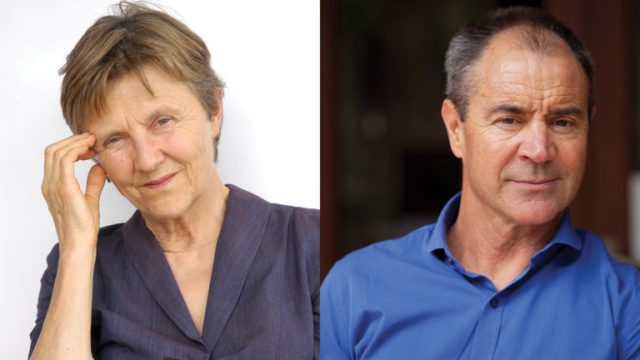
One of the highlights for me was listening to Kim Scott (Taboo) and Helen Garner (Everywhere I look) in conversation.  These are two of Australia’s literary giants.  It was an interesting pairing – but what a rich evening they provided for the sold out crowd at the Octagon Theatre in Perth.   It was also obvious how much they respected and admired each other’s work.
Helen-Garner_Kim-Scott_Hero-768x432
Helen Garner and Kim Scott

Tim Winton’s solo performance about his new book The shepherd’s hut and his powerful interwoven messages that society has failed young boys because they have ­remained trapped in an idea of manhood that is toxic, was fascinating and quite disturbing. I thought about the implications as I made my way home.

I came away inspired from a session with Liz Byrski, Rob Dessaix and Alex Miller, who discussed creativity in later years. They reaffirmed to me that I have a bright future ahead and gave me permission to become more selfish with my own time, say no and even be a little bit rude!

I was lucky enough to interview three women from the Arab world: Manal Al-Sharif, Amal Awad and Tess Woods. With Palestinian, Egyptian and Saudi Arabian heritages the conversation showed the audience life from three different countries and cultures. It was an informative, amusing and sometimes poignant conversation. I recommend all three books – Daring to Drive, Beyond the veiled clichés and Beautiful Messy love.  All would be great book club reads.  I’ll have a review of Daring to Drive up soon, as I spent another hour with Manal in a different session discussing her life and activism in more depth.

So hats off to all in the Perth Writers Week program. Reading ideas abound!


Manal Tess and Amal
Manal Al-Sharif, Amal Awad and Tess Woods


Writers Week is here

The Perth Writers Week is almost here. It starts on Monday 19 February and runs until Sunday 25 February.  I am pleased to be involved again this year, and particularly to be chairing two discussions that demonstrate, once again, that there is always more to the story.

On Sunday I will be interviewing Saudi Arabian woman Manal Al-Sharif who is best known for her YouTube videos for the Women2Drive campaign.

Manal campaigns for women’s rights. Her life story of being raised under a religion of strict fundamentalism to her change to an activist who fights women’s equality in a society that is unequal is incredible. Her book Daring to Drive is a story of resilience. I can’t wait for the conversation.

Manal will also be participating on panel conversation on Saturday called ‘Free to Love, Free to Learn’.  She is joined by Amal Awad who has written a book that is a must read for anyone who wants to understand the Middle East. It’s called Beyond Veiled Clichés. The third participant is Tess Woods who draws on her Egyptian heritage, cross cultural marriage and her insider’s knowledge of professional football (She’s a physio in her day job). Her book is called Beautiful Messy Love and is set in Western Australia.

Will Yeoman, who is curating his first festival, has also catered for my love of crime writing.   I re-unite with Alan Carter who splits his time between Australia and New Zealand these days. We’ll be discussing his new book Marlborough Man at a free event on Wednesday at the fabulous Perth city library.

The full program is available on line or you can pick up a free, easy to read, printed program from most good bookstores. If you are not in Western Australia, some of the Perth Writers Week sessions will be recorded by ABC radio and available as podcasts.

I’ll see you there.


Human rights begin close to home

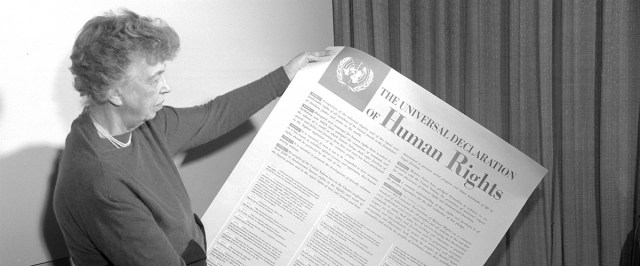
Eleanor Roosevelt HRD“Where after all do universal human rights begin? In small places, close to home – so close and so small that they cannot be seen on any maps of the world.”
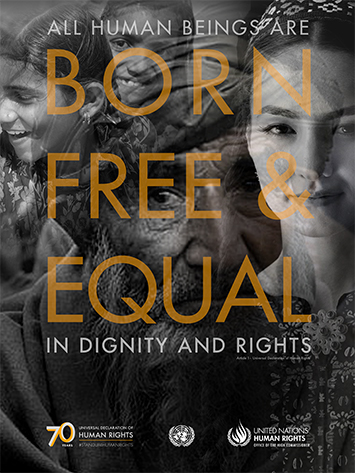
Eleanor Roosevelt (pictured), chair of the drafting committee of the Universal Declaration of Human Rights, said these words 70 years ago when the Declaration was launched. She went on to say unless these rights have meaning close to home they will have little meaning anywhere else.   This is surely something on which to reflect during International Human Rights Day on 10 December 2017.

This is a milestone document that proclaims the inalienable rights which everyone is entitled to as a human being – regardless of race, colour, religion, sex, language, political or other opinion, national or social origin, property birth or other status. The United Nations General Assembly adopted the declaration in 1948. It is the most translated document in the world available in more than 500 languages. There’s more information on the United Nations website.

Wherever you are – there will be all sorts of events to recognise the day.   I’ll be attending a meeting at the Centre for Stories to discuss forming a Western Australian chapter of PEN, which is the worldwide association of writers that emphasises the role of literature in mutual understanding and world culture. PEN is also concerned with opposing restraints of freedom of expression and working to promote literacy itself.

The Universal Declaration of Human Rights empowers us all and reminds us of what we all have in common – our humanity. The principles enshrined in the Declaration are as relevant today as they were in 1948. We need to stand up for our own rights and those of others.


UDHR Poster idea C2


Respect and dignity

Rosemarys Dad (1)
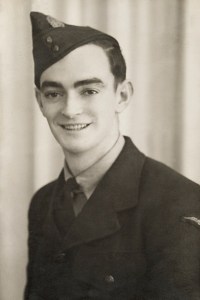
My father, Colin Sayer

My late father was driven by a set of simple values all his life: that all people deserve respect and dignity whoever they are. He often said, ‘I don’t care if you are the Queen of England or a street sweeper – we’re all human and just the same.’

Those values were imprinted on me and today help define who I am. Every day as I continue my PhD studies in human rights and the writing of refugee stories I am reminded of my Dad’s values and by the common threads of humanity that bind us all.

I had the chance to reflect on this a few weeks ago at the Australian Academy of the Humanities two day symposium with its theme of humanitarianism and human rights. Academics, writers and thinkers discussed what it meant to be human and compassionate and what happens when we are not.

My dad would have laughed about the application of academic and social theories to something he saw as so straight forward. I can imagine my explanations of why I needed to study and research these issues as well as be an advocate for human rights. I think it would have baffled him.

However, he would have been horrified at the racist policies of Pauline Hanson’s One Nation party and the election of Donald Trump with his nationalistic and divisive views. We would have talked about why people are frightened and how that fear has been shrouded in a security discussion that positions asylum seekers and refugees as potential terrorists… or someone different to us… someone seen as ‘other’. I’m sure he would have been concerned about security issues too, but we would have come back to our shared values of respect and dignity when we discussed the situation on Manus Island or the treatment of people by the Australian government who have been found to be refugees and still don’t have permanent residency and access to the services they need.

scottkim03
Kim Scott, Author

If he’d been at the event he also would have loved writer Kim Scott’s moving and intimate portrait of his life as young Aboriginal boy searching for an identity and a sense of belonging. While my dad was never short of a word, and certainly had strong views on many issues in society, he loved meeting people from different backgrounds and went out of his way to do so. He loved a good story and he listened well. He was empathetic – although he would have told me not to use fancy words.

Like many writers and commentators, I have come to believe that this lack of empathy for others allows some in society to express more racist views and to see human rights violations as ‘not their concern.’ Without empathy, my dad’s values of dignity and respect for everyone seem a distant concept.

human rights conference
Photograph by Barat Ali Batoor

Voices from Iran

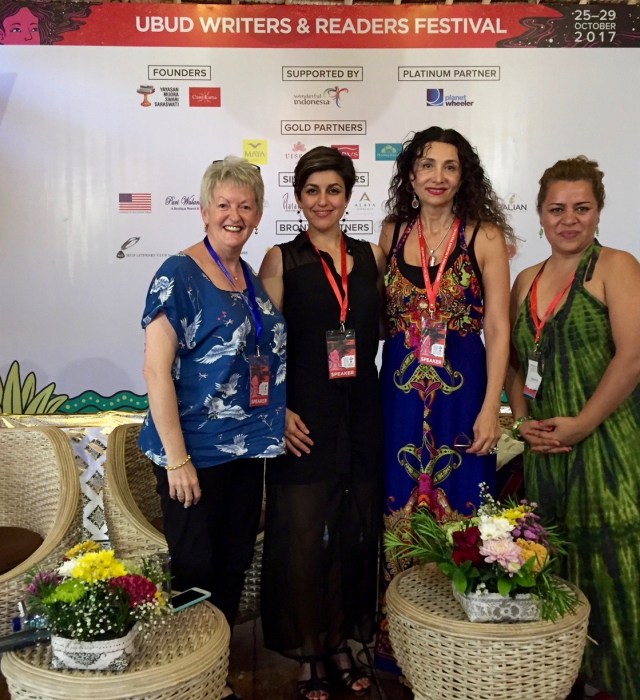
What a joy it was to meet and interview three outstanding Iranian writers Sholeh Wolpe, Sanaz Foutouhi and Shokoofeh Azar at the 2017 Ubud Readers and Writers Festival last week.

Our discussion ranged over the rich history of Persian literature, the influence of heritage and why we should all read more works from around the world in translation. These writers are creating a new chapter in diasporic literature.

Sanaz has written a book about meaning and identity since the Islamic Revolution. The Literature of the Iranian Diaspora is a must read for anyone who wants to begin to understand writing from Iran. Sanaz is also the Director of Asia Pacific Writers and Translators and works tirelessly to promote voices from different regions.

Sholeh lights up any room when she reads her beautiful poetry or other work. She is also an award winning playwright and translator. Her translation of Attar’s The conference of the Birds is a book I return to again and again. Attar was considered by Rumi to be the master of Sufi mystic poetry.

And, of course, Shokoofeh Azar is a writer I know well. I have already reviewed her first book in English called The Enlightenment of the Greengage Tree. It is an enthralling novel that combines magical realism alongside Iranian politics.

The writers discussed the challenges of working across cultures and how to encourage more people to read literature from Iran.   Perhaps, the most poignant moment came when I asked each of the writers about home. Shokoofeh cannot return to Iran.   She was jailed as a journalist and had to flee for her life. Sholeh feels she may never be able to return to Iran because of what she has written since moving to the United States.   Sanaz, however, returns frequently to Iran from Australia. I felt the great sense of loss from Shokoofeh and Sholeh in missing that connection to their homeland.

In Sholeh’s words:

Home is like a missing tooth.

The tongue reaches

For hardness

But falls

Into absence.

Ubud festival 2017 panel

Spiritual Mount Agung Volcano

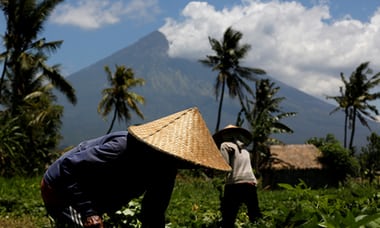
Ubud Readers and Writers Festival Founder and Director Janet De Neefe knows the power and beauty of Mount Agung. From the terrace of her famed restaurant, Indus, she has watched Gunung Agung for nineteen years. ‘We respect whatever choice she makes, but we also hope it’s compassionate’, says Janet.

The mountain, which is the highest point in Bali, is a very sacred place. In every Balinese temple a shrine is dedicated to its spirit.mount Agung

Because of a possible eruption from Mount Agung, an estimated 140,000 people in surrounding areas have been evacuated and moved into makeshift shelters and formerly bustling travel hotspots have been left virtually empty. Festival organisers have looked at all options through their crisis planning and have decided to proceed.

We are doing everything possible to help the displaced villagers,” Janet said this week in an interview with the Guardian newspaper. ‘Ubud won’t be directly affected by the volcano and none of the writers has panicked or threatened to pull out. The Balinese are kind of chilled, like, “Ehh – this could take months”,’ she says. ‘But there’s lots of frantic expats out there.’ The Guardian newspaper has a more in depth look at the current situation.

I love this festival and have been attending as a moderator and interviewer for over a decade. This year I am very pleased to be interviewing Jung Chang the author of Wild Swans, Empress Dowager Cixi, Mao: The Unknown Story.

I am also moderating a wonderful panel of Iranian women writers. Sanaz Fotouhi is Director of Asia Pacific Writers & Translators Conference, a writer and filmmaker. Sholeh Wolpé is an award-winning Iranian-born poet, playwright and literary translator and my friend Shokoofeh Azar, is a rising star of Iranian literature, whose first novel has just been published in English. On our panel, we’ll be discussing the magic of diasporic Iranian literature. The writers will contemplate the influence of their ancient Persian heritage and share insights gleaned from working and writing across cultures. I can’t wait to talk to this wonderful group of writers.

The Ubud Readers and Writers Festival was born from tragedy. In 2002, after the Bali bombings, Janet founded the festival to encourage visitors back to the region. It is now regarded as one of the best writers’ festivals in the world, highlighting and promoting Indonesian authors and attracting some of the biggest names in the international literary scene. I always tell people this is the one festival you MUST see sometime.

We are all hoping a rumbling volcano won’t discourage people from attending the 2017 Ubud Readers and Writers Festival.

Ubud writers festival logo

‘I have stories I want to tell’

Want to read a magical story about an amazing family set alongside a gripping political commentary?  The enlightenment of the greengage tree by my good friend Shokoofeh Azar, which will be launched this week in Australia, does just that.Enlightenment of the greengage tree cover

Living a large part of her life in Iran means most of Shokoofeh’s writing has been published in Farsi. This is her first novel to be written and translated into English with Western readers in mind. It is an opportunity for us to experience the art of Persian story-telling in the style of magical realism at its best. Alice Pung wrote in an early review: ‘It is incredible. I have never heard such a voice before… Azar writes about Iranian history with the lightness of a feather’s touch. Transcendental, brilliant and beautiful.

Shokoofeh came to Australia in 2010 as a political refugee by boat. Sadly sometimes Australians find this the most interesting thing about her. On a blog by Rashida Murphy, another novelist, Shokoofeh said: ‘Surviving a boat journey does not define a person for life. How I got here is not what I’m about. I have stories I want to tell. I paint. I’m a mother.’

Shokoofeh’s book is published by the small independent publisher Wild Dingo and is being launched by Professor Baden Offord, the Director of the Centre for Human Rights Education on Friday 18 August at the Centre for Stories.

This is a book that represents the rich literary tradition of Iran. I loved it.

Shokoofeh Azar

Waleed Aly at the Centre for Human Rights Education

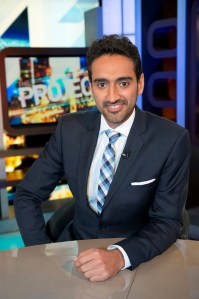
This year’s Annual Human Rights Lecture at the Curtin University Centre for Human Rights Education will be delivered by Waleed Aly.image003 (1)

Widely known as the co-host of Network TEN’s The Project, Waleed Aly is a broadcaster, author, academic, musician and one of Australia’s most respected and versatile media talents.

His social and political commentary has produced an award-winning book and multiple literary short-listings. His debut book, People Like Us: How arrogance is dividing Islam and the West (Picador, 2007), was shortlisted for several awards including the Queensland Premier’s Literary Awards and for Best Newcomer at the 2008 Australian Book Industry Awards. In 2014 he was awarded the prestigious Walkley Award for Commentary, Analysis, Opinion and Critique.

The inaugural Curtin Annual Human Rights Lecture delivered by Professor Gillian Triggs was excellent.  There is a link on the Research and Reports page of this site to view the lecture.

The lecture is on Saturday 19 August starting at 3:45pm. It is free, but you need to register quickly as places are filling fast. All the details are on the Centre for Human Rights Education website.


It takes courage to be a refugee

As a writer and researcher I remain concerned about the lack of empathy toward refugees and asylum seekers, as well as the simplistic narratives told by mainstream media. Refugees are vulnerable people who are fleeing war, violence and persecution in their home countries, and don’t deserve to be met with such overwhelming ignorance and fear.

Many of my friends tell me – “no-one chooses to become a refugee”.

As people who have faced persecution because of who they are (their race, nationality or membership of a persecuted group) or what they believe (their religion or political opinion), refugees need courage:

  • The courage not to deny identity or beliefs in the face of persecution.
  • The courage to leave all that is familiar and step into the unknown in search of peace.
  • The courage to keep going in the face of devastating loss, difficulty and despair.
  • The courage to begin again, to work hard and to maintain hope in an unfamiliar land.

The Australian Red Cross has listed five things to make a difference for refugees in your community, that we could all think about doing in 2017.  I love the fact that the first tip is to get informed and understand the facts.

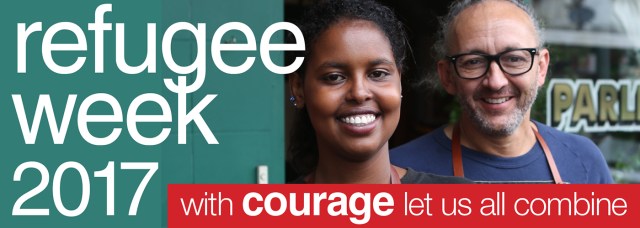
Refugee Week is Australia’s peak annual activity to raise awareness about the issues affecting refugees and celebrate the positive contributions made by refugees to Australian society – this year it will be held from 18 to 24 June. Celebrated since 1986, Refugee Week coincides with World Refugee Day on 20 June.

In Australia, the theme for Refugee Week is “With courage let us all combine”. Taken from the second verse of the national anthem, the theme celebrates the courage of refugees and of people who speak out against persecution and injustice.  You can find out more about Refugee Week from the Refugee Council of Australia website.

Refugee-Week-2017


Our Common Goal

It’s not every evening that you get to tour a mosque, cheer on an enthusiastic game of soccer and attend a board meeting!

That was how my involvement with the Edmund Rice Centre unfolded on Monday night starting with the launch of our second Common Goal program.

Common Goal involves a partnership between the Edmund Rice Centre WA, Football West, WA Police and the Canning Mosque. It aims to give young people opportunities for leadership training and education through a soccer academy.

After the launch event, the Canning Mosque team (aged from 14 -18) took to the field against a WA Police team in an evenly matched game. Over 100 people watched and cheered on the game and I have to say some of the skills on display would have rivalled the A-League! Canning Mosque was victorious with a 1-0 win.

Common Goal also aims to foster positive relationships between people from diverse communities and assist in strengthening police engagement by providing fun and structured sporting activities where anyone is welcome.

As a board member of the Edmund Rice Centre WA, I was delighted to hear the thoughts of the Turkish Muslim Society, Canning Mosque representatives and senior members of the WA Police about how the program was making a difference in the local community.   I was also honored to tour the Mosque with the Iman before the game and understand more about this often misunderstood religion.

The highlight for me though was watching young people from very diverse cultural backgrounds mingling, playing and laughing together. It gives me hope for our future.