Celebrating Human Rights

“Human rights are our compass in turbulent times — guiding and steadying us through uncertainty.” 

This quote is from United Nations Human Rights Chief, Volker Türk at the launch of the 2025 Human Rights Day campaign.

Held on 10 December, Human Rights Day marks the anniversary of the adoption of the Universal Declaration of Human Rights by the United Nations. It’s a day to commemorate, educate and reflect on the rights that allow people to live safely and with dignity. In Australia we tend to take many of our rights for granted – such as the right to an education, the right to receive medical care, and the freedom to practice our chosen religion. However, the reality is they are not equally available in many parts of the world, including Australia. 

In 2025, the very foundations of human rights have been put to the test in a myriad of ways. “Inequalities are rising, conflicts are raging, the climate emergency is mounting, and some are creating and trying to deepen divisions within societies and between countries” said Türk. “It is crucial to keep advocating for our fundamental rights.” 

The Australian Human Rights awards are a true celebration of people across the nation who’ve made it their life’s mission to champion human rights, social justice, and equality for all. The winners of the 2025 awards announced last week, represent the very best of who we can be. 

  • Human Rights Medal – William Tilmouth (NT): For dedicating his life to reform, justice, opportunity and self-determination for First Peoples. William has led numerous community organisations and is the founding chair of Children’s Ground, a First Peoples-led reform movement. William is a member of the Stolen Generation and was NAIDOC Male Elder of the Year in 2023.
  • Law Award – Elisabeth Armitage (NT): For her work as Coroner and judge in making institutions accountable for upholding human rights and removing barriers so every citizen can enjoy full, safe and equal lives.
  • Media and Creative Industries Award – Ben Doherty (NSW): For reporting on human rights and humanitarian issues, from domestic servitude to experiences of forced migration and asylum.
  • Community Award – Ramnik Singh Walia (NT): For advocating for inclusion and accessible services for older people, people with disability and First Peoples, especially in remote areas.
  • Young People’s Award – Shakira Robertson (Tas): For her trauma-informed work to prevent domestic and family violence and transform Tasmania’s systemic response.

Find out more about each winner and nominee and the wonderful work they are doing on the Australian Human Rights Commission website

Finding Freedom

Welcome to Refugee Week. Held each year around World Refugee Day on 20 June, it’s all about increasing awareness of the issues refugees face and the contributions they make in our communities.  

The Refugee Week theme this year is Finding Freedom: Diversity in Community.

Most of us in Australia don’t have to think about freedom; it just is. But when I was writing my two books about refugees the concept of freedom and what it meant came up so often.   

I stood still and turned my face up to the sky to let the raindrops fall on it. Farid kept telling me to hurry up and get out of the rain. I will never forget how it felt on my skin and the smell of the wet soil. I looked at Farid and my boys and laughed out loud. I told them I needed a few minutes to just stand in the rain and feel freedom.

These are words my friend Fauzia used one afternoon as we shared a coffee. She was talking about when she arrived in Australia and was reunited with her husband Farid at Perth Airport after seven years. In fear of the Taliban, Farid had set out to find a new life for them in Australia. You can read more about Fauzia and Farid’s story on the More to the Story website.

Whenever I talk to refugees, they are always grateful for their freedom. The journey towards freedom represents the challenging path that many refugees take, escaping oppression, uncertainty and persecution for safety in a new place.  

In these new spaces, community is more than just a physical place or a group of people; community is a lifeline. It offers refugees safety, belonging, and the strength to rebuild. Every day millions of people across the world embark on dangerous journeys for the sole purpose of finding safety and freedom. From Australia to nations across the globe, settling into a new environment after experiencing the perils of a refugee’s journey can also provide the opportunity to live, to love and to dream.

This coming refugee week I urge you to get involved in some of the many events taking place around the world. In Perth, where I live, there are so many opportunities whether it’s at the local library, council, church or school. You can find out more on the Refugee Council of Australia website

When we understand the people, their vulnerability, and their issues, we all play a part in helping refugees to find freedom and community.

Farid and Fauzia with Rosemary

International Women’s Day

Imagine a gender equal world. 

A world free of bias, stereotypes and discrimination. A world that’s diverse, equitable and inclusive. A world where difference is valued and celebrated. 

I believe that together we can forge gender equality. This week the gender pay gap results for Australia were published, showing that on this International Women’s Day, there is still much to do.

For every $1 on average a man makes, women earn 78c. Over the course of a year, that difference adds up to $28,425.  

How is this still happening?

There is also much to do because of the political situation in the world. As anything to do with diversity, inclusion and gender is eradicated in the US under Trump, here at home Peter Dutton the leader of the opposition chose to launch a Trumpian plan to crack down on Work From Home for public servants.
 
Despite all evidence suggesting otherwise, Dutton claimed it won’t “discriminate on the basis of gender”, and even had the audacity to suggest women can simply take up job sharing arrangements if returning to the office doesn’t suit them. 
 
Make no mistake, the plan is a direct attack on women’s workforce participation and shows a complete misunderstanding of how modern families manage their lives.

This International Women’s Day we are being asked to #AccelerateAction. That means we need to keep taking action by calling out gender bias and discrimination

I also suggest that women take a moment to reflect on their own achievements. Remember what we have accomplished, despite the odds we have faced… and are still facing. For me that means celebrating having worked successfully as a journalist for many years and leading major companies in Australia and Asia in corporate affairs and investor relations. I have also written three books and finished my PhD later in life. Alongside these achievements, I am very proud to have given back to the community through my work on not-for-profit boards and by helping refugees and asylum seekers. I hope I inspired a few people along the way.

Many women (and men) inspired me through my life. This is especially true for Anne Forrest with whom I worked for over ten years in Asia.  Anne didn’t just break the glass ceiling she smashed it, showing me and other women that it was all about the best person for the job, not about gender. You can read about her here

This International Women’s Day I urge you to reach out to those women who have inspired you. We don’t say “thanks – you made a difference in my life” often enough.

Finding Freedom

To coincide with Refugee Week this year, the United Nations has released its latest Global Trends Report. It’s not happy reading but it’s essential we all understand what’s happening in our world.

One in every 69 people, or 1.5 per cent of the entire world’s population, is now forcibly displaced. This is nearly double the 1 in 125 people who were displaced a decade ago.

At the end of 2023, an estimated 117.3 million people worldwide were forcibly displaced due to persecution, conflict, violence, human rights violations, and events seriously disturbing the public order. Based on operational data, UNHCR estimates that forced displacement has continued to increase in the first four months of 2024 and by the end of April 2024 is likely to have exceeded 120 million. 

It’s important for us to remember that behind every number is a person – and over half of them are children.

The increase to 117.3 million at the end of 2023 constitutes a rise of 8 per cent or 8.8 million people compared to the end of 2022. This continues a series of year-on-year increases that has lasted 12 years.

Filippo Grandi, the UN High Commissioner for Refugees reminds us “that behind these stark and rising numbers lie countless human tragedies.” He says, “this suffering must galvanise the international community to act urgently to tackle the root causes of forced displacement.”

This year’s Refugee Week theme “Finding Freedom” – with a focus on family – encapsulates the profound journey of resilience, strength, and unity that defines the refugee experience. For most of us family is one of the most important things in our life. Families can provide love, support, safety and belonging. 

Many refugees are separated from their family, often for decades, sometimes forever.

You can read stories about families taking the journey, families left behind and families welcoming new arrivals, and find more information on the Refugee Week website.

It’s easy to get caught up in the 24-hour news cycle and only hear about one issue; but there are many more not making the news. Please donate to organisations like CARAD and Edmund Rice Centre WA.  Search out other organisations if you are located outside Western Australia. 

These organisations rely on public support to be able to continue to do their incredibly valuable work supporting refugees.

Everyone Belongs

It’s Harmony Week which is the celebration that aims to recognise our diversity and bring together Australians from all different backgrounds.

It’s about inclusiveness, respect and a sense of belonging for everyone.​ Over half of Australians were born overseas or have at least one parent who was born overseas. As a day of anti-racial discrimination, this year’s theme is “Everyone Belongs”.

Many of the refugees who I have interviewed over the years are enormously grateful to Australia for giving them a home when they were forced to flee persecution in their own country. As my friend Paul, a Karen man from Burma, told me he still remembers what he said when he arrived in Australia : “I am a free man. I can smell freedom in the air.” You can read more about Paul on my website.

I don’t have to think about freedom in Australia, it just is. But during this Harmony Week it’s hard not to think about places where people are living without harmony. Burma, Israel and Gaza, Ukraine and Haiti to name a few.  

Harmony Week is celebrated during the week that ​include 21st March, which is also the United Nations International Day for the Elimination of Racial Discrimination. The Australian government has been criticised for continuing to call the 21st March Harmony Day, instead of joining with the world community to celebrate the International Day for the Elimination of Racial Discrimination.

I’m pleased to think about harmony and inclusion this week, but I still feel Australia is a fundamentally racist country like so many others. Critics argue that Australia’s failure to commit to the purpose of the UN day has hindered our efforts to understand, fund, and develop research into problems stemming from systemic racism. There’s an interesting article that delves into this issue here.

But I think we should all try and attend a Harmony Week event and focus on the fact that in our country everyone should belong. How can we make people feel more comfortable? My approach is to read about places around the world to understand both the good and the bad. Sometimes you find a lot of harmony where you least expect it.

Rosemary and Paul

Count Her In

Today is International Women’s Day with the theme Count Her In: Invest in Women. Accelerate Progress. Within the wide array of announcements, events and launches that are happening all around the world, two have stood out for me as highly significant and very meaningful. 

The first is that Ireland is holding a national referendum on the day to remove from their constitution the outdated idea that a ‘woman’s place is in the home’.

The constitution’s clause, which dates to 1937, says: “The State recognises that by her life within the home, woman gives to the State a support without which the common good cannot be achieved. The State shall, therefore, endeavour to ensure that mothers shall not be obliged by economic necessity to engage in labour to the neglect of their duties in the home.”

Proponents argue that the constitution does not truly reflect the Ireland and world we live in today and needs to be modernised. Let’s hope that is a no brainer for voters.

The second is that France, the first country to enshrine the right to abortion in its constitution, today will be holding a ‘sealing ceremony’ – a tradition reserved for only the most significant laws. Crowds gathered at the Eiffel Tower in Paris on Monday as the words “my body, my choice” were shown up in lights on the monument. People celebrated as French lawmakers gathered to vote on the ammendment giving women the ‘guaranteed freedom’ to choose an abortion. It is a big step forward for reproductive rights in Europe.

Closer to home the Workplace Gender Equality Agency released the latest information on gender pay gaps which has once again highlighted the disparity in pay between men and women in Australia. Gender pay gaps are not a direct comparison of like roles. Instead, they show the difference between the average or median pay of women and men across organisations, industries, and the workforce as a whole.

Across all industries in Australia, women are earning on average less than men. Currently at 21.7%, the gender pay gap in Australia is a persistent and pervasive issue that undermines women’s earnings and our place in society.

For us to truly ‘Count Her In: Invest in Women. Accelerate Progress.’, then closing the gender pay gap would be a good start.

Nelson Mandela Human Rights Lecture

“So long as poverty, injustice and gross inequality persist…none of us can truly rest.”

Nelson Mandela

Gillian Triggs, former President of the Human Rights Commission in Australia and now the UNHCR Assistant High Commissioner for Protection, recently delivered the fourth annual Nelson Mandela Human Rights Lecture

This year is the 75th anniversary of the Universal Declaration of Human Rights. This critical document has inspired the entire body of international commitments to protect people around the world.

Gillian argued that we desperately need pilot programs to identify the most urgent needs of refugees who are on route to another country and to provide accurate information about regular, safe and legal pathways.  People on the move often lack access to basic services and don’t possess formal documentation or visas. They are especially vulnerable to detention, trafficking, and gender-based violence – especially women and children.

In June, the UN Refugee Agency released its Global Trends report observing that by the end of 2022 over 108.4 million people worldwide had been forcibly displaced, including a record number of 36 million refugees.

The Universal Declaration recognises two crucial rights: to seek and enjoy asylum from persecution (article 14) and the right to a nationality (article 15).  Australia contravenes article 14 with its refugee policy, as do most countries around the world today, while millions of people are on the move fleeing war and persecution. There is much debate and anguish about how to manage the flows of people, particularly from North Africa into Europe.   There are no easy solutions and no one country can solve this issue. It needs a co-ordinated global response and I fear that is going to be difficult.

Gillian argues that the 1951 convention remains viable as an effective legal foundation for refugee protection, but there are many who believe the Convention, and indeed the United Nations, is “no longer fit for purpose”.

There is a Global Refugee Forum in December 2023 that she is confident will show how the international community has been willing to shoulder a share of the burden for those displaced and to find long term solutions. I hope we see this, but I have my doubts. 

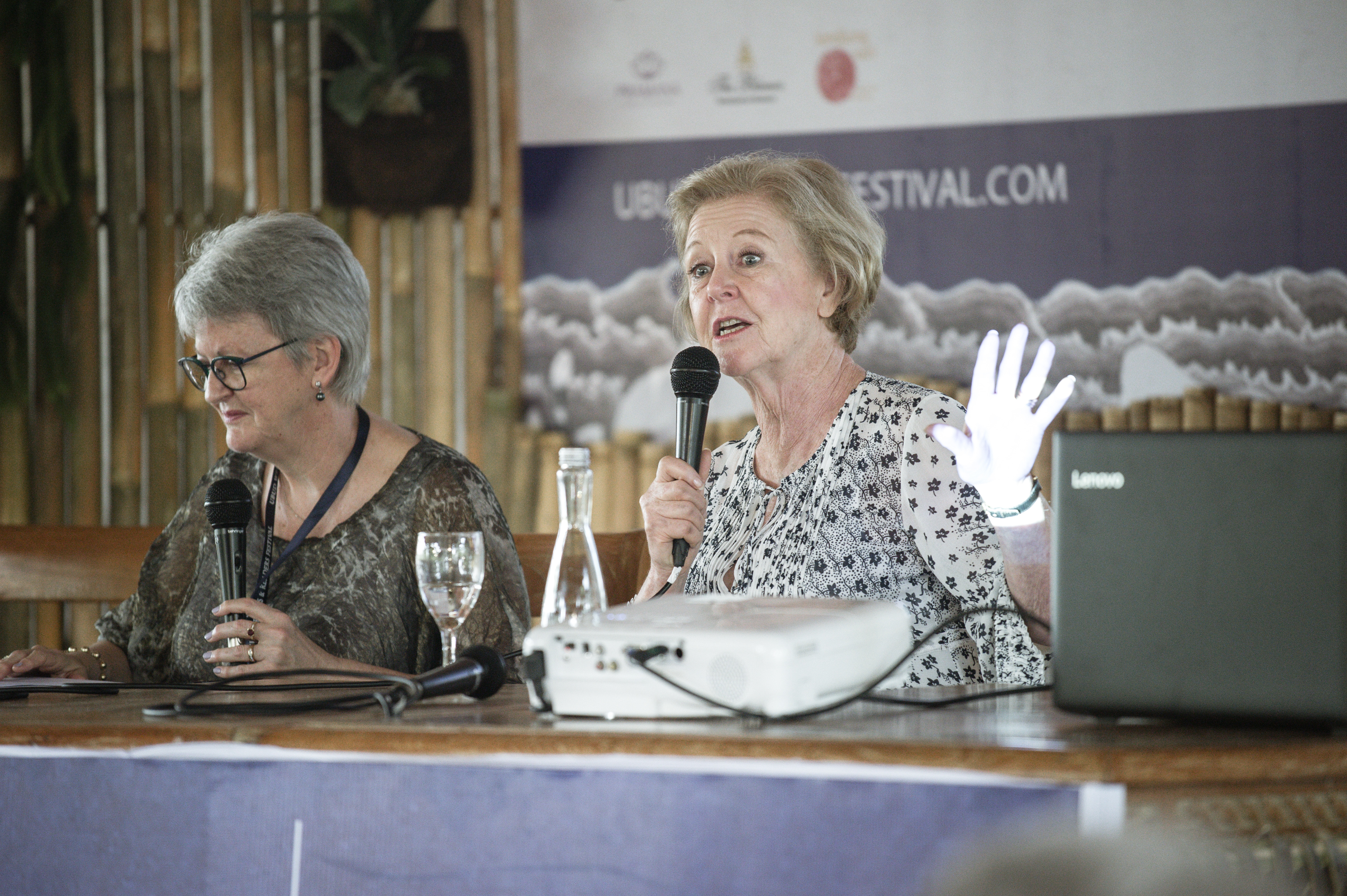
Gillian Triggs has risen on the international stage taking this key position at the UNHCR. I was privileged to interview her at the Ubud Readers and Writers Festival several years ago when she had released her book Speaking Up. It provides valuable insights into her time in leadership roles in Australia and the political pressure to which she was subjected. I still highly recommend the book.

Stand up for Human Rights

Today there is more need than ever to stand up for Human Rights.  There are wars and disregard for human rights in Ukraine, Iran, Afghanistan, Burma, as well as many other places around the world. This means we need to keep informed and always thinking about how we can raise awareness of human rights issues.  

The slogan for this year’s Human Rights Day on 10 December was “Dignity, Freedom, and Justice for All” with the call to action as #StandUp4HumanRights. The 75th anniversary of the Universal Declaration of Human Rights (UDHR) will be celebrated on 10 December 2023. Ahead of this milestone celebration there will be a year-long campaign to showcase the UDHR by focusing on its legacy, relevance and activism. Take a look at the terrific video below.

I was fortunate to mark this year’s Human Rights Day listening to a PEN sponsored event with the fabulous Peter Greste. 

Peter had a 30-year career as an award-winning foreign correspondent for the BBC, Reuters, CNN, and Al Jazeera, reporting from some of the world’s most volatile places. He was based in Afghanistan, former Yugoslavia, Latin America and Africa, and covered conflicts across those regions and in the Middle East. He is best known for becoming a headline himself when he and two of his colleagues were arrested in Cairo while working for Al Jazeera and charged with terrorism offences. In letters smuggled from prison, Peter described their incarceration as an attack on press freedom. He was released after a long international campaign. His book The First Casualty is a must read.

The news media has traditionally been viewed as the guardian of the public interest and as a watchdog on the activities of government. Yet much of the contemporary press are reliant on private business – and a model that that has changed completely thanks to the internet.  Greste asked us to reconsider journalism as a public good rather than a commercial enterprise and for us to develop of a set of regulatory and funding mechanisms to make it serve that purpose. 

As a former journalist, I was horrified to understand that some journalists now have KPIs surrounding the number of eyeballs or views that each one of their stories brings the news organisation.  It explains some of the strange headlines that I see online.  Why write about human rights or local council issues when a story highlighting a celebrity doing something inane is likely to draw more views and thus mean job success for you?

Whatever happened to the objectivity of journalism?

I highly recommend listening to Peter Greste talk about human rights and the importance of a free press in an interview with Margaret Throsby, who is famous for her interviews with high profile people linking them with their favourite music.

Respecting people of all ages

We have recently celebrated Ageism Awareness Day which is an opportunity to draw attention to the existence and impacts of ageism in Australia. It plays a critical role in changing community attitudes and building a world where all people of all ages are valued and respected and their contributions are acknowledged.

Alarmingly on a global scale 1 in 2 people are ageist. That is half of the world’s population who hold negative attitudes about ageing and older people.

Within Australia it is a highly accepted form of prejudice. From a personal perspective of someone who is 60 I know I am invisible at some shops and cafés. I often get overlooked for another person. My invisibility became obvious a few years ago when I let my hair go grey.  There is still so much negativity about women with grey hair, while on men it supposedly looks distinguished.

My older friends warn me I have not seen anything yet. My 70-year-old friend says she started to notice people talking down her as if she was stupid a few years ago.   Why would people think age equals stupidity? In many other cultures age equals wisdom and respect.

Council on the Ageing Australia Chief Executive, Ian Yates, said that while Australia has taken some steps in learning how to end ageism, there is still a very long way to go.

“Ageism is endemic in Australia,” Mr Yates said. “The Australian Human Rights Commission last year found that 90 per cent of Australians agree that ageism exists in this country, yet we are still yet to see some of the simple, concrete measures that older Australians have been asking for put in place to address this critical issue.”

On the brighter side, I still sit on two boards and write and my husband who is older than me sits on at least five boards or councils. We travel and participate in community events and spend time with family. We do not feel our age is holding us back. I do now see older workers now at my local hardware store and occasionally at a café.   With so much worker shortage in hospitality and other sectors, some of our older Australians are ready to fill those gaps.   

People of all ages, including older Australians, should be valued and respected and have their contributions acknowledged. Throughout their lives, from start to finish. The video below really sums up the issues around ageism.  Actor Bryan Brown, a youthful 75 years of age, really gets it.  I urge you to watch it. If you are having trouble viewing the video, you can find it on the EveryAGE Counts website.

Everybody Belongs

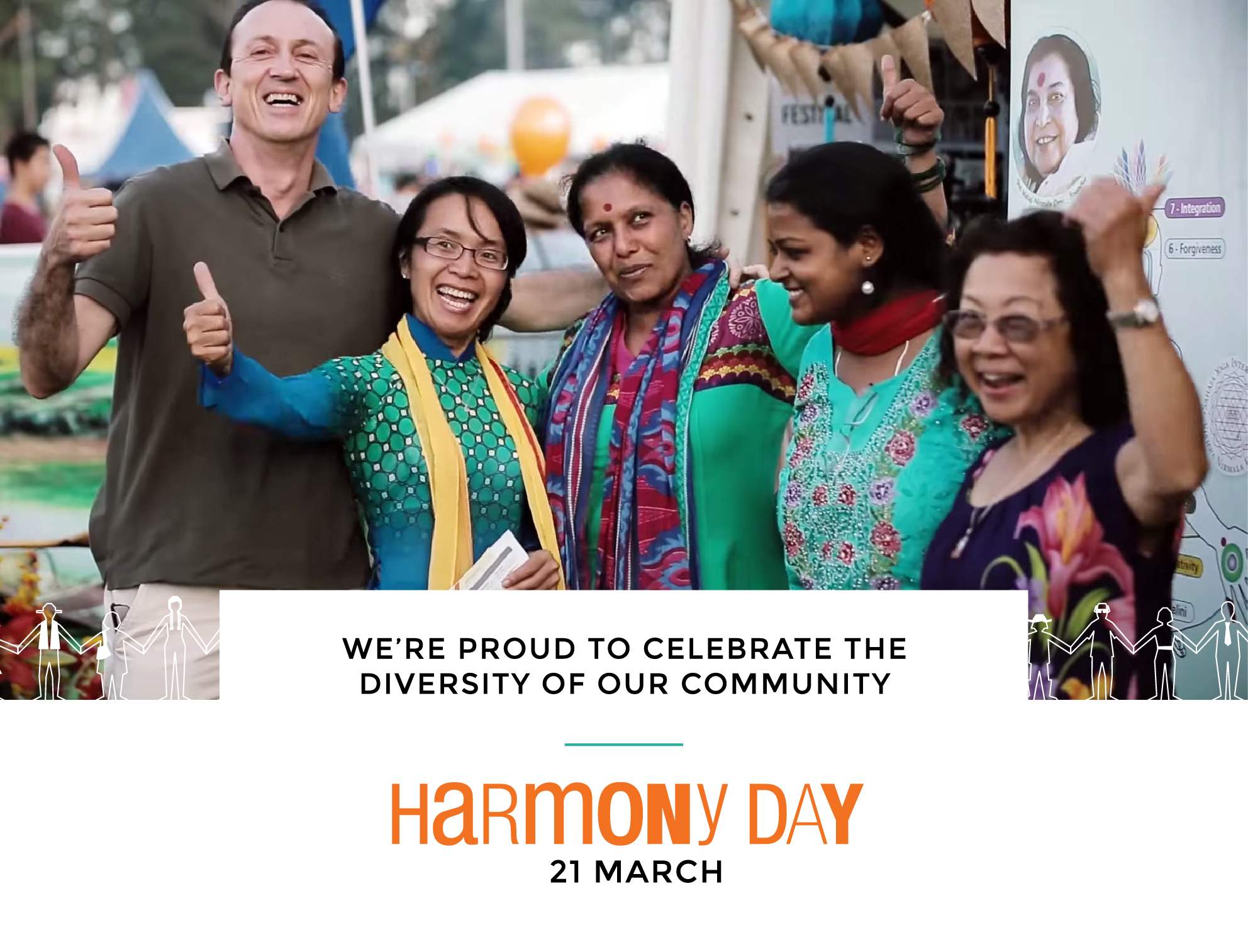
Australia is a vibrant and multicultural country — from the oldest continuous culture of our first Australians to the cultures of our newest arrivals from around the world.  This Harmony Week 15 – 21 March, that is worth celebrating.  

We especially come together to celebrate Harmony Day on 21 March. Created in 1999 to celebrate unity and diversity, Harmony Day was originally an Australian celebration but is now marked worldwide by conscientious citizens. The continuing theme of Harmony Day is Everybody Belongs.

Here are nine stories that will inspire you during the week. Called Food, Faith and Love in WA they were put together by the WA Office of Multicultural Interests and one of my favourite places, the Centre for Stories

An integrated multicultural Australia is an integral part of our national identity. All people who migrate to Australia bring with them some of their own cultural and religious traditions, as well as taking on many new traditions. Collectively, these traditions have enriched our nation.

There are some fascinating statistics about Australia’s diversity that can be good conversation-starters:

  • Nearly half (49%) of Australians were born overseas or have at least one parent who was,
  • We identify with over 300 ancestries,
  • Since 1945, more than 7.5 million people have migrated to Australia,
  • 85 per cent of Australians agree multiculturalism has been good for Australia,
  • Apart from English, the most common languages spoken in Australia are Mandarin, Arabic, Cantonese, Vietnamese, Italian, Greek, Tagalog/Filipino, Hindi, Spanish and Punjabi.

It’s been heartening to see sport and the arts around the world unite in anti-racism messages over the last several years.  Teams make a stand on the pitch/ground/court before every game. Sport transcends culture. It breaks down barriers and helps to build inclusive communities. Sport brings people together by sharing a common goal.

Our cultural diversity is one of our greatest strengths and is at the heart of who we are. 

It makes Australia a great place to live.