“They threw us out like garbage”

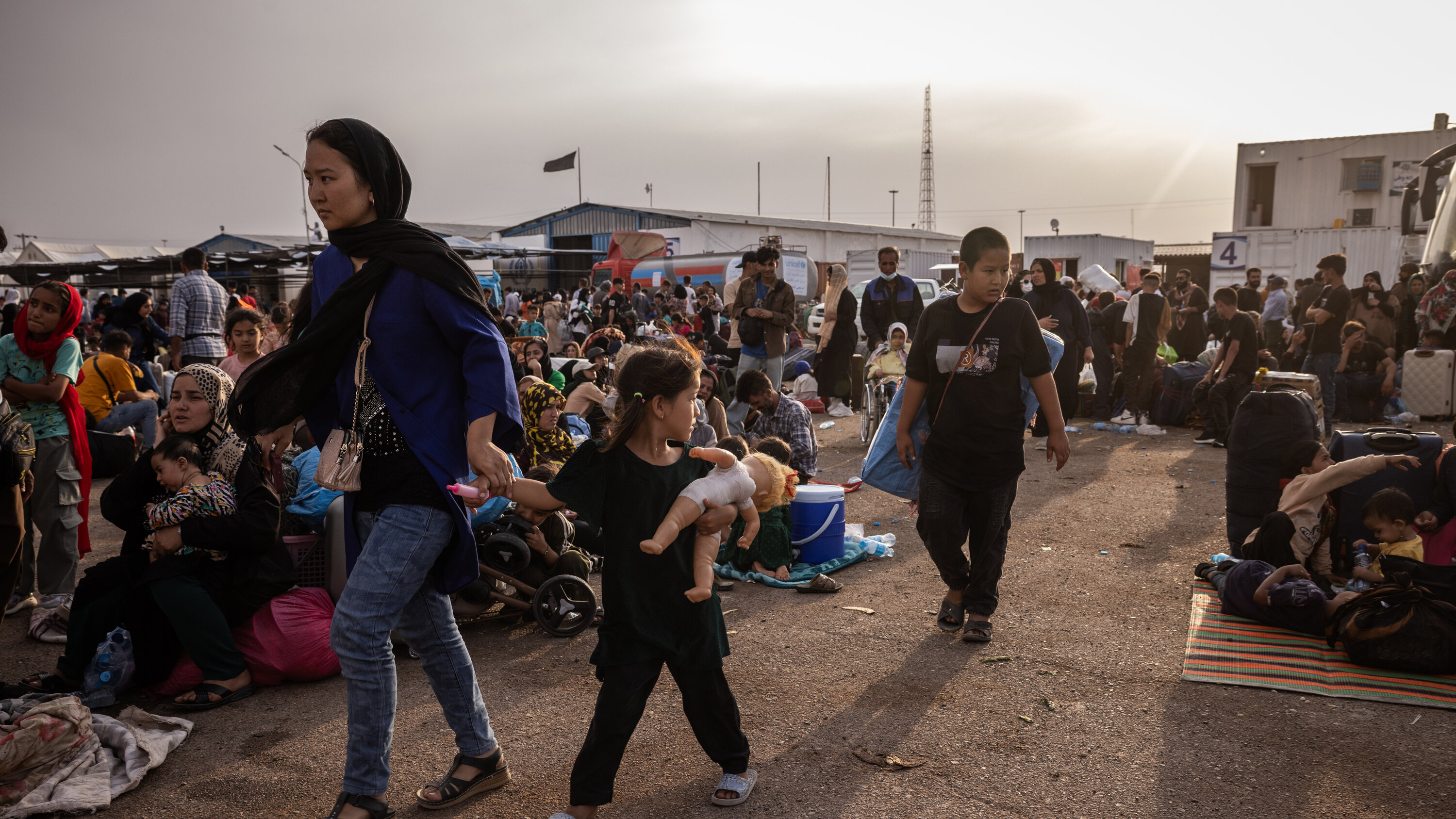
The wave of Afghan refugees and migrants being sent back from Iran to Afghanistan has intensified, with more than 410,000 being pushed out since the end of the Twelve Day War on 24 June 2025.

More than 1.5 million Afghan refugees and migrants have been sent back this year, according to the United Nations’ International Organization for Migration. The Red Cross says more than one million people more could be sent back by the end of 2025.

Iran has been hosting Afghans for decades. While it has periodically expelled irregular arrivals, it has now taken its efforts to unprecedented levels, accusing Afghans of being Israeli spies or taking advantage of their situation in Iran.

The Guardian reports a comment from an Afghan who said “They threw us out like garbage” as Iran rushes deportation of 4 million Afghans before their deadline.

This situation is even more dire for women, especially lone women. Thousands are being forced to return to face extreme repression and destitution under Taliban laws that forbid them to work or travel without a male guardian. No girls above grade six can go to school anymore. They are banned from showing their faces or speaking in public. Anyone caught breaking these laws is subject to public flogging.  

Sahar is travelling with five children and spoke to the Guardian and Zan Times at the border. She says she has no idea where she will live now. A widow, Sahar has been living in Iran for ten years running a small tailoring workshop and had just put down a deposit on a small house. Last week she was detained, taken with her children from a refugee camp and deported. “I didn’t even get to pack our clothes. They came in the middle of the night.” She is now stuck at the border in stifling heat because she has no male chaperone.  

Despite the fact it’s illegal and unsafe for Iran to deport people to a country where they will likely be persecuted, these deportations continue.

Zan Times is a women-led, investigative newsroom that covers human rights violations in Afghanistan with a focus on women and the LGBTQI+ community. They are a group of mainly women journalists working both inside and outside Afghanistan to tell their own stories, raising their voices to shape and inform public discourse. I highly recommend this website, which is my new resource for what is happening to Afghan Women.
Waiting 134 Years for Gender Equality

When our granddaughter was born 20 years ago, and I was still heavily involved in the corporate sector, I believed she would see much better gender equality when she entered the workforce than I was experiencing in Australia at the time.

The latest report from the World Economic Forum’s Gender Equality Index has shown me how wrong I was. We are 134 years from closing the global gender gap. How disheartening! Some of this can be related to a general global slowdown and the pandemic but certainly not much of it.

This year, the Global Gender Gap Index benchmarks gender parity across 146 countries, providing a basis for robust cross-country analysis. It makes for interesting reading and the ranking tables of countries around the world by sector are fascinating.

Australia has made limited progress to the country index, up two places since the 2023 edition to now being ranked 24th in the world for gender equality. That said, the UK is ranked 14th and the United States continues to be ranked 43rd, so some are citing this as a reason for hope. However, when I see New Zealand is ranked fourth I wonder how we can keep getting it so wrong and still do little to nothing about it.

With a ranking of 42, Australia falls well behind on economic participation and opportunity. Australia’s ranking on educational attainment is also behind, now ranked 84th of the 146 countries. Where Australia does do well is on political empowerment and we score an impressive 17th for women in political positions. 

Earlier this year the Minister for Women launched the Australian Government’s Working for Women: A Strategy for Gender Equality. It sets out a path to make progress towards the vision of gender equality over the next 10 years, with a focus on five priority areas: gender-based violence; unpaid and paid care; economic equality and security; health; and leadership, representation and decision-making. We can only hope this strategy is successful.

While the World Economic Forum does report some optimism, it notes the election results we have seen so far in 2024 do not point to a general trend of more women getting elected – outside of a bright spot in Mexico which just recently elected its first female president.

Iceland again takes first place on the gender equity rankings having led the index for a decade and a half.  It is the only country to have closed more than 90 per cent of its gender gap. European and Scandinavian countries continue to do better than Australia.

I recommend the report to you.

Everyone Belongs

It’s Harmony Week which is the celebration that aims to recognise our diversity and bring together Australians from all different backgrounds.

It’s about inclusiveness, respect and a sense of belonging for everyone.​ Over half of Australians were born overseas or have at least one parent who was born overseas. As a day of anti-racial discrimination, this year’s theme is “Everyone Belongs”.

Many of the refugees who I have interviewed over the years are enormously grateful to Australia for giving them a home when they were forced to flee persecution in their own country. As my friend Paul, a Karen man from Burma, told me he still remembers what he said when he arrived in Australia : “I am a free man. I can smell freedom in the air.” You can read more about Paul on my website.

I don’t have to think about freedom in Australia, it just is. But during this Harmony Week it’s hard not to think about places where people are living without harmony. Burma, Israel and Gaza, Ukraine and Haiti to name a few.  

Harmony Week is celebrated during the week that ​include 21st March, which is also the United Nations International Day for the Elimination of Racial Discrimination. The Australian government has been criticised for continuing to call the 21st March Harmony Day, instead of joining with the world community to celebrate the International Day for the Elimination of Racial Discrimination.

I’m pleased to think about harmony and inclusion this week, but I still feel Australia is a fundamentally racist country like so many others. Critics argue that Australia’s failure to commit to the purpose of the UN day has hindered our efforts to understand, fund, and develop research into problems stemming from systemic racism. There’s an interesting article that delves into this issue here.

But I think we should all try and attend a Harmony Week event and focus on the fact that in our country everyone should belong. How can we make people feel more comfortable? My approach is to read about places around the world to understand both the good and the bad. Sometimes you find a lot of harmony where you least expect it.

Rosemary and Paul

Sexual Harassment of Migrant and Refugee Women

I came across an interesting study recently about sexual harassment in the workplace involving migrant and refugee women in Australia

This is the first national study of migrant and refugee women’s experiences, understandings and responses to workplace sexual harassment of its type. Given it is five years on from the launch of the #MeToo movement, I initially found this quite surprising.  On reflection, I realised of course that refugee and migrant women’s voices are often silent in our national societal debates.

The research found that just under half (46%) of the migrant and refugee women in this study of 700 women across Australia had experienced at least one form of sexual harassment in the workplace in the last five years in Australia. The women in this sample rarely experienced only one type of sexual harassment or reported only one incident. Men were most frequently the harassers in the workplace. Across all incident types, those in senior positions were reported as engaging in sexually harassing behaviour in the workplace most frequently, followed closely by clients.

The most frequent experiences included: indecent phone calls/messages of a sexual nature, sexually suggestive comments or jokes, intrusive questions about private life or physical appearance or staring or leering that was intimidating. These experiences are often common to all women regardless of background, but still disturbing.

The researchers delved deeper to ask why and participants believed the harassment was most often motivated because of their gender and/or sex or their race and religion. The researchers comment that they found harassment deeply connected to race and religion. Few women reported their experiences formally.

As women of a non-migrant and refugee background find their voices more, this study also helps us to understand the additional challenges of leaving your home and trying to make a new one whilst navigating cultural differences and sometimes sexual harassment. There is also a handy Fact Sheet on this study

Respecting people of all ages

We have recently celebrated Ageism Awareness Day which is an opportunity to draw attention to the existence and impacts of ageism in Australia. It plays a critical role in changing community attitudes and building a world where all people of all ages are valued and respected and their contributions are acknowledged.

Alarmingly on a global scale 1 in 2 people are ageist. That is half of the world’s population who hold negative attitudes about ageing and older people.

Within Australia it is a highly accepted form of prejudice. From a personal perspective of someone who is 60 I know I am invisible at some shops and cafés. I often get overlooked for another person. My invisibility became obvious a few years ago when I let my hair go grey.  There is still so much negativity about women with grey hair, while on men it supposedly looks distinguished.

My older friends warn me I have not seen anything yet. My 70-year-old friend says she started to notice people talking down her as if she was stupid a few years ago.   Why would people think age equals stupidity? In many other cultures age equals wisdom and respect.

Council on the Ageing Australia Chief Executive, Ian Yates, said that while Australia has taken some steps in learning how to end ageism, there is still a very long way to go.

“Ageism is endemic in Australia,” Mr Yates said. “The Australian Human Rights Commission last year found that 90 per cent of Australians agree that ageism exists in this country, yet we are still yet to see some of the simple, concrete measures that older Australians have been asking for put in place to address this critical issue.”

On the brighter side, I still sit on two boards and write and my husband who is older than me sits on at least five boards or councils. We travel and participate in community events and spend time with family. We do not feel our age is holding us back. I do now see older workers now at my local hardware store and occasionally at a café.   With so much worker shortage in hospitality and other sectors, some of our older Australians are ready to fill those gaps.   

People of all ages, including older Australians, should be valued and respected and have their contributions acknowledged. Throughout their lives, from start to finish. The video below really sums up the issues around ageism.  Actor Bryan Brown, a youthful 75 years of age, really gets it.  I urge you to watch it. If you are having trouble viewing the video, you can find it on the EveryAGE Counts website.