Gambling Scourge

The headline figures are shocking enough. Australians spend more per capita on gambling than anywhere else in the world.  We also lose more per capita – an estimated $25 billion a year! Can you believe that?

I have a family member with a gambling addiction, and it is sad to see what this has done to him over the years and how isolated he has become. Addiction to gambling is no different to any other addiction be it drugs or alcohol. You just get hooked in so far you can’t escape. The statistics above are not those indicative of people having a fun flutter on the weekend or buying a lotto ticket.

A study of Coroner’s Court data found that gambling addiction had contributed to 184 suicides in Victoria over eight years, the vast majority involving men aged between 17 and 44.

Lenore Taylor in the Guardian has written several excellent articles on gambling addition and the role advertising plays. Surely the torrent of gambling advertising on TV screens and social media feeds is adding to this crisis. I, for one, am sick of the fact that I can’t watch my football team play without a bombardment of betting adds.   I fear it is becoming normalised for children and young people as they view sport on their screens. I have a friend who says her son can frequently quote the betting odds on a game just as much as he can quote his team’s selections.

A recent parliamentary report called for a phased comprehensive ban on all advertising on all media – broadcast and online, that leaves no room for circumvention because partial bans on advertising do not work. The report also found that Australians are intensely frustrated and annoyed by current levels of gambling advertising and are concerned about the harm caused, especially to young people.

Australia successfully banned tobacco advertising so I can’t see why this ban wouldn’t work –  except the gambling lobby, the media and sporting codes are very powerful and so far, have stopped any attempts to curb it.

This is something we all must advocate against for the sake of our young people and those already addicted.

Finding Freedom

To coincide with Refugee Week this year, the United Nations has released its latest Global Trends Report. It’s not happy reading but it’s essential we all understand what’s happening in our world.

One in every 69 people, or 1.5 per cent of the entire world’s population, is now forcibly displaced. This is nearly double the 1 in 125 people who were displaced a decade ago.

At the end of 2023, an estimated 117.3 million people worldwide were forcibly displaced due to persecution, conflict, violence, human rights violations, and events seriously disturbing the public order. Based on operational data, UNHCR estimates that forced displacement has continued to increase in the first four months of 2024 and by the end of April 2024 is likely to have exceeded 120 million. 

It’s important for us to remember that behind every number is a person – and over half of them are children.

The increase to 117.3 million at the end of 2023 constitutes a rise of 8 per cent or 8.8 million people compared to the end of 2022. This continues a series of year-on-year increases that has lasted 12 years.

Filippo Grandi, the UN High Commissioner for Refugees reminds us “that behind these stark and rising numbers lie countless human tragedies.” He says, “this suffering must galvanise the international community to act urgently to tackle the root causes of forced displacement.”

This year’s Refugee Week theme “Finding Freedom” – with a focus on family – encapsulates the profound journey of resilience, strength, and unity that defines the refugee experience. For most of us family is one of the most important things in our life. Families can provide love, support, safety and belonging. 

Many refugees are separated from their family, often for decades, sometimes forever.

You can read stories about families taking the journey, families left behind and families welcoming new arrivals, and find more information on the Refugee Week website.

It’s easy to get caught up in the 24-hour news cycle and only hear about one issue; but there are many more not making the news. Please donate to organisations like CARAD and Edmund Rice Centre WA.  Search out other organisations if you are located outside Western Australia. 

These organisations rely on public support to be able to continue to do their incredibly valuable work supporting refugees.

The Missing Children of Europe

An international investigation has found that tens of thousands of unaccompanied child migrants – 47 each day on average – have vanished after arriving in Europe over the past three years. 

While doing other research, I came across three organisations who specialise in tracking lost migrant and refugee children and was appalled and taken aback by my ignorance. 

Research by the journalist collective Lost in Europe revealed that at least 51,433 unaccompanied refugee children and young people who were previously in the care of the state went missing across Europe between 2021 and 2023.

According to the data collected in the latest investigation, Italy has more registered missing unaccompanied minors than any other country that provided data, with 22,899, followed by Austria (20,077), Belgium (2,241), Germany (2,005) and Switzerland (1,226).

The actual number of missing children may be even higher as gathering complete information is difficult, with some countries in Europe not even collecting data on missing unaccompanied minors according to a statement by the Lost in Europe project.

Ylva Johansson, the EU Commissioner for Home Affairs responsible for migration, in an interview with the German news portal rbb24 – a member of the Lost in Europe network – linked the problem to Europe’s “broken migration system”.

Child protection organisations like Missing Children Europe have confirmed that unaccompanied child migrants and refugees are at higher risk of abuse and are easily influenced by traffickers.

Many who arrive in Europe have already been exploited by smugglers to pay off debts or because they hold control over their loved ones or their passports.

A 2022 study by researchers at Ghent University – The Childmove Project – found that more than 80 percent of children experience physical violence during their migration to Europe. 

We should all care about this. How can we stay silent? 

The Mustard Pot

I was very pleased to recently have been asked to contribute to a WA anthology of short memoirs. The first collection of its kind in Australia, Ourselves: 100 Micro Memoirs aims to invite the reader into the histories we often edit—or don’t tell—about ourselves.

Published by Night Parrot Press with funding from the WA Department of Local Government, Sport and Cultural Industries this book includes 100 micro memoirs, each 750 words or less, all from WA writers.

Author and journalist Kate Emery shone a lovely and generous spotlight on the book recently in The Sunday Times, calling the collection a ‘a high note’ for WA culture and writing, and good news worth celebrating.

My micro memoir is called ‘The Mustard Pot’ and is about a funny lop-sided mustard pot that my Mum bought me from the Provencal markets and that we used for years and years at our home in France. Here is a brief excerpt:

One day I dropped it and it shattered into hundreds of pieces. Even though it was only a piece of pottery it brought back so many memories of my mum who passed away from cancer ten years ago. The shattered pieces seem to reflect my loss more deeply. I kept telling myself it didn’t matter, it was only an old mustard pot, just a thing that I could easily replace, but this tangible little pot was much more than that…

To purchase the book go to Night Parrot Press, or check out your favourite independent bookshop.

Everyone Belongs

It’s Harmony Week which is the celebration that aims to recognise our diversity and bring together Australians from all different backgrounds.

It’s about inclusiveness, respect and a sense of belonging for everyone.​ Over half of Australians were born overseas or have at least one parent who was born overseas. As a day of anti-racial discrimination, this year’s theme is “Everyone Belongs”.

Many of the refugees who I have interviewed over the years are enormously grateful to Australia for giving them a home when they were forced to flee persecution in their own country. As my friend Paul, a Karen man from Burma, told me he still remembers what he said when he arrived in Australia : “I am a free man. I can smell freedom in the air.” You can read more about Paul on my website.

I don’t have to think about freedom in Australia, it just is. But during this Harmony Week it’s hard not to think about places where people are living without harmony. Burma, Israel and Gaza, Ukraine and Haiti to name a few.  

Harmony Week is celebrated during the week that ​include 21st March, which is also the United Nations International Day for the Elimination of Racial Discrimination. The Australian government has been criticised for continuing to call the 21st March Harmony Day, instead of joining with the world community to celebrate the International Day for the Elimination of Racial Discrimination.

I’m pleased to think about harmony and inclusion this week, but I still feel Australia is a fundamentally racist country like so many others. Critics argue that Australia’s failure to commit to the purpose of the UN day has hindered our efforts to understand, fund, and develop research into problems stemming from systemic racism. There’s an interesting article that delves into this issue here.

But I think we should all try and attend a Harmony Week event and focus on the fact that in our country everyone should belong. How can we make people feel more comfortable? My approach is to read about places around the world to understand both the good and the bad. Sometimes you find a lot of harmony where you least expect it.

Rosemary and Paul

Count Her In

Today is International Women’s Day with the theme Count Her In: Invest in Women. Accelerate Progress. Within the wide array of announcements, events and launches that are happening all around the world, two have stood out for me as highly significant and very meaningful. 

The first is that Ireland is holding a national referendum on the day to remove from their constitution the outdated idea that a ‘woman’s place is in the home’.

The constitution’s clause, which dates to 1937, says: “The State recognises that by her life within the home, woman gives to the State a support without which the common good cannot be achieved. The State shall, therefore, endeavour to ensure that mothers shall not be obliged by economic necessity to engage in labour to the neglect of their duties in the home.”

Proponents argue that the constitution does not truly reflect the Ireland and world we live in today and needs to be modernised. Let’s hope that is a no brainer for voters.

The second is that France, the first country to enshrine the right to abortion in its constitution, today will be holding a ‘sealing ceremony’ – a tradition reserved for only the most significant laws. Crowds gathered at the Eiffel Tower in Paris on Monday as the words “my body, my choice” were shown up in lights on the monument. People celebrated as French lawmakers gathered to vote on the ammendment giving women the ‘guaranteed freedom’ to choose an abortion. It is a big step forward for reproductive rights in Europe.

Closer to home the Workplace Gender Equality Agency released the latest information on gender pay gaps which has once again highlighted the disparity in pay between men and women in Australia. Gender pay gaps are not a direct comparison of like roles. Instead, they show the difference between the average or median pay of women and men across organisations, industries, and the workforce as a whole.

Across all industries in Australia, women are earning on average less than men. Currently at 21.7%, the gender pay gap in Australia is a persistent and pervasive issue that undermines women’s earnings and our place in society.

For us to truly ‘Count Her In: Invest in Women. Accelerate Progress.’, then closing the gender pay gap would be a good start.

My Top Five Books of 2023

Last year provided some excellent new books, so if you’re looking for something to read I thought I’d share a list of my top five books for 2023.  

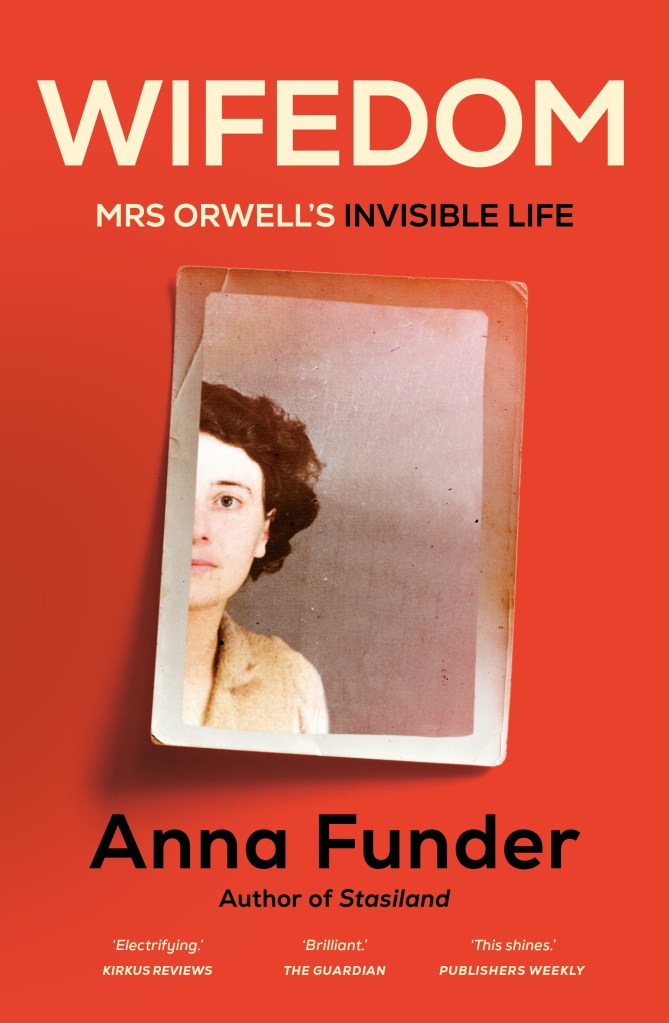
It was a tough choice, but my number one book of the year is Wifedom by Anna Funder. Meticulously researched combining history and memoir, Wifedom uncovers the hidden life of George Orwell’s wife Eileen. It shows how she was written out of history and the vital role she played in supporting and aiding Orwell in his writing life. A terrific read.

Second choice takes us to another country, Malaysia, sometimes home of sublime writer Tan Twan EngTwan writes with a moody and descriptive style of colonial Malaysia in his book The House of  Doors. His exploration of lives is rich and satisfying. I had the good fortune to meet and interview Twan in both Hong Kong and Ubud. His humility and dry sense of humour makes him popular at literary festivals around the world. You’ll want to read everything he has written.

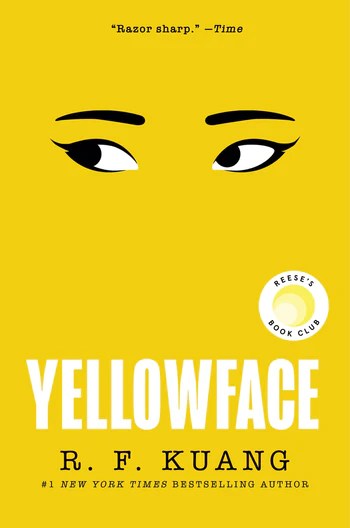
My third choice is Yellowface by R.F Kuang. June Hayward, an unsuccessful young author, finds herself the only witness to the death of her former classmate, Athena Liu, a Chinese American author who is an industry darling. She decides to position herself as a friend of the author and begins to edit and re-write Athena’s manuscript. In the end she makes it her own and I could not get past the fact that she stole the manuscript. It asks all sorts of questions about the publishing industry and was a fascinating read.

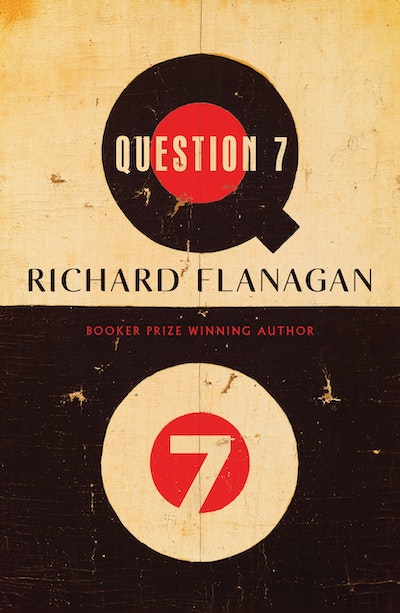
I finished Richard Flanagan’s book Question 7 over Christmas. It’s a captivating read written in a unique style. It is a meditation on the past of one man and the history that coalesced in his existence. It jumps around quite a bit as Flanagan explores different ideas from HG Wells to the atomic bomb, to his father’s life as a POW, to the killing and suffering of Tasmanian Aborigines but somehow it all works. A book that makes you think.

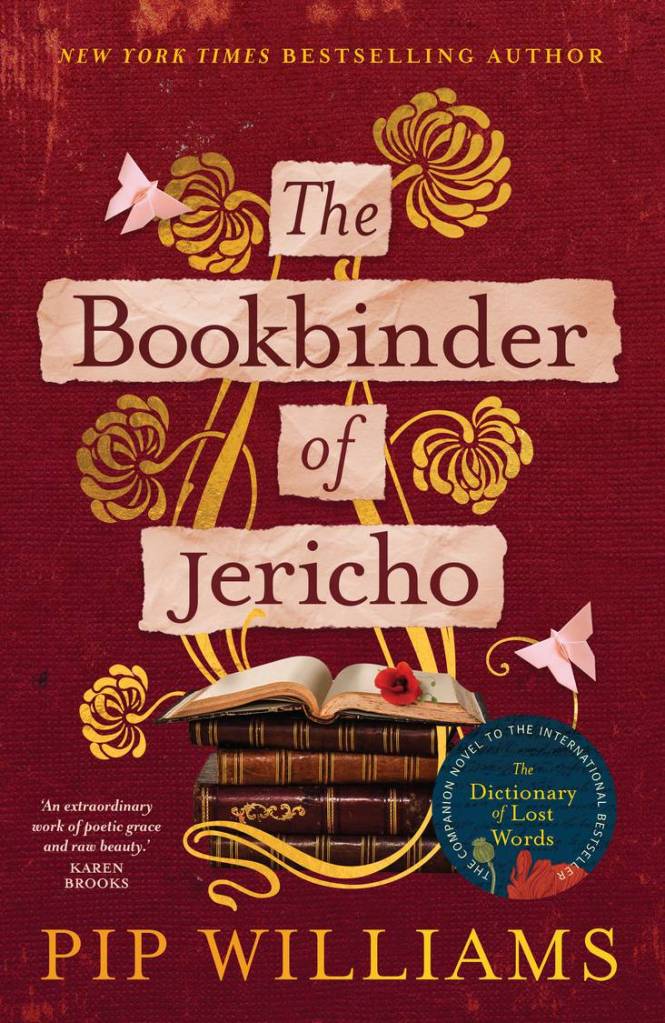
My final choice is The Bookbinder of Jericho by Pip Williams. It is almost a companion novel to her highly successful book The Dictionary of Lost Words, as again she has told a story told through women’s eyes. A working-class, self-educated woman, Peggy works as a book binder at Oxford University Press, while what she wants is to read the books and study at Oxford. Williams writes in a descriptive easy to read style. It’s a good one to curl up with on rainy day.

Happy reading!

An Unhappy Christmas

At this time of year we can be overwhelmed by images and footage of laughing, loving and happy families. The reality, however, is that this time can be very stressful and unhappy. For many, it is downright dangerous. The added financial stresses, coupled with an environment in which families are spending more time together in confined spaces, can lead to an increase in incidents of violence.

Anyone who works in family and domestic violence support will tell you they see a huge increase in need around this time of year. Crisis support hotlines can experience a surge of 25 to 30 per cent on Christmas Day and Boxing Day alone, while crisis relief and emergency housing programs can see spikes of up to 40 per cent.

The ANROWS National Community Attitudes Towards Violence Against Women report shows 91 per cent of respondents believe that violence against women is an issue in Australia. However, a majority of Australians still don’t believe that violence against women occurs in all communities, including their own.

In additional to physical and sexual violence, women from migrant and refugee backgrounds are particularly vulnerable to financial abuse, reproductive coercion and immigration related violence such as withholding documents, threats of visa cancellations or deportation.

If someone is in an abusive relationship, this time of year does provide opportunities where friends and family can more easily notice and identify red flags and offer support. 

For help and advice where I live in Western Australia, you can call the Women’s Domestic Violence Helpline on 1800 007 339. You can also access local information on all family and domestic violence services at the Centre for Women’s Safety and Wellbeing.

Anywhere in Australia help can be found by calling 1800 Respect on 1800 737 732. They also have some excellent resources on their website.

Similar support services can be found outside Australia, so if you need help, please remember you are not alone.

Sexual Harassment of Migrant and Refugee Women

I came across an interesting study recently about sexual harassment in the workplace involving migrant and refugee women in Australia

This is the first national study of migrant and refugee women’s experiences, understandings and responses to workplace sexual harassment of its type. Given it is five years on from the launch of the #MeToo movement, I initially found this quite surprising.  On reflection, I realised of course that refugee and migrant women’s voices are often silent in our national societal debates.

The research found that just under half (46%) of the migrant and refugee women in this study of 700 women across Australia had experienced at least one form of sexual harassment in the workplace in the last five years in Australia. The women in this sample rarely experienced only one type of sexual harassment or reported only one incident. Men were most frequently the harassers in the workplace. Across all incident types, those in senior positions were reported as engaging in sexually harassing behaviour in the workplace most frequently, followed closely by clients.

The most frequent experiences included: indecent phone calls/messages of a sexual nature, sexually suggestive comments or jokes, intrusive questions about private life or physical appearance or staring or leering that was intimidating. These experiences are often common to all women regardless of background, but still disturbing.

The researchers delved deeper to ask why and participants believed the harassment was most often motivated because of their gender and/or sex or their race and religion. The researchers comment that they found harassment deeply connected to race and religion. Few women reported their experiences formally.

As women of a non-migrant and refugee background find their voices more, this study also helps us to understand the additional challenges of leaving your home and trying to make a new one whilst navigating cultural differences and sometimes sexual harassment. There is also a handy Fact Sheet on this study

Nelson Mandela Human Rights Lecture

“So long as poverty, injustice and gross inequality persist…none of us can truly rest.”

Nelson Mandela

Gillian Triggs, former President of the Human Rights Commission in Australia and now the UNHCR Assistant High Commissioner for Protection, recently delivered the fourth annual Nelson Mandela Human Rights Lecture

This year is the 75th anniversary of the Universal Declaration of Human Rights. This critical document has inspired the entire body of international commitments to protect people around the world.

Gillian argued that we desperately need pilot programs to identify the most urgent needs of refugees who are on route to another country and to provide accurate information about regular, safe and legal pathways.  People on the move often lack access to basic services and don’t possess formal documentation or visas. They are especially vulnerable to detention, trafficking, and gender-based violence – especially women and children.

In June, the UN Refugee Agency released its Global Trends report observing that by the end of 2022 over 108.4 million people worldwide had been forcibly displaced, including a record number of 36 million refugees.

The Universal Declaration recognises two crucial rights: to seek and enjoy asylum from persecution (article 14) and the right to a nationality (article 15).  Australia contravenes article 14 with its refugee policy, as do most countries around the world today, while millions of people are on the move fleeing war and persecution. There is much debate and anguish about how to manage the flows of people, particularly from North Africa into Europe.   There are no easy solutions and no one country can solve this issue. It needs a co-ordinated global response and I fear that is going to be difficult.

Gillian argues that the 1951 convention remains viable as an effective legal foundation for refugee protection, but there are many who believe the Convention, and indeed the United Nations, is “no longer fit for purpose”.

There is a Global Refugee Forum in December 2023 that she is confident will show how the international community has been willing to shoulder a share of the burden for those displaced and to find long term solutions. I hope we see this, but I have my doubts. 

Gillian Triggs has risen on the international stage taking this key position at the UNHCR. I was privileged to interview her at the Ubud Readers and Writers Festival several years ago when she had released her book Speaking Up. It provides valuable insights into her time in leadership roles in Australia and the political pressure to which she was subjected. I still highly recommend the book.