Celebrating Human Rights

“Human rights are our compass in turbulent times — guiding and steadying us through uncertainty.” 

This quote is from United Nations Human Rights Chief, Volker Türk at the launch of the 2025 Human Rights Day campaign.

Held on 10 December, Human Rights Day marks the anniversary of the adoption of the Universal Declaration of Human Rights by the United Nations. It’s a day to commemorate, educate and reflect on the rights that allow people to live safely and with dignity. In Australia we tend to take many of our rights for granted – such as the right to an education, the right to receive medical care, and the freedom to practice our chosen religion. However, the reality is they are not equally available in many parts of the world, including Australia. 

In 2025, the very foundations of human rights have been put to the test in a myriad of ways. “Inequalities are rising, conflicts are raging, the climate emergency is mounting, and some are creating and trying to deepen divisions within societies and between countries” said Türk. “It is crucial to keep advocating for our fundamental rights.” 

The Australian Human Rights awards are a true celebration of people across the nation who’ve made it their life’s mission to champion human rights, social justice, and equality for all. The winners of the 2025 awards announced last week, represent the very best of who we can be. 

  • Human Rights Medal – William Tilmouth (NT): For dedicating his life to reform, justice, opportunity and self-determination for First Peoples. William has led numerous community organisations and is the founding chair of Children’s Ground, a First Peoples-led reform movement. William is a member of the Stolen Generation and was NAIDOC Male Elder of the Year in 2023.
  • Law Award – Elisabeth Armitage (NT): For her work as Coroner and judge in making institutions accountable for upholding human rights and removing barriers so every citizen can enjoy full, safe and equal lives.
  • Media and Creative Industries Award – Ben Doherty (NSW): For reporting on human rights and humanitarian issues, from domestic servitude to experiences of forced migration and asylum.
  • Community Award – Ramnik Singh Walia (NT): For advocating for inclusion and accessible services for older people, people with disability and First Peoples, especially in remote areas.
  • Young People’s Award – Shakira Robertson (Tas): For her trauma-informed work to prevent domestic and family violence and transform Tasmania’s systemic response.

Find out more about each winner and nominee and the wonderful work they are doing on the Australian Human Rights Commission website

The debate democracies cannot afford to lose

I was delighted to be in the crowd to hear outstanding academic, film maker, journalist and author, Peter Greste give the annual lecture for PEN Perth this week. 

And what a thought provoking and inspiring lecture it was. Titled “Grey zone: the debate democracies cannot afford to lose”, he argued that across the globe, the room for free thought and open debate (the grey zone) is shrinking. Journalists are jailed in record numbers. Writers are muted by accusation of antisemitism and de-platformed. In the name of security and social cohesion, governments extend their powers to restrict dissent.

It was an extremist group who first gave the fragile arena of debate and disagreement a name: ‘the grey zone’. They feared it as the true enemy of their ideology. Yet today, as Peter eloquently described, in trying to contain extremism, democratic governments themselves are eroding that very space—unwittingly serving the extremists’ agenda.

Peter is best known for becoming a headline himself, when he and two colleagues were arrested in Cairo on terrorism charges while working for Al Jazeera. In letters smuggled from prison, Peter described their incarceration as an attack on press freedom.

His campaign for freedom earned him numerous human rights and freedom of speech awards. Now, as an academic, he leads a research program investigating the impact of national security legislation on public interest journalism. Peter is the author of The Correspondent about his experiences in Egypt, and the wider war on journalism. The book has since been turned into a movie starring Richard Roxburgh.  I highly recommend both the book and the film.

Medecins sans Frontieres

This week I attended a briefing from Medecins sans Frontieres (Doctors without Borders) on their work around the world and came away humbled.

Medecins sans Frontieres (MSF) is an independent, international medical humanitarian organisation that provides emergency aid to people affected by armed conflict, epidemics, natural disasters and exclusion from healthcare.  

It’s not just doctors, with many other medical and operational staff working for the organisation, all of whom account for over 50,000 full time staff in 37 countries.

Of the 120 Australians currently working in the field for MSF, two addressed the briefing. One is a community psychologist who has just returned from a year in Bangladesh at the world’s biggest refugee camp Cox’s Bazaar, and the other a project director who has worked in many crisis situations such as Afghanistan and South Sudan organising sanitation, roads and facilities for the medical staff.  

The information they covered in the briefing provided a window into the scale and reach of their work and the difference they make in so many people’s lives. In South Sudan alone MSF operate one of the largest assistance programs worldwide and ran 12 regular and five emergency projects delivering a range of services. MSF teams responded to numerous disease outbreaks including measles, yellow fever, Hepatitis E and Cholera. There were numerous surges in malaria cases and an unusually high number of admissions of children suffering malnutrition.

In one example, Dr Ahmed Mahmoud Al Salem observed the dramatic deterioration of the mental health of Palestinians after 7 October 2023.  “This is not a normal trauma; this is a huge tormenting catastrophe,” he said. 

My husband and I have been donors to MSF for over ten years. If you’re thinking of supporting a charity, I urge you put MSF top of your list

“They threw us out like garbage”

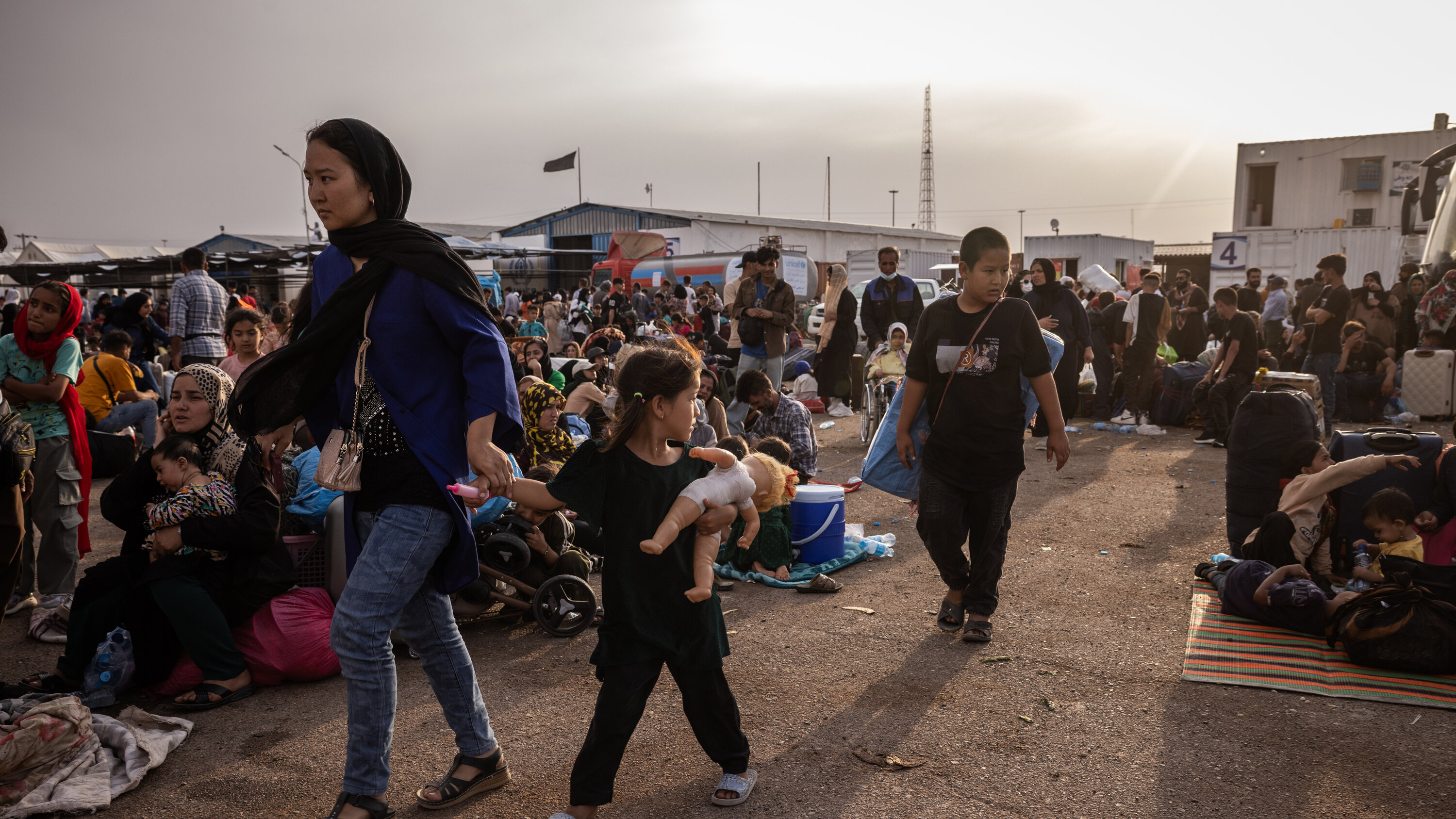
The wave of Afghan refugees and migrants being sent back from Iran to Afghanistan has intensified, with more than 410,000 being pushed out since the end of the Twelve Day War on 24 June 2025.

More than 1.5 million Afghan refugees and migrants have been sent back this year, according to the United Nations’ International Organization for Migration. The Red Cross says more than one million people more could be sent back by the end of 2025.

Iran has been hosting Afghans for decades. While it has periodically expelled irregular arrivals, it has now taken its efforts to unprecedented levels, accusing Afghans of being Israeli spies or taking advantage of their situation in Iran.

The Guardian reports a comment from an Afghan who said “They threw us out like garbage” as Iran rushes deportation of 4 million Afghans before their deadline.

This situation is even more dire for women, especially lone women. Thousands are being forced to return to face extreme repression and destitution under Taliban laws that forbid them to work or travel without a male guardian. No girls above grade six can go to school anymore. They are banned from showing their faces or speaking in public. Anyone caught breaking these laws is subject to public flogging.  

Sahar is travelling with five children and spoke to the Guardian and Zan Times at the border. She says she has no idea where she will live now. A widow, Sahar has been living in Iran for ten years running a small tailoring workshop and had just put down a deposit on a small house. Last week she was detained, taken with her children from a refugee camp and deported. “I didn’t even get to pack our clothes. They came in the middle of the night.” She is now stuck at the border in stifling heat because she has no male chaperone.  

Despite the fact it’s illegal and unsafe for Iran to deport people to a country where they will likely be persecuted, these deportations continue.

Zan Times is a women-led, investigative newsroom that covers human rights violations in Afghanistan with a focus on women and the LGBTQI+ community. They are a group of mainly women journalists working both inside and outside Afghanistan to tell their own stories, raising their voices to shape and inform public discourse. I highly recommend this website, which is my new resource for what is happening to Afghan Women.

Finding Freedom

Welcome to Refugee Week. Held each year around World Refugee Day on 20 June, it’s all about increasing awareness of the issues refugees face and the contributions they make in our communities.  

The Refugee Week theme this year is Finding Freedom: Diversity in Community.

Most of us in Australia don’t have to think about freedom; it just is. But when I was writing my two books about refugees the concept of freedom and what it meant came up so often.   

I stood still and turned my face up to the sky to let the raindrops fall on it. Farid kept telling me to hurry up and get out of the rain. I will never forget how it felt on my skin and the smell of the wet soil. I looked at Farid and my boys and laughed out loud. I told them I needed a few minutes to just stand in the rain and feel freedom.

These are words my friend Fauzia used one afternoon as we shared a coffee. She was talking about when she arrived in Australia and was reunited with her husband Farid at Perth Airport after seven years. In fear of the Taliban, Farid had set out to find a new life for them in Australia. You can read more about Fauzia and Farid’s story on the More to the Story website.

Whenever I talk to refugees, they are always grateful for their freedom. The journey towards freedom represents the challenging path that many refugees take, escaping oppression, uncertainty and persecution for safety in a new place.  

In these new spaces, community is more than just a physical place or a group of people; community is a lifeline. It offers refugees safety, belonging, and the strength to rebuild. Every day millions of people across the world embark on dangerous journeys for the sole purpose of finding safety and freedom. From Australia to nations across the globe, settling into a new environment after experiencing the perils of a refugee’s journey can also provide the opportunity to live, to love and to dream.

This coming refugee week I urge you to get involved in some of the many events taking place around the world. In Perth, where I live, there are so many opportunities whether it’s at the local library, council, church or school. You can find out more on the Refugee Council of Australia website

When we understand the people, their vulnerability, and their issues, we all play a part in helping refugees to find freedom and community.

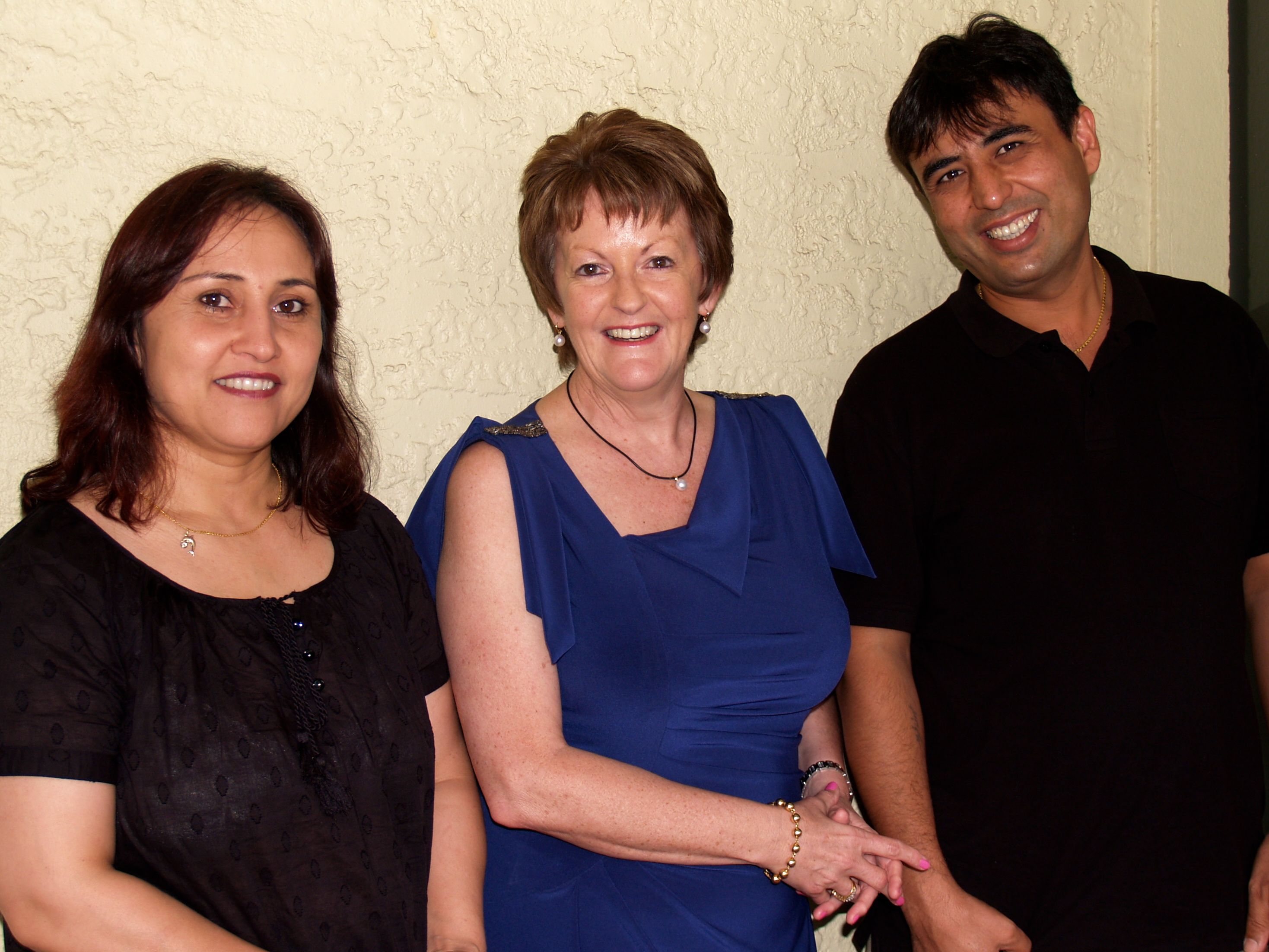
Farid and Fauzia with Rosemary

Disease knows no borders

Polio has re-emerged in Gaza after 25 years. In Yemen there has been a dramatic surge in measles.  

Conflicts, collapsed health systems, interrupted supply chains and a range of other factors including COVID, have resulted in low routine vaccine coverage around the world and an increased spread of infectious diseases. Children are especially affected.

Untreated measles can lead to serious complications like pneumonia, blindness and brain damage. According to Médecins Sans Frontieres (MSF) more than 100,000 children globally, mostly under the age of five, died from measles in 2023. They also report that since 2022, Nigeria has been at the centre of a diphtheria outbreak brought about by low vaccine rates.

Most of us are lucky.  We live in parts of the world that are safe and healthy with high vaccination rates. I can only imagine what it is like to live in a conflict zone requiring help all the time with food, water, health, and infrastructure.

News that the US government is defunding the World Health Organisation (WHO), and other essential United Nations agencies has brought even more uncertainty for people who rely on humanitarian assistance. The US has also suspended nearly all foreign aid programs.  

The World Health Organisation has led eradication efforts for some of the world’s cruellest diseases including polio and smallpox and aims to eliminate a further 20 diseases by 2030. 

But what will happen now without significant funding to WHO and the many partner organisations?  

Katrina Penney, President of MSF Australia says “we are most concerned about people who rely on essential services for survival. The World Health Organisation is a key partner in the international humanitarian system.” 

The consequences for the world’s most vulnerable people are dire. It’s important we support the work of MSF, Red Cross, Oxfam and other agencies working in this age of uncertainty. 

Disease knows no borders. The world knows this from our experience of the COVID pandemic. It’s time to step up.

Young girl getting vaccination from a health care professional

Trump is coming for UNICEF

For decades, UNICEF has been a symbol of international cooperation. Now, it’s the target of an unprecedented effort by the U.S. government to undermine it. 

UNICEF grew out of post-war efforts to feed and shelter hundreds of thousands of children whose lives were upended by the Second World War. It soon evolved into a global organisation dedicated to improving the health and welfare of children across the world.

By mid-century, founding leader Maurice Pate and UNICEF were able to channel international solidarity to improve the lives of the world’s most vulnerable children. For example, Pate devised a partnership with Mexico to drive down malaria, which was killing 20,000 Mexican children annually. Within four years, malaria was all but eradicated in the country, putting Mexico’s malaria levels on par with the United States.

But now, the Trump administration is taking direct aim at UNICEF, positioning one of the world’s most trusted child welfare organisations as its latest target. 

This attack has potentially devastating consequences for millions of children worldwide. 

Last week, UNICEF (along with a few other United Nations agencies) received a bizarre questionnaire from the United States that demanded “yes” or “no” answers to some 23 questions. These questions are absurd, and clearly crafted in such a way as to force answers that would justify an American withdrawal from UNICEF as its longtime financial and political backer.

For example, one question asks the agency to affirm that it “does not work with entities associated with communist, socialist, or totalitarian parties, or any party that espouses anti-American beliefs.”

Of course UNICEF does — because it’s an agency of the United Nations! To be sure, the vast majority of UN member states don’t fall into any of these categories. But the UN is a member-based institution composed of 193 countries. Some of these countries are run by communist parties, like China and Cuba. Several can credibly be called totalitarian, like North Korea and Eritrea. Some are run by avowedly socialist parties, like certain countries in Northern Europe, and a few are expressly anti-American, like Iran. 

The UN is not a club of like-minded governments — that’s what groups like NATO or the Organisation of Islamic Cooperation are for. Rather, the whole point of the UN is to serve as the one entity that can bring every country together to find opportunities for cooperation, transcending wide differences. 

Every day UNICEF provides a platform where countries can find ways to support the world’s most vulnerable children, despite their vast political and cultural divides.

Worrying times ahead.

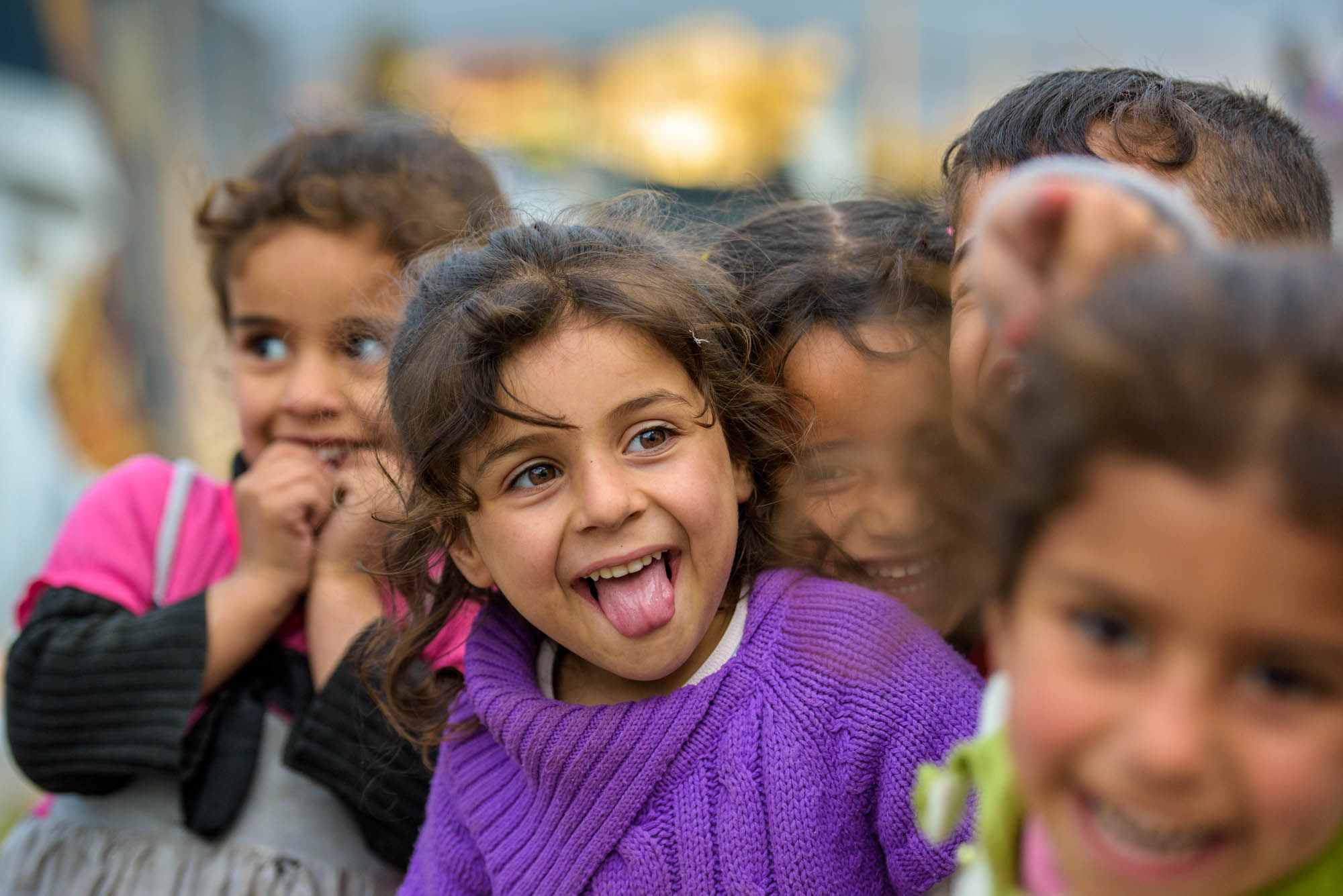
yrian refugee girl, Rahaff, 5, wearing purple sweater, is happy to be in a safe place. In an informal tented settlement in Bakaa, Lebanon.
©2016 World Vision/photo by Jon Warren

International Women’s Day

Imagine a gender equal world. 

A world free of bias, stereotypes and discrimination. A world that’s diverse, equitable and inclusive. A world where difference is valued and celebrated. 

I believe that together we can forge gender equality. This week the gender pay gap results for Australia were published, showing that on this International Women’s Day, there is still much to do.

For every $1 on average a man makes, women earn 78c. Over the course of a year, that difference adds up to $28,425.  

How is this still happening?

There is also much to do because of the political situation in the world. As anything to do with diversity, inclusion and gender is eradicated in the US under Trump, here at home Peter Dutton the leader of the opposition chose to launch a Trumpian plan to crack down on Work From Home for public servants.
 
Despite all evidence suggesting otherwise, Dutton claimed it won’t “discriminate on the basis of gender”, and even had the audacity to suggest women can simply take up job sharing arrangements if returning to the office doesn’t suit them. 
 
Make no mistake, the plan is a direct attack on women’s workforce participation and shows a complete misunderstanding of how modern families manage their lives.

This International Women’s Day we are being asked to #AccelerateAction. That means we need to keep taking action by calling out gender bias and discrimination

I also suggest that women take a moment to reflect on their own achievements. Remember what we have accomplished, despite the odds we have faced… and are still facing. For me that means celebrating having worked successfully as a journalist for many years and leading major companies in Australia and Asia in corporate affairs and investor relations. I have also written three books and finished my PhD later in life. Alongside these achievements, I am very proud to have given back to the community through my work on not-for-profit boards and by helping refugees and asylum seekers. I hope I inspired a few people along the way.

Many women (and men) inspired me through my life. This is especially true for Anne Forrest with whom I worked for over ten years in Asia.  Anne didn’t just break the glass ceiling she smashed it, showing me and other women that it was all about the best person for the job, not about gender. You can read about her here

This International Women’s Day I urge you to reach out to those women who have inspired you. We don’t say “thanks – you made a difference in my life” often enough.

International Human Rights Day

Human rights are about people. They are about you and your life: your needs and wants and fears; your hopes for the present and the future.” 

This quote is from United Nations Human Rights High Commissioner, Volker Türk, to mark this year’s Human Rights Day on 10 December. Born out of the Universal Declaration of Human Rights, this day celebrates human rights achievements and calls for continuous progress in protecting the rights and freedoms of all people

In this conflicted world we need to consider people’s human rights more than ever, yet sadly this is not happening.

Under the theme “Our rights, our future, right now” this year’s campaign focuses on how human rights are a pathway to solutions, as they play a critical role as a preventative, protective and transformative force for good, particularly in times of crises. By establishing, recognising and adhering to a common set of values and principles that apply universally, human rights help to avoid violations, conflicts, and abuses before they happen.

I like to think we can aspire to this, but several weeks ago the United Nations released its annual assessment of global humanitarian needs.

It’s a grim document, but I urge you to read it.

The report, known as the Global Humanitarian Overview, surveys the dozens of man-made and natural disasters around which the UN has mounted a response over the current year. It also projects the crises expected to demand international attention in 2025. The report estimates that 305 million people across 32 countries and nine refugee-hosting regions will require humanitarian assistance in the coming year, with a staggering price tag of $47 billion.

Many of these crises are well-known to those who follow the news: Gaza, Sudan, Syria, Ukraine and Afghanistan. Many others have faded from the headlines but remain massive in scale, such as Yemen, Democratic Republic of the Congo, and Burma.

What can you do? To feel less helpless my husband and I donate regularly to local Perth agencies helping refugees and asylum seekers like CARAD. Their A Place to Call Home Campaign provides vital support to individuals and families navigating the challenges of displacement and seeking safety. We also donate to Medecin Sans Frontieres, a global health agency working around the world in hot spots. I also write about the issues – reading everything I can from trusted sources so I can advocate with full knowledge.

So, remember use your vote and your voice when you can. There are local, national and international issues to champion.

Waiting 134 Years for Gender Equality

When our granddaughter was born 20 years ago, and I was still heavily involved in the corporate sector, I believed she would see much better gender equality when she entered the workforce than I was experiencing in Australia at the time.

The latest report from the World Economic Forum’s Gender Equality Index has shown me how wrong I was. We are 134 years from closing the global gender gap. How disheartening! Some of this can be related to a general global slowdown and the pandemic but certainly not much of it.

This year, the Global Gender Gap Index benchmarks gender parity across 146 countries, providing a basis for robust cross-country analysis. It makes for interesting reading and the ranking tables of countries around the world by sector are fascinating.

Australia has made limited progress to the country index, up two places since the 2023 edition to now being ranked 24th in the world for gender equality. That said, the UK is ranked 14th and the United States continues to be ranked 43rd, so some are citing this as a reason for hope. However, when I see New Zealand is ranked fourth I wonder how we can keep getting it so wrong and still do little to nothing about it.

With a ranking of 42, Australia falls well behind on economic participation and opportunity. Australia’s ranking on educational attainment is also behind, now ranked 84th of the 146 countries. Where Australia does do well is on political empowerment and we score an impressive 17th for women in political positions. 

Earlier this year the Minister for Women launched the Australian Government’s Working for Women: A Strategy for Gender Equality. It sets out a path to make progress towards the vision of gender equality over the next 10 years, with a focus on five priority areas: gender-based violence; unpaid and paid care; economic equality and security; health; and leadership, representation and decision-making. We can only hope this strategy is successful.

While the World Economic Forum does report some optimism, it notes the election results we have seen so far in 2024 do not point to a general trend of more women getting elected – outside of a bright spot in Mexico which just recently elected its first female president.

Iceland again takes first place on the gender equity rankings having led the index for a decade and a half.  It is the only country to have closed more than 90 per cent of its gender gap. European and Scandinavian countries continue to do better than Australia.

I recommend the report to you.