A world of stories


Refugee Week, 16 -22 June, provides a wonderful opportunity for people around the world to celebrate the contribution refugees make to our society.  It’s also a time to raise awareness, remembering and honouring the often-perilous journey that refugees have taken to reach Australia and other countries.
Logo

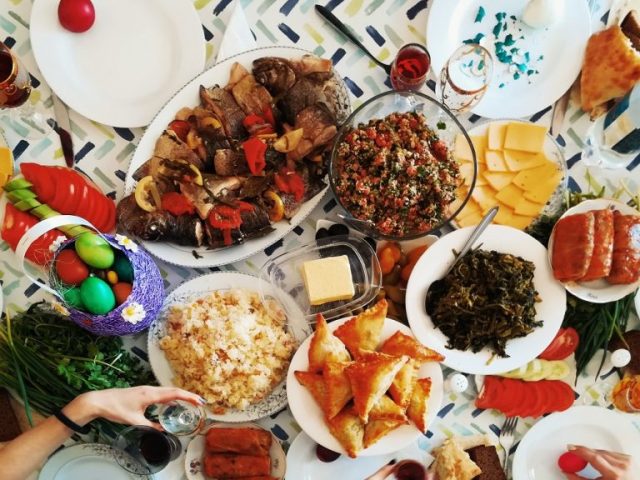
For many people, Refugee Week provides an opportunity to meet a refugee for the first time. This year’s theme for Refugee Week is A World of Stories which makes food the focus and asks you to “Share a meal, share a story…”  With that in mind, the Refugee Council is encouraging businesses, community groups, schools, and individuals to hold a food event (breakfast, morning tea, dinner) where they can hear stories from this year’s Refugee Ambassadors, while sharing some of their favourite meals. This can be done by either inviting a refugee to your event, watching a video or listening to stories in other ways.

There’s a lot of information on the website and similar organisations around the world also provide advice.  If you are planning an event in Western Australia, I can highly recommend the speakers bureau at the Youth Affairs Council of WA.  For a modest fee, a young person is available to talk, share their story and answer questions.

There are many public events around the world for Refugee Week.   If you do nothing else, take time on World Refugee Day on 20 June to look out for some stories such as this one about a woman whose parents came to Australia after the second world war.

Or you could buy a book.  Behrouz Boochani’s book about his imprisonment on Manus Island No friend but the mountains  is excellent, or They cannot take the sky, a collection of direct testimonies as stories, is also a thoughtful read. I have a suggested reading list on my website you may like to investigate.

I will be thinking about my new friends – those refugees who entrusted me with their stories, and the positive lives they have built for themselves here in Australia.
gor-davtyan-share-a-meal-02-768x576

What next?

After four years of hard work I have finally submitted my PhD about refugee life stories.  It’s been a thoroughly enjoyable experience – well except for the last few months of endless proofreading, formatting and reference checking!

My colleague, Professor Baden Offord, told me at the beginning of my PhD that it would be a time when I could research a project, delving deeply into subjects dear to me, without feeling guilty that I was sitting and reading a book. He was right. What a joy it has been to read books and articles about stories from refugees from around the world.   I have examined the different ways stories are told and the influence this has on us as readers.  I have studied the way stories make their way into the public domain, and, at the same time, I have written my own manuscript-length collection of stories about women from a refugee background.  This writing has also forced me to examine my own role as a narrator and resulted in me telling some of my own story. My two supervisors, Dr Rachel Robertson and Associate Professor Caroline Fleay, are outstanding scholars and contributed to the joyful learning experience.

Eleven women and three men became co-collaborators as part of my writing, and I feel deeply honoured to have been able to work with them to create their stories.  I collaborated with people from Afghanistan, Iran, Eritrea, Sudan, South Sudan, Somalia, Burma and Palestine.  I have learnt so much and been humbled by their honesty and their resilience.  All of them have agency and voice and a story to tell.  I look forward to sharing them with you in due course.

My thesis is now with two examiners for some time so I am waiting in a kind of limbo.  Most people have congratulated me on submitting my thesis and expect me to be out celebrating.   I’m not.  I don’t feel elated. I feel kind of numb.  Apparently, this is a common feeling for many PhD students after something that has engulfed your life for years has quietly disappeared with the push of a “submit” button.

Hopefully I will officially pass sometime this year, then my goal is to turn the manuscript into a marketable book.  It will need editing and a couple more stories will need to be added.  If you are a woman from a refugee background or you know of someone, don’t hesitate to contact me.  I want to help more people to share their stories.

What became clear throughout my research is that we don’t have access to refugee stories in the style that I write. I use direct testimony from people, conversation and historical context alongside my own reflections to entice the reader to think about their lives, as well as that of the person of a refugee background.

My way of advocating for refugee rights is to tell stories and I intend to keep doing this.

I will also be continuing my work on the board of Edmund Rice Centre WA and, now with a little more time on my hands, will look for other organisations where I can volunteer my time and expertise.  So many need “hands-on” assistance as well as donations.

So far, I have been able to maintain my links with Curtin University.   I am joining other writing colleagues to give an academic paper at a conference in Madrid in June and I continue to stay involved with the Centre for Human Rights Education.  I have worked as a research assistant, co-authored one paper about the challenges of accessing higher education as an asylum seeker and am also working on another journal article.

So, whilst waiting for the examiners’ feedback on my thesis, I am taking a short break and then will be back to my life of writing stories and working at a grass-roots level in society to try and make a difference.

Rose Farid Fauz Paul Piok 2016 (1)
I met Farid, Paul, Piok and Fauzia (L-R) when writing More to the Story – conversations with refugees.