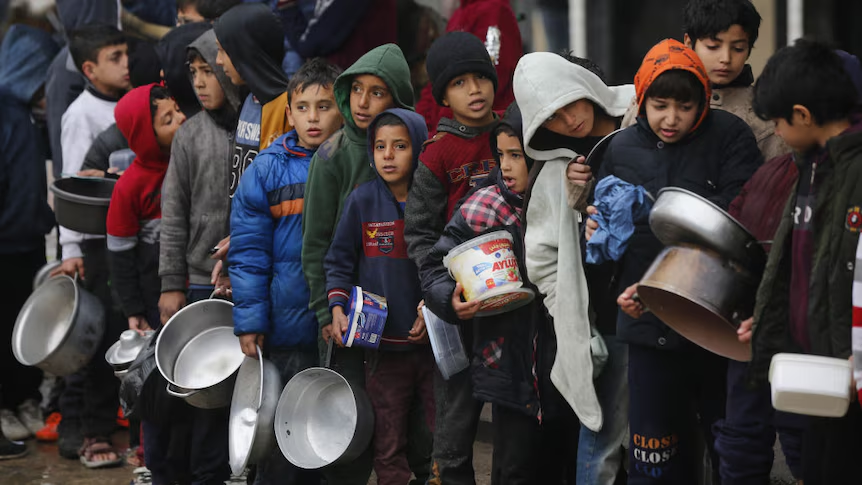
According to the latest figures I could find from the UN, in the last three years 1,000 humanitarian aid workers have been killed. Of those deaths more than 560 were in Gaza and the West Bank, 130 in Sudan, 60 in South Sudan, 25 in Ukraine and 25 in the Democratic Republic of Congo.
This horrific death count is triple that of the previous three years. And still the numbers rise.
This is an untenable situation. These humanitarians were killed while distributing essential food, water, medicine and shelter. They died in clearly marked convoys and on missions co-ordinated directly with authorities. And all too often they were killed by member states of the United Nations.
Tom Fletcher, Under Secretary General for Humanitarian Affairs and Emergency Relief Co-ordinator for the UN, says “this is not an accidental escalation – it is collapse in protection.” He goes on to ask: “is it because member states see these numbers as collateral damage, part of the fog of war? Or worse still, are we now seen as legitimate targets?”
Across multiple crises, humanitarians are not only being killed, but their action is also being restricted, delegitimised and penalised. And of course, when humanitarians are harmed, aid often stops – clinics close and food doesn’t arrive.
Did you know that in Yemen, 73 UN and dozens of NGO personnel remain arbitrarily detained by the Houthis? In Afghanistan and Yemen, women humanitarians are prevented from doing their jobs. In Gaza, Israel restricts UN agencies and international NGOs. In Myanmar, security and access constraints cut off aid to over 100,000 people in a single month. And in Ukraine, drone attacks have forced aid groups to pull back from frontline communities.
In all these cases, the deaths of humanitarian workers often leads to the death of hope for millions who rely on them.
Without hope how can we keep going? Yet aid groups and NGOs do keep going, often under horrendous circumstances. We owe them our deep gratitude.
Rather than feel helpless I donate to one of the best NGOs I know – Médecins Sans Frontieres who work across war zones. But of course, there are many others that make a significant difference in so many lives – Oxfam, Red Cross and Save the Children to mention a few.
I urge you to consider supporting their work, reading about their work and talking to others about it. By holding our hope, essential aid can continue to flow so those caught up in conflicts and disasters can continue to hope for peace and safety.