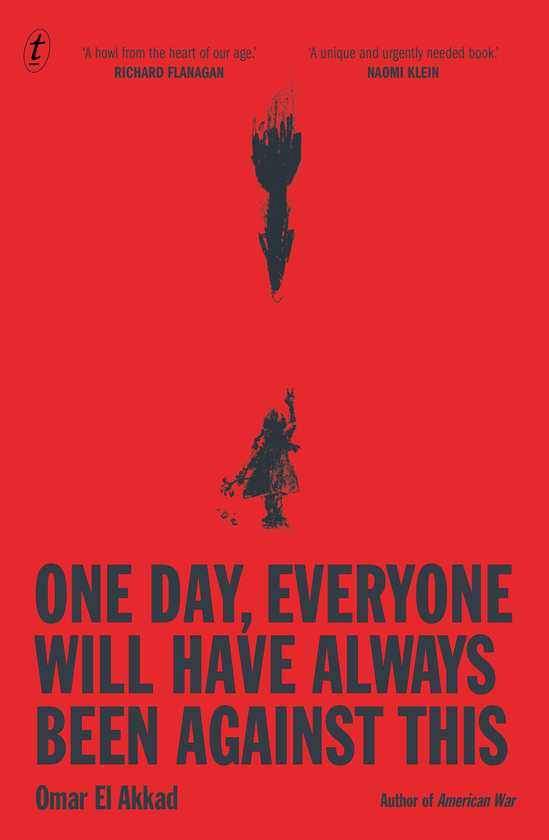
One day, everyone will have been against this

The good thing about holidays is that there is time for reading. Over my break I read One day, everyone will have been against this by Omar El Akkad and urge you to read it. My good friend from the Centre for Stories Caroline Wood gave it to me as we sat despairing about the state of the world, working our way around all the conflicts and humanitarian crises in the world and wondering how this could all be happening.

Naomi Klein wrote: “It is difficult to understand the nature of a true rupture while it is still tearing through the fabric of our world. Yet that is what Omar El Akkad has accomplished, putting broken heart and shredded illusions into words…”

One Day is passionate, poetic and sickening. It is full of well-earned rage, frustration with those who need this morality to be spelled out. For me it was cathartic. It is an important book, a must-read, if only for the reminder that history always comes down to one simple question: “When it mattered, who sided with justice and who sided with power?”

El Akkad was born in Egypt, raised in Qatar and Canada, and is now a US citizen, he has reported from the Middle East, Afghanistan and Guantánamo. This book is a response to events in Gaza after 7 October 2023. Like El Akkad, I despise Hamas and the authoritarian governments who use Islam to crush women, minorities and peaceful Muslims. I have written extensively about the treatment of women in Afghanistan by the Taliban. El Akkad says he can’t stomach the lie that the west is a civilised party in the Middle East.

I know some people will disagree, but I always think it is good to get away from your normal news feed and read something different. It’s for that reason while I was away in France, I watched Fox News as well as my usual feed of CNN and the BBC. I am trying to understand both sides in all conflicts, but it’s hard when people are being massacred and killed by one side under the name of democracy.

I wake up each day and look at my news feed to see what Donald Trump has done while I was sleeping. He is singlehandedly rupturing the world, just as Naomi Klein wrote. El Akkad asks us who is doing what and why around the world. Can we stand by and watch passively? 

He focuses heavily on the harm to innocent children, so this is not an easy book to read. As Richard Flanagan writes “this is a howl from the heart of our age…it seeks to describe the indescribable and make coherent an increasingly incoherent world.”  I hope you’ll read it. 
Trump is coming for UNICEF

For decades, UNICEF has been a symbol of international cooperation. Now, it’s the target of an unprecedented effort by the U.S. government to undermine it. 

UNICEF grew out of post-war efforts to feed and shelter hundreds of thousands of children whose lives were upended by the Second World War. It soon evolved into a global organisation dedicated to improving the health and welfare of children across the world.

By mid-century, founding leader Maurice Pate and UNICEF were able to channel international solidarity to improve the lives of the world’s most vulnerable children. For example, Pate devised a partnership with Mexico to drive down malaria, which was killing 20,000 Mexican children annually. Within four years, malaria was all but eradicated in the country, putting Mexico’s malaria levels on par with the United States.

But now, the Trump administration is taking direct aim at UNICEF, positioning one of the world’s most trusted child welfare organisations as its latest target. 

This attack has potentially devastating consequences for millions of children worldwide. 

Last week, UNICEF (along with a few other United Nations agencies) received a bizarre questionnaire from the United States that demanded “yes” or “no” answers to some 23 questions. These questions are absurd, and clearly crafted in such a way as to force answers that would justify an American withdrawal from UNICEF as its longtime financial and political backer.

For example, one question asks the agency to affirm that it “does not work with entities associated with communist, socialist, or totalitarian parties, or any party that espouses anti-American beliefs.”

Of course UNICEF does — because it’s an agency of the United Nations! To be sure, the vast majority of UN member states don’t fall into any of these categories. But the UN is a member-based institution composed of 193 countries. Some of these countries are run by communist parties, like China and Cuba. Several can credibly be called totalitarian, like North Korea and Eritrea. Some are run by avowedly socialist parties, like certain countries in Northern Europe, and a few are expressly anti-American, like Iran. 

The UN is not a club of like-minded governments — that’s what groups like NATO or the Organisation of Islamic Cooperation are for. Rather, the whole point of the UN is to serve as the one entity that can bring every country together to find opportunities for cooperation, transcending wide differences. 

Every day UNICEF provides a platform where countries can find ways to support the world’s most vulnerable children, despite their vast political and cultural divides.

Worrying times ahead.

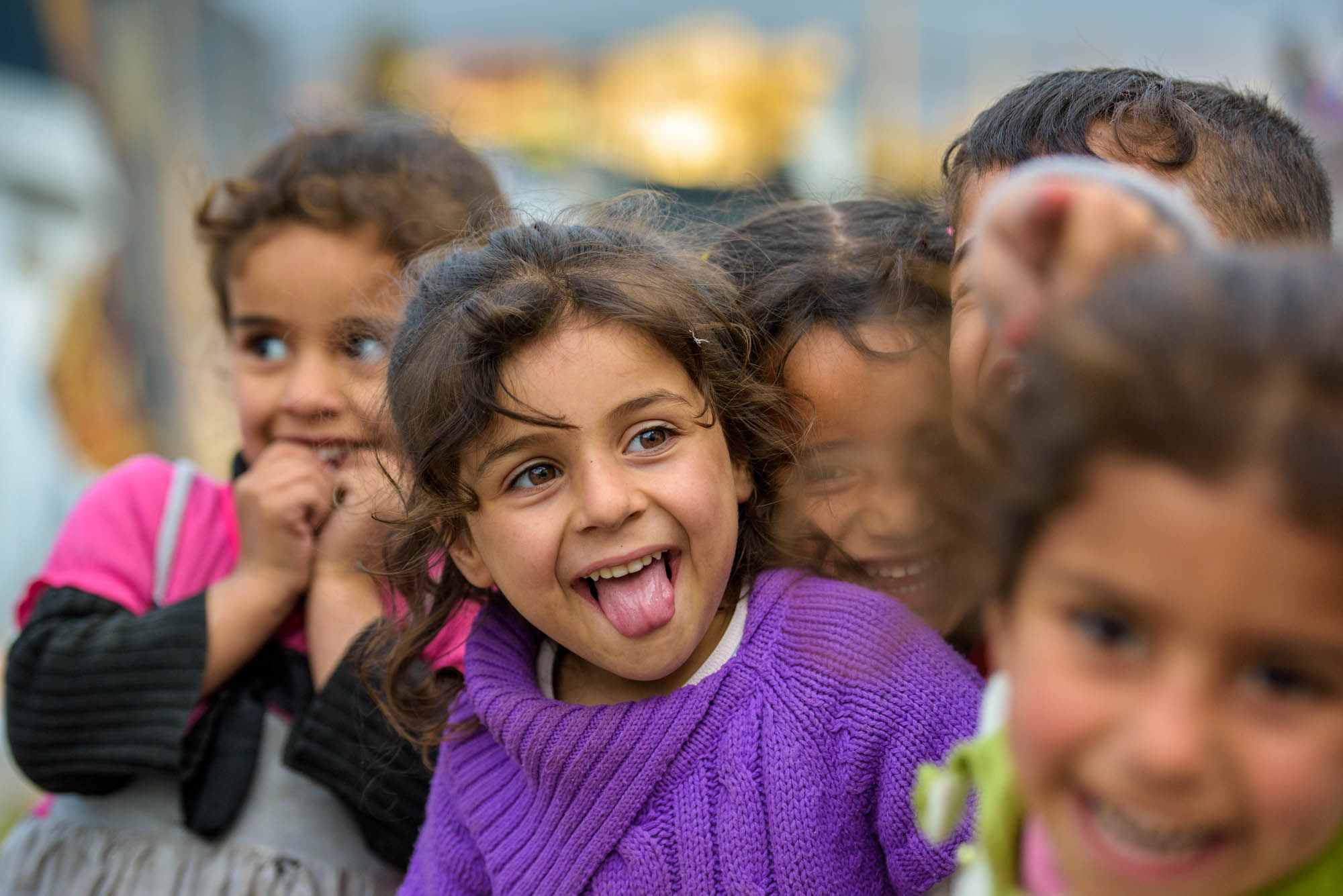
yrian refugee girl, Rahaff, 5, wearing purple sweater, is happy to be in a safe place. In an informal tented settlement in Bakaa, Lebanon.
©2016 World Vision/photo by Jon Warren