Reflections on Refugee Week

We have just finished Refugee Week which was celebrated with major events around the world. The week aims to promote harmony and togetherness with the theme this year of Healing. The importance of human connections has been underscored by the pandemic and the lessons from this can help our community in so many ways. 

We can draw upon shared hardship to heal wounds, to learn from each other and to move forward. Healing can occur through storytelling, through community and through realisation of our intrinsic interconnectedness as individuals. The common theme is a reminder that, regardless of our differences, we all share a common humanity.

I spent some time during the week reflecting on the change of government in Australia and hoping conditions can be re-set for so many people who came as asylum seekers to Australia and whose lives currently remain in limbo.

One of the organisations of which I am a director is CARAD – the Centre for Asylum Seekers, Refugees and Detainees. Along with the Centre for Human Rights Education at Curtin University where I partly studied my doctorate, CARAD is extremely active in advocacy for those people with lived asylum seeker and refugee experience including those on temporary protection visas. Our new Prime Minister Anthony Albanese said before the election that his government would oppose temporary protection visas. Right now in Australia more than 15,000 people of various nationalities are on temporary protection visas.

We need to keep them to their word.

I am in Europe at the moment and am watching with horror as the United Kingdom introduces its “Rwanda policy.” This policy will mean people who come seeking asylum by boat across the English Channel will be sent to Rwanda for processing. The UK Prime Minister has said they modelled this approach on Australia’s offshore processing – how horrible! These asylum seekers have little chance of a getting any sort of visa.

People are being punished all around the world for fleeing persecution and seeking asylum. The United Nations High Commissioner for Refugees strictly states that it is not illegal to seek asylum. 

Where has our humanity gone?

Celebrating a Centenary

PEN was one of the world’s first non-governmental organisations and amongst the first international bodies advocating for human rights. It was the first worldwide association of writers, and the first organisation to point out that freedom of expression and literature are inseparable – a principle PEN continues to champion today.  

PEN International began in London in 1921, a hundred years ago. Within four years there were 25 PEN Centres in Europe, and by 1931 there were several Centres in South America as well as China.

As the world grew darker just before the outbreak of war in 1939, PEN member Centres included Argentina, Australia, Bolivia, Brazil, Canada, Chile, Colombia, Egypt, India, Iraq, Japan, Mexico, New Zealand, Palestine, Uruguay, the US and others. All the Scandinavian countries were included as well as several countries in Eastern Europe. Basque, Catalan and Yiddish Centres were represented, too.

Today with 155 centres in more than 100 countries, PEN acts to preserve endangered languages, support translation, protect the freedom to write, and expand the space for writers worldwide in the belief that literature can build communities.

Words without Borders, a wonderful organisation, is celebrating the PEN Centenary with some excellent new fiction. Written by Words Without Borders contributors who have ties to PEN centres in three countries, the stories from Nazlı Karabıyıkoğlu (Turkey), Kettly Mars (Haiti), and Mohamed Magani (Algeria), with translations by Ralph Hubbell, Nathan H. Dize and Edward Gauvin, make some great reading! You can find the stories on the Words without Borders Website

Check out your local PEN chapter around the world and get involved. Click here for the Perth Chapter

We could have done better

During the two decades in which Australia was ensnared in an unwinnable war after trailing the US into Afghanistan, successive Australian leaders like Julia Gillard, Tony Abbott and Malcolm Turnbull all spoke reassuringly about how they would not desert the Afghans.

However, this is exactly what we have done.

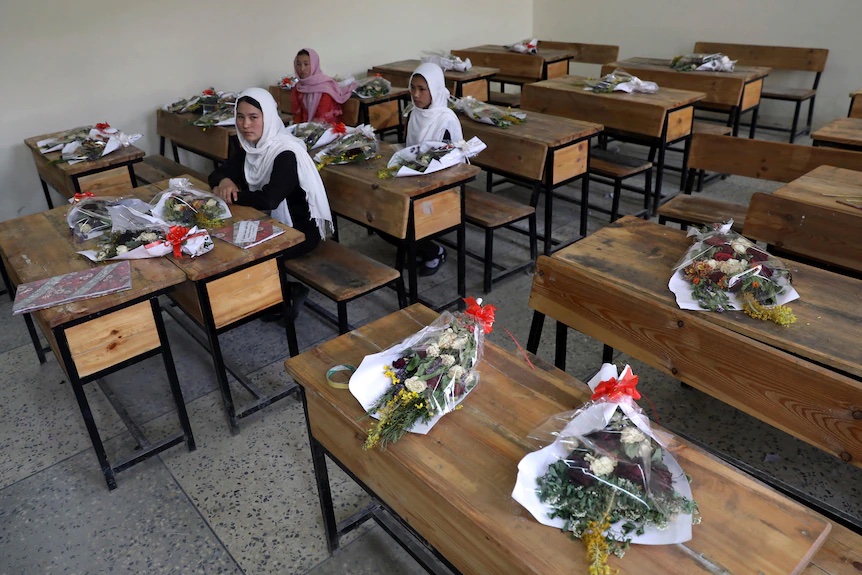
Afghan friends following the unfolding drama in their former homes can’t believe that after all the fighting, after everything they and their families went through the Taliban is back. Violence, discrimination and persecution of women and young girls has returned. 

The Taliban is stronger right now than at any time since the US invasion. The United Nations reports record civilian casualties. In recent weeks, the militants have stepped up offensive in key cities Lashkar Gah, Kandahar, Kunduz and Herat.

This is critical. The Taliban has strongholds in rural areas but taking back cities is a decisive change potentially tipping the balance of power in its favour. Foreign Policy magazine this week said: 

“The urban offensives also have demographic implications. If the Taliban seize cities, the insurgents would bring an even more sizeable share of the population under their control.”

Australian journalist Stan Grant who worked as a foreign correspondent in Pakistan and Afghanistan has written thoughtfully about the issue based on his experiences

In 2014, former Australian Army Colonel and defence strategist for US General David Petraeus and Security Advisor to Condoleezza Rice, David Kilcullen, forecast exactly what is now happening in Afghanistan. “The worst-case scenario is not that ISIS and al-Qaeda continue to be rivals, it’s that they pal up. You end up with a precipitated withdrawal from Afghanistan, creating space for the Taliban to come back, just like ISIS did in Iraq.”

Kilcullen continues to write about the situation.

I pictured an Australian soldier today, back from extended tours of duty in the Middle East, watching the news on television. The hard-fought battles to defeat the Taliban in places like Uruzgan province and to then improve security and assist villagers re-build their lives, must have seemed a complete waste of time. The country seemed to be back where they had started from. Right in front of them on the screen all the good work that he or she thought they had done, was unravelling in fast moving pictures. 

Several years ago, at the Byron Bay Writers Festival, I interviewed Major General John Cantwell, Commander of Australian Forces in Afghanistan in 2010, and I asked him was the effort by Australian, and allied forces, worth it? What had we achieved in Afghanistan? Was it worth all the lives that had been lost? Cantwell answered that even though such comments seemed disrespectful to a life-time soldier, steeped in a sense of duty and service, he had to answer, “No. It wasn’t worth it.”

The whole mess has been summed up in the Guardian Australia by writers Paul Daley and Ben Doherty as a tragic and wasted opportunity. 

We could have done more. 

We could have done better. 

We’ve let the people of Afghanistan down.

New Voices

If you are looking for something different to read over the holiday period, you might want to check out the fabulous website of Words without Borders. The latest issue features short stories from four Afghan women writers among other things.

In modern Afghanistan, years of chronic instability and internal displacement have created a challenging environment for writers of all kinds. Twenty different flags have flown over the country since the beginning of the twentieth century. Changes in rulers, monarchs, emirs, and presidents, as well as revolution, Soviet invasion, and Taliban rule, have led to clashing political ideologies and the imposition of widespread restrictions not only on everyday life but on freedom of speech and expression, particularly for women.

All four writers mention the difficulty of finding the peace and space required to concentrate on writing. Finding the space to write is but one challenge; the war-scarred country feels permanently on edge, locked down long before the pandemic. This atmosphere is conveyed in Sharifa Pasun’s “The Decision,” and Maryam Mahjube’s “Turn This Air Conditioner On, Sir,” where just leaving the house can be a matter of life or death.

Peace negotiations between the Afghan government and the Taliban are deadlocked and the militant group continues to launch deadly attacks. Amid the surge in violence throughout Afghanistan the Taliban have denied they are deliberately targeting journalists, human rights campaigners, and women. This is clearly not true.

Joan Didion, my favourite essayist, said “I write entirely to find out what I’m thinking, what I’m looking at, what I see and what it means, what I want and what I fear.”  

By reading these four short stories on Words without Borders perhaps we will understand what some Afghan women are thinking and seeing, what they want and what they fear. We’ll understand lives different from our own and that can only be a good thing.