Everybody Belongs

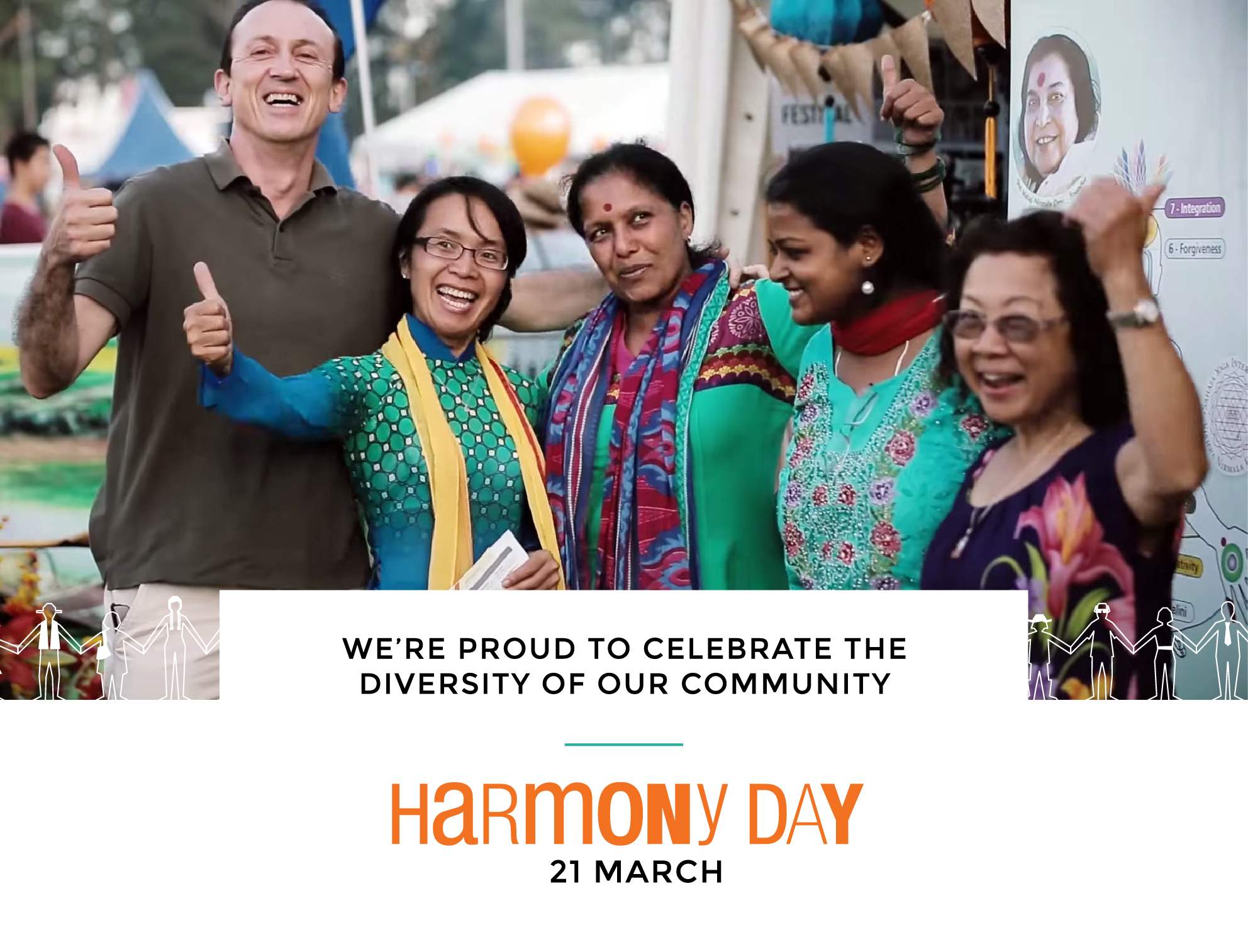
Australia is a vibrant and multicultural country — from the oldest continuous culture of our first Australians to the cultures of our newest arrivals from around the world.  This Harmony Week 15 – 21 March, that is worth celebrating.  

We especially come together to celebrate Harmony Day on 21 March. Created in 1999 to celebrate unity and diversity, Harmony Day was originally an Australian celebration but is now marked worldwide by conscientious citizens. The continuing theme of Harmony Day is Everybody Belongs.

Here are nine stories that will inspire you during the week. Called Food, Faith and Love in WA they were put together by the WA Office of Multicultural Interests and one of my favourite places, the Centre for Stories

An integrated multicultural Australia is an integral part of our national identity. All people who migrate to Australia bring with them some of their own cultural and religious traditions, as well as taking on many new traditions. Collectively, these traditions have enriched our nation.

There are some fascinating statistics about Australia’s diversity that can be good conversation-starters:

  • Nearly half (49%) of Australians were born overseas or have at least one parent who was,
  • We identify with over 300 ancestries,
  • Since 1945, more than 7.5 million people have migrated to Australia,
  • 85 per cent of Australians agree multiculturalism has been good for Australia,
  • Apart from English, the most common languages spoken in Australia are Mandarin, Arabic, Cantonese, Vietnamese, Italian, Greek, Tagalog/Filipino, Hindi, Spanish and Punjabi.

It’s been heartening to see sport and the arts around the world unite in anti-racism messages over the last several years.  Teams make a stand on the pitch/ground/court before every game. Sport transcends culture. It breaks down barriers and helps to build inclusive communities. Sport brings people together by sharing a common goal.

Our cultural diversity is one of our greatest strengths and is at the heart of who we are. 

It makes Australia a great place to live.
Break the Bias

Women in Australia have been fighting for the right to equal pay since early this century. The principle of equal pay for equal work was recognised in the Universal Declaration of Human Rights in 1948. Since then, women’s right to equal remuneration has gained increasing international support. Australian women workers were granted equal pay in 1969.

Twenty years ago, ten years ago, five years ago, I kept thinking well at least my granddaughters will not have to fight for equal pay and respect like I did. But that simply isn’t true. Despite laws against pay inequality, those same battles continue to be fought.

I spent most of my working life in Perth – except for a decade in Hong Kong where amazingly I faced no discrimination and always received equal pay. But here in Western Australia, the gender pay gap is the largest in Australia at 21.9%, with men earning approximately $23,000 more over the course of a year than women. Western Australia is followed by Queensland and then NSW as the states with the next highest pay gaps. 

I am so angry about this situation. We have to keep talking about the gender pay gap and bringing it into the open. When I discuss this with most of the men I know, they are appalled… they simply don’t know.

I tried to think of some positives for this week’s International Women’s Day and there are many.  Young women have once again found their voices led by Grace Tame and Brittany Higgins. If you didn’t hear the joint address by these two young women at the National Press Club early in February, I urge you to take 30 minutes to listen to it. 

I hope we see the change they are so passionately advocating for reflected in a change of Federal government at the coming elections. If ever there was a government with a tin ear about women and women’s issues, it’s this one. 

The #metoo movement has developed into a strong force in discussions around the world. So much for those who said it was a fad!  I know many women (myself included) who signed up to support #metoo about their experiences of discrimination in the workplace and we are still a powerful cohort for change. 

Personally, I will keep advocating and writing for women everywhere.

Enough is enough.