New Voices

If you are looking for something different to read over the holiday period, you might want to check out the fabulous website of Words without Borders. The latest issue features short stories from four Afghan women writers among other things.

In modern Afghanistan, years of chronic instability and internal displacement have created a challenging environment for writers of all kinds. Twenty different flags have flown over the country since the beginning of the twentieth century. Changes in rulers, monarchs, emirs, and presidents, as well as revolution, Soviet invasion, and Taliban rule, have led to clashing political ideologies and the imposition of widespread restrictions not only on everyday life but on freedom of speech and expression, particularly for women.

All four writers mention the difficulty of finding the peace and space required to concentrate on writing. Finding the space to write is but one challenge; the war-scarred country feels permanently on edge, locked down long before the pandemic. This atmosphere is conveyed in Sharifa Pasun’s “The Decision,” and Maryam Mahjube’s “Turn This Air Conditioner On, Sir,” where just leaving the house can be a matter of life or death.

Peace negotiations between the Afghan government and the Taliban are deadlocked and the militant group continues to launch deadly attacks. Amid the surge in violence throughout Afghanistan the Taliban have denied they are deliberately targeting journalists, human rights campaigners, and women. This is clearly not true.

Joan Didion, my favourite essayist, said “I write entirely to find out what I’m thinking, what I’m looking at, what I see and what it means, what I want and what I fear.”  

By reading these four short stories on Words without Borders perhaps we will understand what some Afghan women are thinking and seeing, what they want and what they fear. We’ll understand lives different from our own and that can only be a good thing.

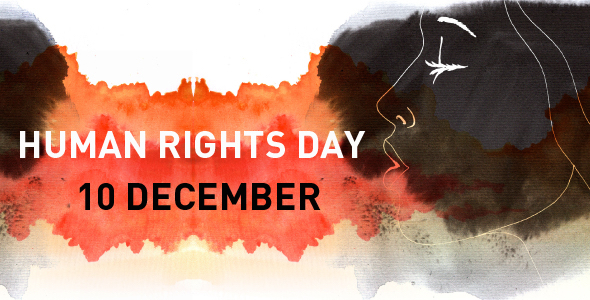
International Human Rights Day

During this week we celebrated International Human Rights Day.  On the 10th of December we remembered the day the Universal Declaration of Human Rights was proclaimed in 1948.   It is a milestone document that guides much of international law today covering the inalienable rights which everyone is entitled to as a human being, regardless of race, colour, religion, sex, language, political opinion, national or social origin, property, birth, or other status.

In this year of COVID19 the theme is recover better- stand up for human rights.  The pandemic exposed failures and exploitation of poorer people around the world.   While there were heart-warming examples of people coming together in more caring ways during COVID19, I feel those suffering in refugee camps were almost forgotten.  

Social distancing simply isn’t possible for the one million Rohingya refugees who live in Cox’s Bazar refugee camp, in south eastern Bangladesh. Families live in close quarters inside flimsy bamboo shacks, using communal toilets and water facilities. Sometimes the most basic items, such as soap, are lacking. It is one of the most densely populated places on earth.

I think how lucky I am to live in Western Australia where life has been relatively normal with exceptionally low case numbers. But then I reflect on the cruelty of the Australian government’s decision to slash support to people seeking asylum in the 2020-21 Budget. This decision, according to the Refugee Council of Australia, puts over 100,000 people, including around 16,000 children, at further risk of homelessness and destitution.  Refugees are living in Australia on various temporary visas because the government will not recognise a large cohort of people who came to Australia seeking asylum.  These are the forgotten people.

During this year, while attempting to publish stories about the lives of refugees, I was told by several publishers that the reading population has “refugee fatigue”. Is that true? If it is, what does it say about our humanity?

Eleanor Roosevelt, one of the declaration’s authors stated, “human rights begin in small places, close to home.” During this week of international rights, I know I could do more in standing up for human rights. Maybe we all could.