Landmark Win Provides Hope

I’m pleased to report that last week after a long fought case, The Federal Court ruled against the Minister for Immigration on the question of citizenship for people of refugee background.

The Court found the Minister had ‘unreasonably delayed’ making decisions on citizenship applications, depriving eligible former refugees from having their full rights as Australian citizens.

The case, brought by the Refugee Council of Australia with pro bono legal support, provides renewed hope for 10,231 people that the department confirmed were in the same situation. This large group, although eligible for citizenship, have had their applications ‘put in the bottom drawer’, as the Department dragged its feet in completing this simple but important task.

Lawyers for the former refugees argued that these delays have been unreasonable and appear discriminatory.

The Court heard that the excessive delays have caused significant anxiety for the many thousands affected, as they have been unable to reunite with their families while their citizenship remains in limbo.

Tim O’Connor, acting CEO of the Refugee Council of Australia, said “this decision is a landmark ruling, providing hope for over 10,000 people around Australia who have been denied justice by the Immigration Department. Our government has denied them basic rights to stability and importantly, family reunion, through slow and targeted decision-making. Today’s ruling recognises this injustice and represents a first step towards a resolution for thousands and a chance for them to start to rebuild their lives.”

The Refugee Council of Australia do terrific work in promoting the development of humane, lawful and constructive policies towards refugees and asylum seekers. Find out how you can support its work and get involved here.

refugee-council-of-australia-logo


Human Rights is Nothing Without Stories

To mark International Human Rights Day on Saturday December 10 I attended a wonderful event at The Centre for Stories in Northbridge, and listened to a great panel of speakers discussing why stories matter.  Each had a different perspective and it was one of the most thoughtful afternoons I have experienced.

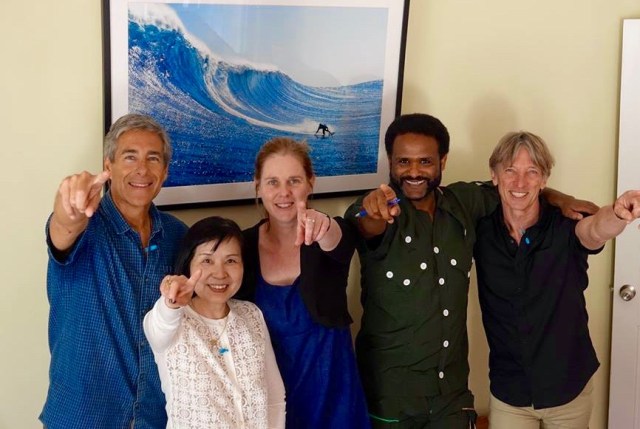
Chair and Director of the Centre for Human Rights Education at Curtin University, Baden Offord, set the scene for a crowded room of people.  We heard from Mary Ann Kenny from Murdoch who also acts as a lawyer for refugees and asylum seekers. Her heart breaking stories illustrated how the power of social media makes it easier for those in detention or in the community care to communicate. Mary Ann’s stories moved us all to tears. John Ryan gave us the view of an educator and talked about what concerns students and teachers in schools have. Yasue Arimutsu gave her first-hand experience of how some Japanese people struggle to find a clear identity and Yirga Gelaw Woldyes shared his own personal story as a boy growing up in Ethiopia. I was particularly taken with his point that it is possible to feel a sense of dislocation in your country when language is taken away or not respected.

After a break for coffee and chocolates at afternoon tea, we re-convened for an open and stimulating discussion. Baden concluded by reminding us that human rights theory is nothing without stories.

As a storyteller, I have always felt that it is impossible to fully understand a place or a person without engaging with all the stories of that place or person. In this way we surely have a better chance of finding a shared humanity. To do that, of course, we need to find better ways of listening and respecting each other. It was suggested to me through the week at a conference called ‘Re-imagining Australia’, that we need to give up something so that there is more room in our lives for contemplation – and that allows for a better way of listening.

One of my favourite Australian writers, Kim Scott, was also at this conference. When it opens, if you visit the new Perth Stadium at Burswood in WA you will see a poem written by Kim and etched around the walls in Noongar and English welcoming people – it is beautiful. I was particularly taken with these lines:

Travelling, we are many peoples; 

But our footprints make us one.

Let’s all think more about everyone’s footprints around the world.

baden-and-rose
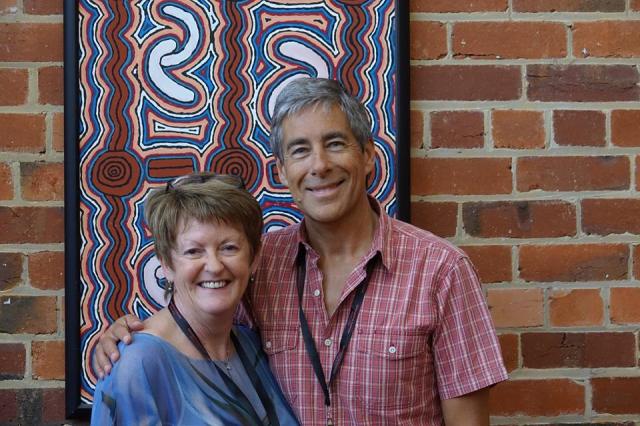
Rosemary with Baden Offord, Director of the Curtin University Centre for Human Rights Education
int-human-rioghts-day
Baden Offord, Yasue Arimutsu, Mary Ann Kenny, Yira Gelaw Woldyes and John Ryan at The Centre for Stories 2016 International Human Rights Day event